NATO reveals Russia's main target in potential war with alliance

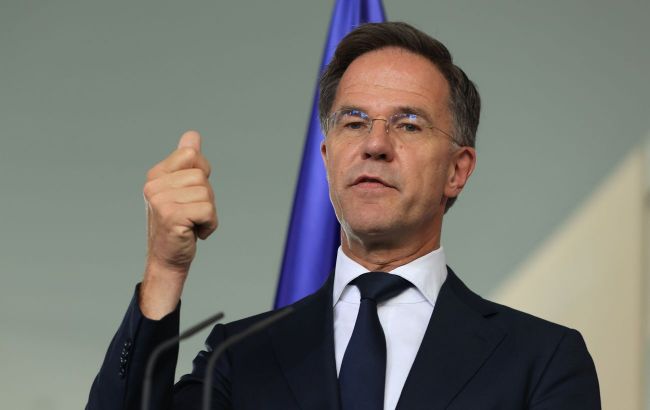 Photo: NATO Secretary General Mark Rutte (Getty Images)
In the event of an attack on NATO, Russia would likely focus on targeting energy infrastructure. In light of this, the Alliance is already stepping up training and the protection of critical infrastructure, according to NATO Secretary General Mark Rutte’s 2025 report.
The document states that Russia’s military aggression against Ukraine has demonstrated that the energy sector is also likely to be a primary target in the event of any attack against NATO.
As before, the report identifies Russia as the most significant and direct threat to the security of the Euro-Atlantic region.
The Kremlin continues to act with increasing recklessness, including violating airspace, carrying out sabotage, and launching cyberattacks.
The document contains no direct references to the prospect of Ukraine’s NATO membership, but emphasizes practical support. This includes military aid, training, and the integration of the defense industry.
NATO emphasizes a long-term approach to supporting Ukraine. The Alliance must continue to provide Ukraine with the support necessary for its defense today, while helping it to be prepared to deter any future Russian aggression tomorrow, it says.
The report also describes the existing support system for Ukraine, which includes the coordination of military aid, training, and logistics through NATO structures, as well as the gradual alignment of Ukrainian forces with Alliance standards.
Separate emphasis is placed on plans to integrate the Ukrainian defense industry into the allies’ ecosystem.
In addition, the document provides data on member countries’ defense spending. In 2025, European NATO members and Canada spent $574 billion on defense, 20% more than the previous year.
For the first time, all 32 allies reached the 2% of GDP defense spending target. The highest figures were recorded in Poland and the Baltic states, while the lowest were in Belgium, Spain, Albania, and Canada.
At the same time, the United States remains the Alliance’s key contributor, accounting for more than half of NATO’s total GDP and about 60% of defense spending.
War threat between NATO and Russia
European officials are increasingly warning that Russia may be preparing for a direct conflict with NATO. In particular, Dutch Defense Minister Ruben Brekelmans stated that such a threat could materialize as early as 2030.
The German military command assesses the risks even more pessimistically. They believe that there may be only 2–3 years left before a potential Russian attack on Alliance countries.
At the same time, Germany, as one of NATO’s key members, could find itself at the epicenter of events.
Assessments of the Kremlin’s military plans are also causing additional concern. According to the European Commissioner, Russia may be ready to deploy between 7 and 9 million drones as early as 2026.
Meanwhile, Western media are painting a bleak picture for NATO. Despite the threat of a global conflict, NATO countries are completely unprepared for it.
A hybrid war is already underway, Russia is preparing to attack NATO in a few years, and the state of war preparedness in the West is catastrophic.