NATO no longer has psychological barrier toward Russia, Ukrainian official says


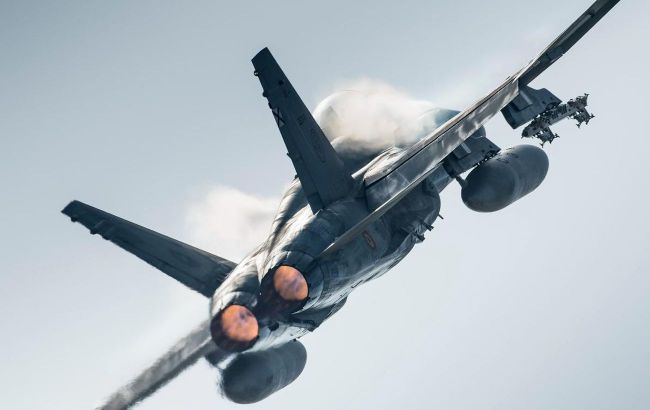 Photo: NATO aircraft in Europe (ac.nato.int)
Almost a year ago, NATO aircraft shot down a Russian drone over Poland for the first time. Today, Alliance nations carry out such interceptions regularly without psychological hesitation, stated Alyona Getmanchuk, head of Ukraine’s Mission to NATO, in an interview with RBC-Ukraine.
NATO has no psychological barrier
When asked by a journalist whether NATO is overcoming its psychological barriers regarding the Russian threat after starting to shoot down Russian drones over Romania and Latvia, Hetmanchuk answered in the affirmative.
"I completely confirm that. This barrier was removed back on September 10 last year, when NATO shot down Russian drones that entered Polish territory."
She also noted that there had been questions and even mockery in Ukraine about what was used and how the drones were shot down.
"However, the fact that Russian drones were actually intercepted was ignored. Since then, we have seen NATO begin doing this regularly," Getmanchuk said.
A different deterrence policy
According to the head of Ukraine’s Mission to NATO, there are several explanations for why this is happening.
"First, NATO is reconsidering its entire deterrence policy. Moreover, it is rethinking what it means to be a defensive Alliance in the conditions of modern warfare. They understand that if you demonstrate indecision and an inability to act, and follow the logic that sometimes prevailed in the past — just monitoring the situation and avoiding escalation at all costs — it does not work," she said.
NATO has now developed an algorithm for responding to the Russian threat.
"Today, the logic is that if there is a violation of airspace and if that violation could pose a threat either to infrastructure or to people in NATO member states, then that threat must be immediately destroyed," she said.
NATO has also realized that these are no longer isolated cases and that such incidents are becoming more frequent. According to Getmanchuk, they may not necessarily be accidental but could represent planned Russian actions aimed at testing NATO’s response.
RBC-Ukraine previously reported that the Ramstein group and the PURL program will focus through the end of 2026 on funding defense packages already approved by the United States.
It was also reported that NATO recognized Ukraine as a contributor to security at the declaration level. Thus, the Alliance has assessed the potential of Ukraine’s capabilities to strengthen the organization, Getmanchuk said.
In addition, the PURL program provides a basic monthly supply of PAC-3 and PAC-2 interceptors for Ukraine’s Patriot systems. However, this is not enough, Getmanchuk added.