Kh-101 cruise missiles: How Russia changed key long-range weapon during war against Ukraine

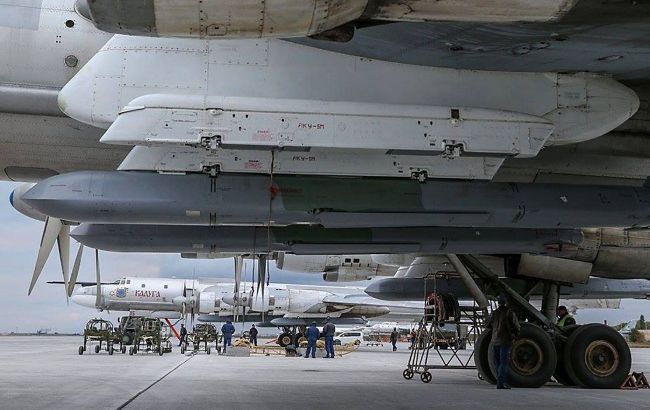 Russia is modernizing Kh-101 missiles for strikes on Ukraine (photo: Russian media)
Russia has changed the design of the Kh-101 cruise missile at least four times since the beginning of the full-scale war. In this way, the enemy is trying to bypass Ukrainian air defense and inflict even greater damage on civilian infrastructure, the Ukrainian Defense Ministry reports.
Why Russia is modernizing Kh-101
Ukrainian military explains that all changes have two main goals:
-
Reduce the effectiveness of Ukrainian air defense;
-
Intensify strikes on peaceful cities and critical infrastructure.
According to Defense Minister Mykhailo Fedorov, Ukraine's main task is to learn how to detect all aerial targets in real time and intercept at least 95% of missiles and drones.
Since the beginning of 2026 alone, Ukrainian air defense has already destroyed about 88% of Kh-101, Kh-55, and Kh-555 missiles.
What the missile looked like at the beginning of the invasion
At the start of full-scale war, Kh-101 was a long-range cruise missile launched from Tu-95MS and Tu-160 strategic bombers.
Its main characteristics:
-
Warhead weighing up to 500 kg;
-
Flight range up to 2,500 km;
-
Satellite navigation;
-
Terrain image guidance system.
Launches were usually carried out from the Caspian Sea region. Because of this, the missile could fly toward the target for up to 12 hours.
It was a large range reserve that allowed Russia to begin changing missile design.
First modernization — more explosives
After a significant number of Kh-101 missiles began to be intercepted, the Russians decided to sacrifice part of the fuel supply.
Freed-up space was used for a second warhead.
As a result, the total explosive payload increased to about 800 kg. This significantly strengthened the missile's destructive power.
Second modernization — cluster charges and fires
Later, Kh-101 received cluster munition elements.
After the explosion, they scatter over a large area and hit many targets simultaneously.
Incendiary additives are especially dangerous because they can cause large-scale fires.
This is why strong fires at civilian sites are often recorded after strikes with such missiles.
Defense Ministry stresses that this indicates deliberate adaptation of the missile for attacks on urban infrastructure.
Third modernization — more precise guidance
Russia also upgraded the missile's guidance system.
It works as follows:
-
Before launch, the terrain map is loaded into the missile's memory.
-
During flight, the system compares the real image with the reference image.
-
If deviations are detected, the missile corrects course on its own.
This allows more accurate targeting even during the operation of Ukrainian electronic warfare systems.
However, in large cities, such a system works worse because of dense urban development.
Defense Ministry emphasizes that when Russia launches Kh-101 missiles at cities, it understands the risk of inaccurate strikes on residential districts.
Fourth modernization — protection from interception
The latest stage was the installation of electronic warfare protection systems.
They can:
-
Create false targets for radars;
-
Throw interceptor missiles off course;
-
Automatically launch heat traps.
This complicates the work of air defense systems, but does not make the missile invulnerable.
The Ukrainian military has already found Kh-101 debris where these systems failed to work.
Russia has problems with carriers
Despite the modernization of missiles themselves, Russia is facing growing problems with strategic aviation.
Tu-95MS and Tu-160 bombers are rapidly wearing out because of intensive use.
Because of this:
-
Some aircraft carry fewer missiles;
-
The number of combat-ready carriers is decreasing;
-
Russian nuclear potential is weakening.
In addition, analysis of debris shows that missiles are often assembled literally just weeks before launch.
This means Russia almost no longer has large stockpiles and is operating in constant production mode.
What this means for Ukraine
The Defense Ministry summarizes that all changes to Kh-101 are not a technological breakthrough, but a forced Russian response to the successful work of Ukrainian air defense.
The more missiles Ukraine intercepts, the more the enemy is forced to modify its weapons in an attempt to preserve the ability to attack Ukrainian cities.
Earlier, rumors appeared online that Russia is preparing ground-based modifications of Kh-101 cruise missiles used by Tu-95 and Tu-160 aircraft to attack Ukraine.
Whether Russians can really move these missiles to the ground and what this may indicate — read in the RBC-Ukraine material.