Like addicts: Ukrainian MFA responds to Orbán and Fico’s criticism over Russian oil

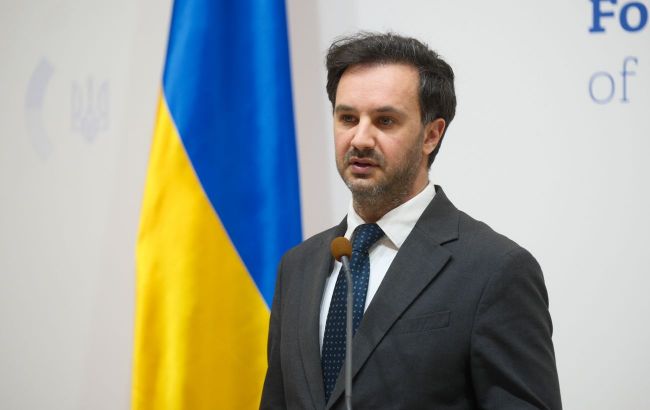 Photo: Ukrainian Foreign Ministry spokesperson Heorhii Tykhyi (Vitalii Nosach, RBC-Ukraine)
The behavior of Hungary and Slovakia, which are trying to maintain Russian oil transit through blackmail, resembles "typical behavior of addicts." Despite EU policy, they want to stay on the "Russian needle," states Foreign Ministry spokesperson Heorhii Tykhyi at a press briefing for journalists.
Read also: 'Big lie': Hungary's foreign minister rejects claim Ukraine protects Europe from Russia
Commenting on accusations from Hungary and Slovakia regarding oil transit through the Druzhba pipeline, Tykhyi reminded that the pipeline is not operational because it was attacked by Russia.
The Hungarian side received a notification on January 27, the same day the Russian army attacked and damaged a facility near Brody in the Lviv region. Therefore, Budapest is not only lying but also omitting the fact that the suspension of transit is Russia’s fault.
"Somehow, statements blaming Ukraine are now being made. Ukraine is in constant dialogue both with the European Commission and with the relevant authorities of Hungary and Slovakia on this issue," he said.
Tykhyi also reminded that Russia systematically attacks Ukraine’s oil and gas infrastructure. In 2025, there were 225 attacks on facilities of Naftogaz of Ukraine, with the enemy using 1,399 drones and missiles.
At the same time, according to him, Hungary and Slovakia received temporary exemptions from the European Union within the framework of EU sanctions on the import of Russian pipeline oil.
Budapest and Bratislava had time to "get off the Russian oil needle." Hungarian Prime Minister Viktor Orbán and Slovak Prime Minister Robert Fico also had the means to do so.
"But unfortunately, we do not see even attempts to free themselves from dependence on Russian oil. On the contrary, in defiance of European Union policy, we see attempts to stay on this needle for as long as possible… Sorry, it really resembles the behavior of addicts, with all due respect to the serious problem of addiction," Tykhyi concluded, adding that this is not an insult but a metaphor that fits Orbán, Fico, and their policy very well.
Problems with the Druzhba pipeline and the ultimatum from Russia’s friends
Oil transit through the Druzhba pipeline stopped in January 2026 due to a Russian terrorist attack. The Ukrainian Foreign Ministry reported that transit issues began after the Russian army struck the pipeline.
Following this, on February 16, Hungary and Slovakia turned to Croatia for help importing Russian oil specifically, due to problems with the Druzhba pipeline. However, Croatian Economy Minister Ante Šušnjar stated that the country is ready to help, but only within EU law and without violating US sanctions.
Then, on February 18, Orbán and Fico issued an ultimatum to Ukraine. In particular, Hungary stopped supplying diesel fuel to Ukraine, while Slovakia once again threatened to halt electricity imports to the country.