Kremlin masks deepening fuel crisis with illusion of stability, intelligence claims

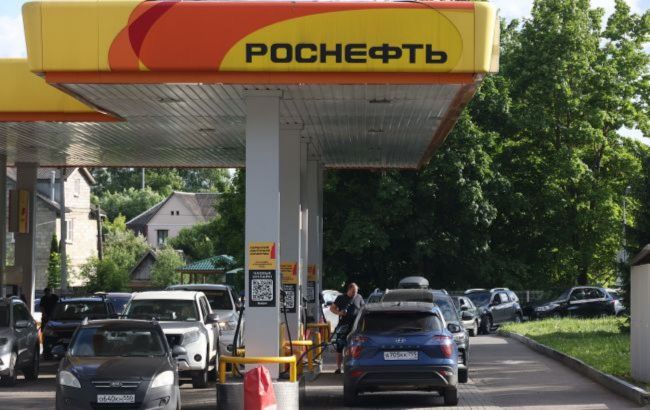 Line of cars at a Rosneft gas station in Russia (photo: Getty Images)
Russia continues to claim its fuel market is stabilizing, despite data to the contrary. Behind the façade of "improvement" lie fuel shortages, rising prices, and falling production, according to the Foreign Intelligence Service of Ukraine (SZRU).
Russian authorities continue to assure the public that the fuel crisis is supposedly easing. Kremlin-controlled media report increased fuel supplies, the partial lifting of restrictions at gas stations, and improved conditions in 15 regions, including Moscow and St. Petersburg. At the same time, Russian officials insist the situation is fully under control.
However, SZRU says the reality is quite different. Reported improvements in some regions are not the result of increased production but rather of the administrative redistribution of existing fuel reserves among regions and consumer groups.
Places with worst situation
Based on Ukrainian intel, the most severe shortages persist in the Tambov, Astrakhan, Kirov, Penza, Voronezh, Rostov, Volgograd, Orenburg, and Yaroslavl regions, as well as the Perm Territory, the Chuvash Republic, the republics of Mordovia and Udmurtia, and the Russian-occupied territory of Crimea. No signs of stabilization are currently expected in these areas.
Prices rise, production falls
The deepening crisis is also reflected in fuel prices. Between July 1 and July 10, the average price of AI-92 gasoline at Russian gas stations rose to 64.5 rubles per liter, up 20% from a year earlier. AI-95 increased to 77.5 rubles per liter, a 24% annual rise, while AI-98 climbed to 119.5 rubles per liter, up 32%.
According to the SZRU, the shortages continue to stem from reduced output following damage to Russian oil refineries. In July, gasoline production fell to about 71,500 tons per day, while average summer demand is roughly 110,000 tons per day. As a result, Russian refineries are meeting only about 65% of domestic demand, leaving a shortfall of nearly 38,500 tons per day, or about 35% of consumption.
Why Kremlin talks about improvement
"Everything indicates that the Kremlin is preparing not to overcome the crisis but to manage its long-term existence. The regime's main goal is not to fully restore market supply but to prevent disruptions in strategically important sectors," the intelligence service said.
According to the SZRU, official statements about the market returning to normal are primarily intended to shape public perception. They have to project stability, even as the gap between official rhetoric and the actual state of the fuel market widens.
Economic problems in Russia are increasingly extending beyond fuel shortages and affecting other sectors of the economy.
Earlier, the Institute for the Study of War (ISW) said that amid record wartime spending, Russia is facing a growing budget deficit, rising inflation, and the depletion of its financial resources.