Israel, Lebanon, and US sign trilateral agreement in Washington

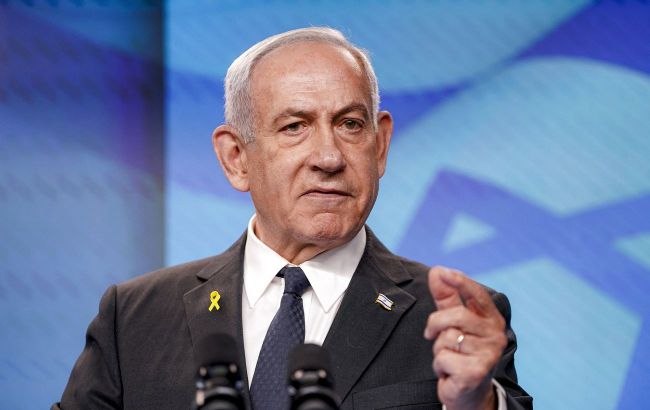 Photo: Israeli Prime Minister Benjamin Netanyahu (Getty Images)
Israel, Lebanon, and the United States have signed a trilateral framework agreement that provides for the start of a partial withdrawal of Israeli forces from southern Lebanon, according to The Times of Israel.
Details and terms of the agreement
According to the outlet, the signing ceremony took place at the US Department of State and was attended by the ambassadors of Israel and Lebanon, as well as Secretary of State Marco Rubio.
The US official described the event as "the beginning of the beginning" of a complex settlement process. The agreement provides for the withdrawal of Israel Defense Forces (IDF) units from several small areas in southern Lebanon.
At the same time, Israeli Prime Minister Benjamin Netanyahu stressed in a special video address that Israel would retain control over the buffer zone it has established until Hezbollah is disarmed and as long as a threat to Israel exists.
According to the Israeli Prime Minister, the country will not allow Hezbollah militants or Lebanese civilians to enter the security zone, which is designed to keep anti-tank missile threats at a distance.
Meanwhile, the Lebanese army will begin preparations to assume control of two pilot areas agreed upon with the IDF.
Limiting Iran’s influence
The Israeli side emphasized that the signed document effectively removes Tehran from the settlement process inside Lebanon.
According to Israel’s ambassador to the United States, Yechiel Leiter, although Washington had previously attempted to involve Iran in deconfliction mechanisms, the current agreement nullifies that approach.
"In this performance-based, trilateral framework agreement, Iran is out, Hezbollah is out, and the road to peace between Israel and Lebanon is in,” the Israeli diplomat said.
At the same time, Netanyahu’s office added that the IDF’s freedom of military action throughout the security zone would be fully preserved in order to eliminate any potential threats.
Updated at 11:30 p.m.
The US Department of State has officially confirmed the signing of the agreement and released a number of details. According to its website:
-
The agreement establishes a "clear and structured" process for restoring Lebanon's sovereignty, disarming Hezbollah, and dismantling its terrorist infrastructure. It also allows Israel to return to its territory once this threat to its citizens is eliminated;
-
A trilateral Military Coordination Group for Lebanon (MGG4L) will be established with US assistance, enabling both sides to implement this framework agreement;
-
For Lebanon, this agreement opens up a viable path out of a long crisis, while for Israel, it creates a verifiable pathway to removing the persistent threat on its northern border;
-
To ensure the peace process, the US will allocate significant resources, including $100 million in immediate humanitarian assistance in coordination with the UN;
-
The US reaffirms its intention to enhance the combat readiness and capabilities of the Lebanese Armed Forces to establish sovereignty across the entire country. To this end, the Pentagon will allocate $30 million under existing authorities and appropriations to support the President’s vision for a lasting peace in Lebanon.
Timeline of the conflict in Lebanon
On June 19, 2026, Israel and Hezbollah agreed to a ceasefire following another escalation of the conflict in Lebanon. At the time, the restoration of the ceasefire was brokered by the United States and Qatar. However, due to the escalation in hostilities, US-Iran talks scheduled to take place in Switzerland were canceled.
The agreement followed an earlier escalation when Israel struck Lebanon ahead of a US-Iran peace deal. The Israel Defense Forces carried out large-scale airstrikes against Hezbollah infrastructure in Beirut. Prime Minister Benjamin Netanyahu stated at the time that Israel would not tolerate attacks on its territory.
Earlier, Netanyahu suggested that Israel might have to confront Iran without US support. According to him, Jerusalem had considered the possibility of carrying out a unilateral strike on Tehran despite the risks and costs involved.