Israel and Lebanon move toward new round of talks

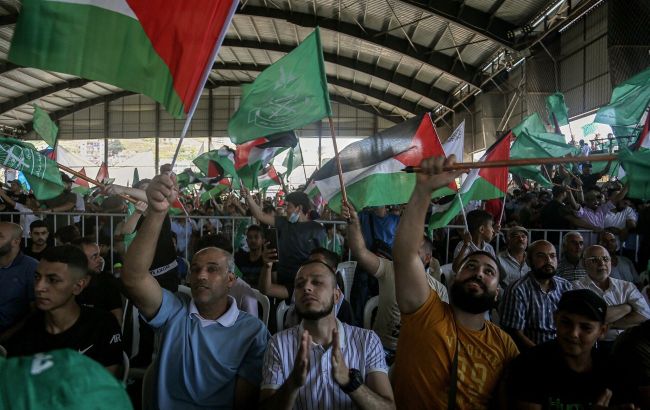 Palestinian refugees in Lebanon (Photo: Getty Images)
Israel and Lebanon will again seek a path to ending the long-standing conflict. Negotiations, with the facilitation of the US, could begin as early as the 14th, according to The Jerusalem Post.
The US State Department emphasizes that the delegations must form a comprehensive peace and security agreement. Such a document must address the key problems of both states.
The parties plan to address several critical issues:
- Establishing clear land and maritime borders;
- Creating reliable routes for humanitarian aid;
- A plan for the large-scale reconstruction of affected regions;
- The full restoration of Lebanon's sovereignty over its entire territory.
The US emphasizes the importance of the security aspect: "comprehensive peace is contingent on the full restoration of Lebanese state authority and the complete disarmament of Hezbollah."
Beirut's position: peace instead of normalization
Lebanese Prime Minister Nawaf Salam has already commented on the upcoming meeting. He insists on the state's right to control the situation. The official underlined the government's desire to ensure that weapons remain in the state's exclusive possession. This aligns with previous decisions of the Lebanese leadership.
The Lebanese side is already preparing its proposals. They include:
- Ending Israeli strikes on Lebanese regions;
- Releasing all prisoners;
- The phased withdrawal of Israeli troops from the southern part of the country.
Salam assured journalists that Lebanon is moving not toward normalization, but toward peace with Israel. At the same time, he noted that this process is not completely detached from the US-Iran dialogue.
"Lebanon succeeded in establishing that it is negotiating on its own behalf, but this does not mean the Lebanese track is completely separate from the negotiations track in Islamabad," the prime minister said.
Washington demands the disarmament of militants
The US sees the main obstacle to stability as the Hezbollah militants. US Secretary of State Marco Rubio said during a media appearance:
"We want the relations between Israel and Lebanon, its legitimate government, to be very strong. The impediment to that is Hezbollah," Rubio said.
What is known about the situation between Lebanon and Israel
Israel and Hezbollah failed to maintain a ceasefire for long. The parties exchanged strikes, and Israel even deployed next-generation artillery — the Ro'em cannon — against Hezbollah on the battlefield.
A ceasefire between Lebanon and Israel regarding Hezbollah was brokered by the US on April 16. The Lebanese Prime Minister welcomed Trump's announcement of a ceasefire. The Israeli Prime Minister emphasized that the IDF would remain in strategic positions during the 10-day truce.
Meanwhile, the UN and the EU estimate that rebuilding Gaza will cost at least $71.4 billion. Restoring the region could take 10 years, and action must be taken now.