Is Russia really ready to end Ukraine war? ISW analysis


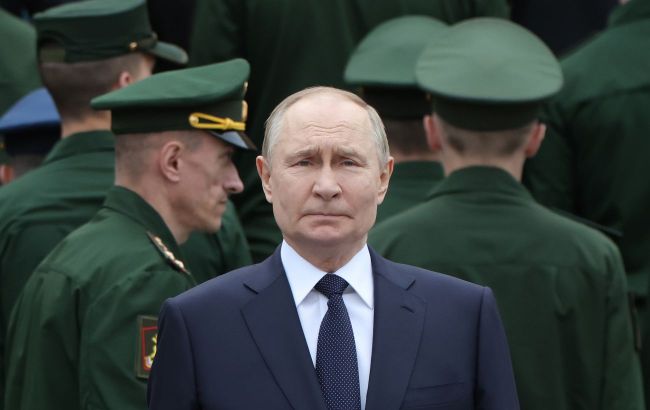 Photo: Russian president Vladimir Putin (Getty Images)
Russia has consistently signaled that it will not agree to a peace deal that does not include Ukraine's complete surrender or the fulfillment of Moscow's maximalist territorial demands, Jessica Sobieski and Jennie Olmsted, researchers on Russia at the Institute for the Study of War (ISW), said in an interview with RBC-Ukraine.
As the experts pointed out, Russian president Vladimir Putin and other Kremlin officials have repeatedly confirmed their desire to restore political control over the entire territory of Ukraine.
“Kremlin officials have repeatedly referred to Ukrainian cities such as Odesa as Russian, and the Kremlin's oft-citing of its "root causes" – a deliberately vague term that the Kremlin has long used as shorthand for its original war justifications and demands, such as the destruction of Ukrainian sovereignty and the NATO alliance – necessitates that any peace deal or settlement subjects Ukraine to a status of de-facto Russian territory,” they said.
Analysts note that Putin's “theory of victory” is based on the assumption that Russian troops will be able to continue their gradual, creeping advance indefinitely, thereby preventing Ukraine from launching successful counteroffensives and ultimately winning a war of attrition.
This theory also assumes that the West will eventually stop supporting Ukraine. According to ISW, such calculations face numerous challenges both on and off the battlefield, complicating Russia's ability to achieve victory.
Experts emphasize that Russia still faces serious challenges, including capturing Ukraine's fortification belt, crossing the Dnipro River, and further utilizing tactical gains amid economic and domestic political problems.
The war is likely to continue, as Moscow's harsh and inflexible demands are incompatible with Ukraine's survival as a sovereign state.
To end the war, the ISW notes, Russia must make concessions on terms acceptable to Ukraine, the US, and Europe.
"European states have explicitly linked Ukrainian independence and sovereignty with European security. Russia is unable to achieve its objectives as long as Ukrainians are willing to defend their country and Western states continue to support Ukraine,” the experts said.
Negotiations to end the war in Ukraine
Ukrainian and US officials recently met in Berlin. US special envoy Steve Witkoff, who participated in the discussions, said that a lot of progress had been made.
After the meeting in Berlin, Ukrainian President Volodymyr Zelenskyy noted that the positions of Kyiv and Washington on the issue of territories still differ.
Meanwhile, Western media reported that a new round of negotiations between Ukraine and the US is to take place in Miami over the weekend. The military is likely to participate in the discussions.
Bloomberg, citing its own sources in the White House, also reported that the administration of US President Donald Trump is preparing a new round of sanctions against Russia's energy sector to increase pressure on Moscow if Kremlin leader Putin rejects a peace agreement with Ukraine.