Iran threatens US with withdrawal from ceasefire - Media

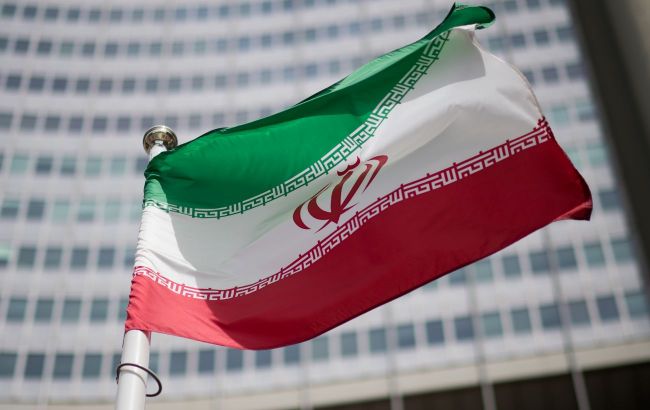 Photo: flag of Iran (Getty Images)
Iran has threatened to withdraw from the ceasefire agreement if Israel continues to carry out strikes on Lebanon, according to Tasnim.
As stated by a source cited by the agency, Iran is considering withdrawing from the two-week ceasefire plan due to what it says are violations already committed by the Israeli side.
"Ending the war on all fronts, including against the heroic Islamic resistance in Lebanon, was agreed upon by the United States within the two-week ceasefire plan, but the Zionist regime has been carrying out brutal attacks on Lebanon since this morning, which constitutes a clear violation of the ceasefire agreement," the source said.
According to the interlocutor of Tasnim, in this context, Iran’s armed forces are already identifying targets for a possible response to Israel’s actions in Lebanon.
The source also sharply criticized the United States, stating that if Washington "cannot control its dogs in the region," Iran is ready to "help" it do so by force.
However, there has been no official confirmation of these statements from the authorities of either Iran or the United States at the time of publication.
Ceasefire under threat?
The situation in the Middle East remains extremely tense despite US efforts to move the conflict toward a diplomatic track. On the night of April 8, US President Donald Trump announced an agreement on a two-week ceasefire with Iran, which was also expected to include Israel. This pause was intended to give the parties time to prepare a final peace agreement.
However, within the first hours after the ceasefire announcement, reports of new strikes emerged.
In particular, Iran reported an attack on an oil refinery on Lavan Island and accused its opponents of violating the ceasefire regime.
At the same time, the Israel Defense Forces confirmed a large wave of strikes on Hezbollah targets in Lebanon, stating that within 10 minutes, Israeli forces hit more than 100 command centers and military targets in Beirut, the Bekaa Valley, and southern Lebanon.