US plans hit setback as Iran refuses to transfer enriched uranium

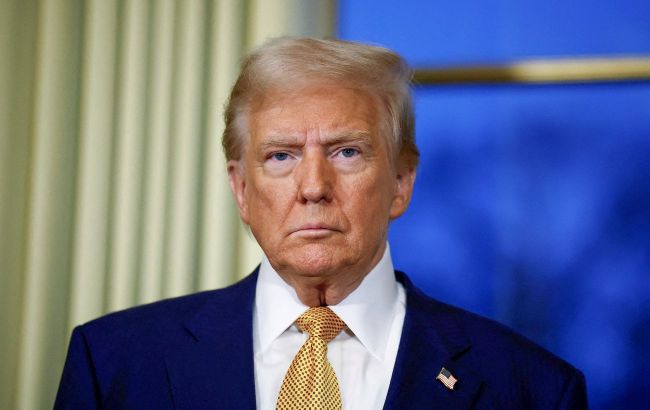 Donald Trump (photo: Getty Images)
Iran's Deputy Foreign Minister, Saeed Khatibzadeh, stated that Tehran will not hand over its country's enriched uranium to the US, according to his interview with the Associated Press.
"I can tell you that no enriched material is going to be shipped to United States. This is non-starter and I can assure you that while we are ready to address any concerns that we do have, we’re not going to accept things that are nonstarters," the official said, thereby rejecting the statements of US President Donald Trump.
As is known, on Friday, Trump stated that the US would enter Iran and take all the nuclear dust, referring to the 440 kg of enriched uranium likely stored under nuclear facilities heavily damaged by US strikes in the summer of 2025.
Returning to the interview, Khatibzadeh noted that there have been many exchanges of messages between the parties, but he accused Washington of stubbornly insisting on demands that Tehran considers excessive.
"We are still not there yet to move on to an actual meeting because there are issues that the Americans have not yet abandoned their maximalist position," the deputy foreign minister said, adding that Iran seeks to finalize a framework agreement before meeting in person.
He did not go into details of the negotiations with the US or say which issues remain unresolved, but called on Washington to take into account Iran's concerns, including the sanctions imposed on the country.
"The other sides also should understand and address our main concerns, which are illegal unilateral sanctions that Americans have imposed on Iranians and this economic terrorism which has targeted Iranian people to suffocate them and make them to revolt against the political structure inside Iran," the official explained.
He also said that a new protocol for the Strait of Hormuz would be introduced as part of the negotiations with the US, emphasizing that the waterway will remain open and safe for all civilian shipping.
When asked whether Iran would respond to Israel's resumption of attacks on Lebanon despite the ceasefire reached between them, Khatibzadeh said that Tehran has no choice but to stop the aggressors once and for all.
What is known about the negotiations and beyond
The issue of enriched uranium and Iran's nuclear program is effectively the key point in negotiations between Washington and Tehran. Israel and the US firmly insist that Iran cannot have its own nuclear weapons, and during the first round of talks in Pakistan on April 11, the parties failed to reach an agreement.
It is against this backdrop that Trump, in addition to Iran's blockade of the Strait of Hormuz, decided to declare his own blockade of the same waterway. But an important clarification: the US restrictions apply only to Iran and vessels sailing to or from its ports.
At the same time, on Friday, the US president said that Iran had agreed to hand over all its enriched uranium, adding that Tehran agreed to everything. According to Trump, a deal with Iran could be reached in a day or two. However, in reality, judging by the statements from the Iranian side, this is far from the case, and the country has already refused to hand over nuclear materials.
Meanwhile, on the evening of April 18 (Kyiv time), Axios reported that Trump had called an emergency meeting in the White House Situation Room due to the risk of renewed war with Iran in the coming days.