Trump outlines Pakistan talks, reaffirms tough stance on Iran nuclear issue

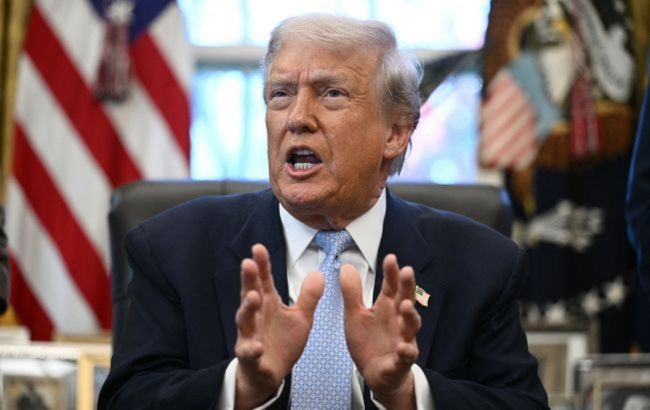 Donald Trump (photo: Getty Images)
The US President said talks with Iran in Pakistan went well. According to him, many issues were agreed upon, but the nuclear weapons issue remains unresolved.
"So, there you have it, the meeting went well, most points were agreed to, but the only point that really mattered, nuclear, was not," Trump wrote in his Truth Social.
He later posted another message, again addressing the negotiations and outlining his position on Iran's nuclear weapons.
According to Trump, the meeting with Iran began early in the morning and lasted throughout the night. In total, it took about 20 hours.
The US leader wrote that he could provide a detailed account of the results achieved, but that the most important point is that Iran does not want to give up its nuclear ambitions.
"In many ways, the points that were agreed to are better than us continuing our military operations to conclusion, but all of those points don't matter compared to allowing nuclear power to be in the hands of such volatile, difficult, unpredictable people," the post reads.
Trump added that during the negotiations, his three representatives (referring to Vice President JD Vance and special envoys Steve Witkoff and Jared Kushner) "became, not surprisingly, very friendly and respectful of" the Iranian representatives. However, due to Iran's refusal to give up nuclear capabilities, this does not matter.
"But that doesn't matter because they were very unyielding as to the single most important issue and, as I have always said, right from the beginning, and many years ago, Iran will never have a nuclear weapon!" the US president concluded.
US–Iran talks failed
On April 11, a US delegation led by Vice President JD Vance arrived in Pakistan for talks with Iran. Media reports varied, with both positive and negative assessments.
However, by the morning of April 12, Vance told reporters that the negotiations had still not resulted in an agreement to end the war. As a result, he said, the delegation was returning to Washington empty-handed. He also suggested that the key reason for the failure was Iran's refusal to abandon its nuclear ambitions.
According to the New York Times, the talks also stalled over control of the Strait of Hormuz. In particular, Iran sought to retain control and opposed joint patrols.