Iran deploys small submarines in Strait of Hormuz, Bloomberg reports

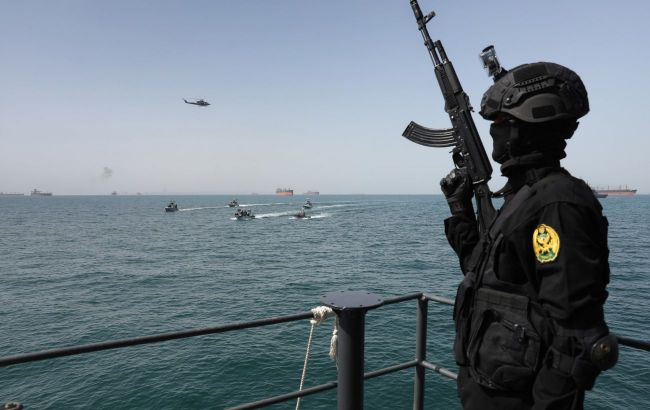 Photo: Iran is moving submarines into the Strait of Hormuz (Getty Images)
Iran has announced the deployment of small submarines in the Strait of Hormuz amid escalating tensions with the United States and the collapse of peace negotiations, Bloomberg reports.
Tehran said the small submarines are intended to act as an "invisible guardian" of the Strait of Hormuz after a series of failed peace agreements between Iran and the United States.
The vessels in question are Ghadir-class mini submarines. According to estimates by the International Institute for Strategic Studies, Iran has at least 16 such submarines. Each is capable of carrying two torpedoes or two Chinese-made C-704 anti-ship missiles.
At the same time, a Bloomberg source noted that the submarines are significantly noisier than modern subs, while their crews have limited combat experience. The vessels also reportedly have maintenance problems.
According to the agency, the decision to deploy the submarines came after US President Donald Trump suggested a possible revival of the idea of American military escorts for commercial ships.
Iran effectively blocked the Strait of Hormuz following US and Israeli strikes in late February. Since then, commercial tanker traffic in the region has become significantly more difficult.
Experts believe the main role of mini-submarines is not only to carry out potential attacks, but also to demonstrate strength and act as a deterrent. Iran is already actively using missiles and drones for that purpose.
At the same time, the geography of the Strait of Hormuz complicates the covert use of submarines. The waterway is only about 100 meters deep, making submarines easier to detect with sonar systems.
Earlier, Bloomberg reported that global oil reserves had begun falling sharply amid the war in Iran and the effective blockade of the Strait of Hormuz. According to Morgan Stanley estimates, global oil inventories declined by nearly 4.8 million barrels per day in March and April.
The biggest fuel shortage risks have emerged in Asian countries dependent on oil imports, as well as in Europe, where aviation fuel reserves are rapidly shrinking.