Intel chief outlines Ukraine's critical reliance on US intelligence support

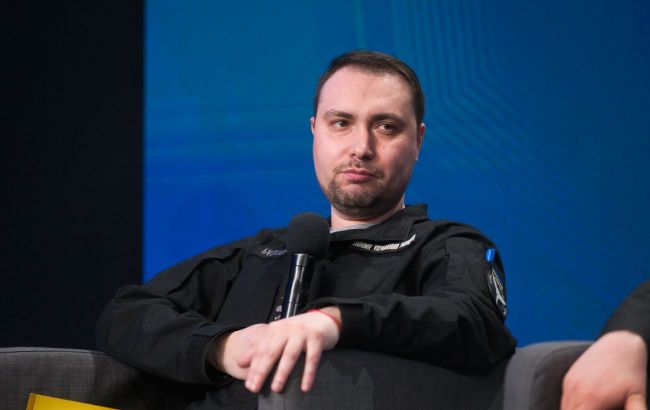 Photo: Kyrylo Budanov (Vitalii Nosach, RBC-Ukraine)
Ukraine is critically dependent on the United States in two key areas of intelligence: satellite imagery and early-warning systems for ballistic missile threats, according to Kyrylo Budanov, head of Ukraine’s Defense Intelligence.
In his view, a partial suspension of free intelligence assistance would not be catastrophic as long as existing commercial contracts remain in force. However, Ukraine’s reliance on the United States for satellite intelligence has two components: free access provided through aid programs and paid commercial contracts.
If only free access to optical satellite imagery were suspended, Ukraine would lose about 15–17% of its capabilities, which Budanov says would not be critical. Losses in radar satellite imagery would amount to roughly 46%, complicating the situation but not leading to collapse.
By contrast, blocking commercial contracts for access to satellite data would have far more serious consequences.
“It would be critical if a political decision were made to block the contracts. In that case, we would fall to almost zero,” Budanov emphasized.
He also noted that another area of Ukraine’s critical dependence on the United States is the early-warning system for ballistic missile threats. At the same time, in other intelligence components, Ukraine relies primarily on its own capabilities.
Security guarantees for Ukraine
It should be recalled that in late February, Ukrainian President Volodymyr Zelenskyy had a public dispute with US President Donald Trump during a visit to the White House. Afterward, Trump claimed that Zelenskyy allegedly did not want to end the war with Russia.
Against this backdrop, the United States decided to suspend weapons deliveries to Ukraine. Intelligence sharing between the two countries was also temporarily halted.
Western media reported that the pause in intelligence sharing had the greatest impact on Ukrainian Armed Forces operations in Russia’s Kursk region.
The situation was eased after talks between Ukrainian and US officials in Saudi Arabia, after which Washington decided to resume weapons deliveries and intelligence sharing.
At the same time, during the summer, White House press secretary Karoline Leavitt did not rule out that the United States could provide air support to Ukraine as part of security guarantees, clarifying that Trump excludes only the presence of American ground troops in Ukraine.
Last month, the Trump administration proposed a peace plan to end the war in Ukraine. Initially, the document consisted of 28 points, most of which did not align with Ukraine’s interests and instead favored Russia. The plan has since been revised.
Currently, the US peace plan includes a framework agreement, security guarantees, and a document on Ukraine’s postwar recovery.
Recently, Zelenskyy said the plan is expected to be divided into five documents, and that once Kyiv is as close as possible to reaching an agreement with Russia, he will meet with Trump.