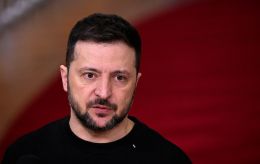
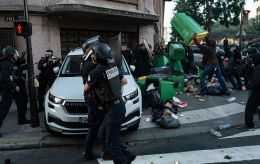
Two days in Berlin: What Ukraine discussed with US and Europe

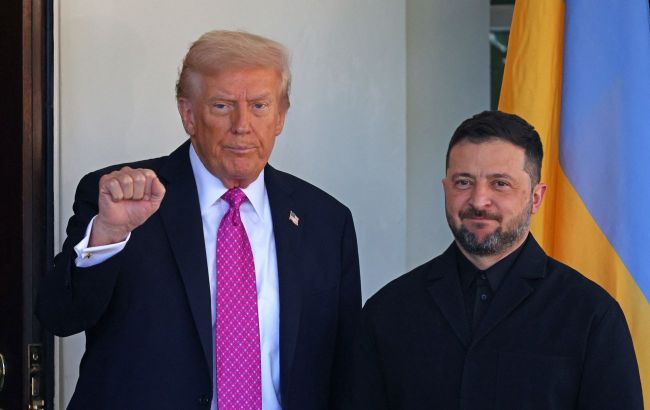 Volodymyr Zelenskyy and Donald Trump (Photo: Getty Images)
President Volodymyr Zelenskyy and the Ukrainian negotiating team spent two days in Berlin. They held meetings with US presidential envoys and European leaders, focused on a single agenda item: advancing peace in Ukraine.
What progress has been made on the peace plan, which issue remains the most challenging, and what commitments are European leaders making to Ukraine - read more in the RBC-Ukraine report below.
Ukraine
On December 14 and 15, the Ukrainian negotiating team, led by President Zelenskyy, held several rounds of talks with Trump’s envoys, Steve Witkoff and Jared Kushner.
On the first day, the negotiations lasted over five hours, and on the second day, they likely continued for a similar duration. As Zelenskyy explained, the talks on Monday were conducted in multiple rounds and were still ongoing late in the evening. In particular, the President of Ukraine noted that there was sufficient dialogue regarding the territorial issue.
Following the first day of talks, Witkoff stated that significant progress had been made in negotiations on the peace plan. The next day, Zelenskyy confirmed the envoy’s assessment.
“Indeed, there was progress on many issues. What is important is that we were heard. Had these meetings taken place earlier, the progress would have been even greater, but I am grateful to them for the fact that we worked very well together,” the President of Ukraine told journalists on Monday.
As usual, the first details of the negotiations appeared in Western media. Several outlets, citing a briefing by an unnamed American official, reported that Trump is satisfied. In addition, the reports mentioned the following:
- Russia may be open to Ukraine’s accession to the EU as part of a peace agreement,
- 90% of the issues have been resolved,
- Progress has been made on security guarantees similar to NATO’s Article 5, though these guarantees will not remain on the table forever.
It was also announced that Trump would join Zelenskyy’s negotiations with European and NATO leaders by phone.
Europe
At an evening briefing with Zelenskyy, German Chancellor Friedrich Merz once again expressed support for Ukraine. He stated that a repeat of the Minsk scenario must not be allowed and noted the convergence of positions between Ukraine, the EU, and the US.
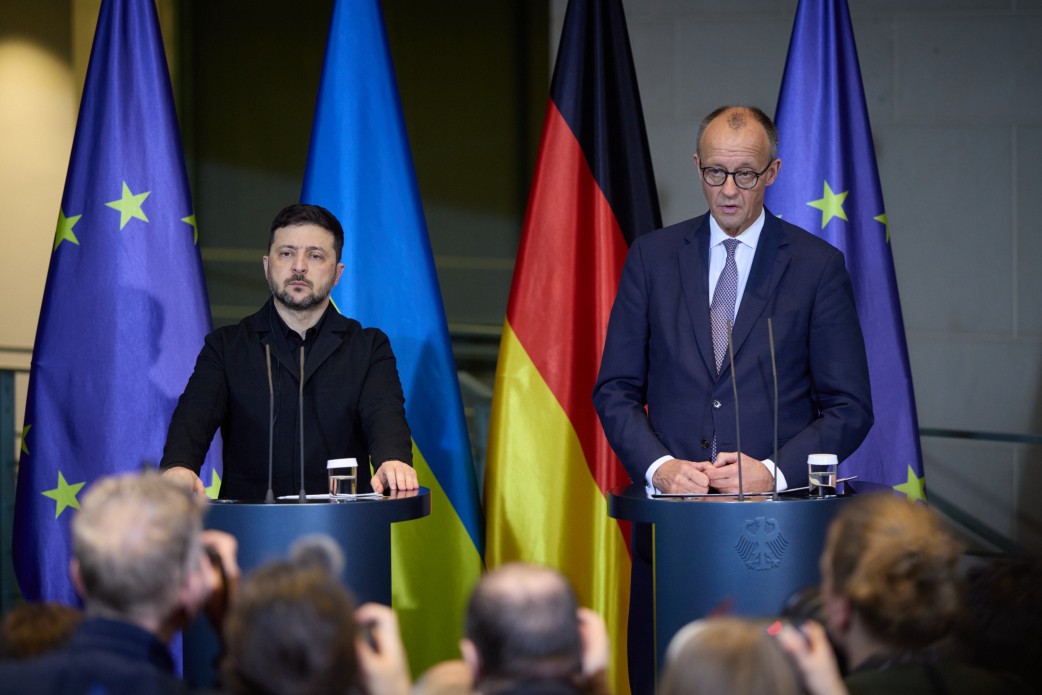
Photo: Zelenskyy and Merz in Berlin (Presidential Office)
Another notable statement by Merz concerned a potential ceasefire for Christmas.
Merz said that yesterday and today (December 14 and 15) Europeans, Americans, and Ukrainians had developed a whole range of proposals, which would be presented to the Russian side. He added that they would do everything possible to continue appealing to the Russians, to the Russian government, to at least halt hostilities for the duration of Christmas. He also expressed hope that the Russian government might still have remnants of humanity and that perhaps they would leave people in peace for a few days, at least during Christmas.
Commenting on the Chancellor’s reference to remnants of humanity in Russia, Zelenskyy sharply replied that there were none.
European Security Guarantees: What Is Being Proposed
Following the Berlin meeting, European leaders issued a joint statement regarding security guarantees and Ukraine’s post-war recovery.
The text indicates that both the US and European leaders have committed to working together to ensure reliable security guarantees and measures to support Ukraine’s economic recovery within the framework of a ceasefire agreement. Key points include:
- Support for Ukraine in maintaining its Armed Forces at a strength of 800,000.
- Multinational forces led by Europe within the framework of the coalition of the willing and the US.
- A monitoring and verification mechanism for the ceasefire under US leadership with international participation.
- Legally binding commitments to take measures to restore peace and security in the event of future armed aggression, which may include military, economic, or diplomatic assistance.
- Investments in Ukraine’s recovery, trade agreements, and compensation for damages from Russia, with Russian assets in the EU remaining frozen.
- Support for Ukraine’s accession to the European Union.
US
On Monday evening, the US leader made several statements regarding the Ukraine negotiations. According to Trump, we are now closer than ever to achieving peace in Ukraine.
He also noted that he had a very good conversation with European leaders that evening.
“In a long discussion, and things are seemingly going well. But we've been saying that for a long time,” he said.
Additionally, when directly asked by journalists whether he had recently spoken with Putin, Trump responded affirmatively.
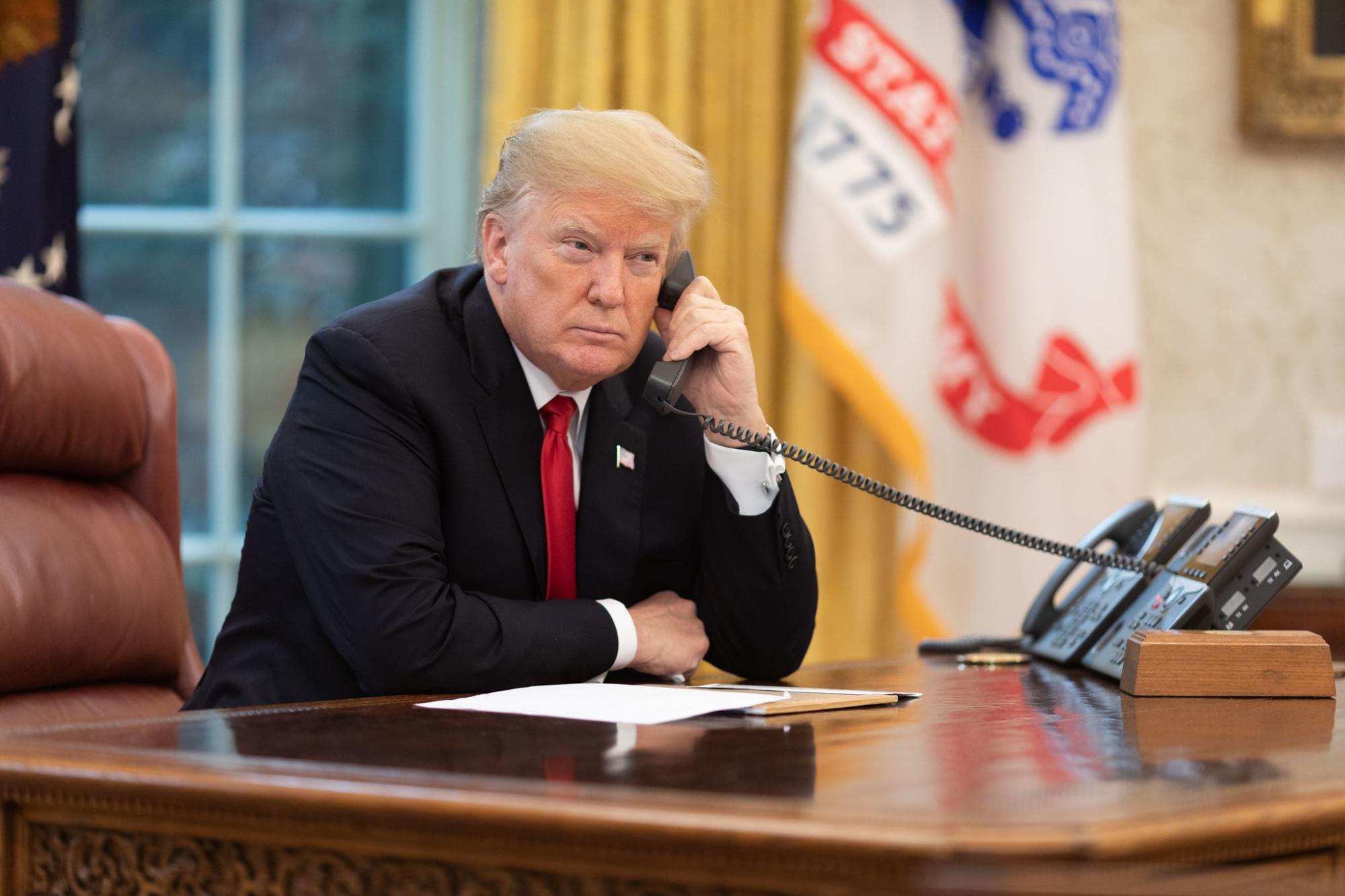
Photo: Donald Trump (White House Press Service)
“At this moment, Russia wants to get it, but they will want to get ended, and all of a sudden they want, and Ukraine will want to get ended, and all of a sudden they won't. We have to get them on the same page,” he added.
Trump also stated that the US administration is working with Europe on security guarantees to ensure the war does not start again, and that Europe will be a major part of this.
He further noted that there is no time limit for reaching an agreement, saying, the only time limit is when they get it done.
Next meeting in Miami
According to Axios, Ukraine–US negotiations are set to continue this weekend, likely in Miami. An unnamed US official told the outlet that working groups and military personnel will be involved in the discussions, with the parties reportedly working with maps.
Key takeaways from the Berlin negotiations – Zelenskyy
After midnight, President Zelensky responded to journalists’ questions about the progress of the negotiations and the next steps. Key statements include:
- Christmas ceasefire: Chancellor Merz proposed the idea. The US supports it. I fully support it. Any ceasefire, we will support.
- Referendum: We are not discussing a referendum at this time. We are trying to do everything possible to avoid complicating the already difficult lives of Ukrainians due to the war.
- Peace plan: We are counting on five documents, some of which pertain to security guarantees approved by the US Congress. Once the documents are finalized or close to their final version, we will meet with Trump.
- Territories: This remains one of the key issues; there is no consensus yet.
- Donbas: We do not want to cede our Donbas. The Americans propose a free economic zone, which does not mean under Russian control. Neither de jure nor de facto will we recognize the occupied Donbas as Russian.
- Reparations loan: $210 billion – a game-changer. It represents a security guarantee for Ukraine. Plan A – end the war; Plan B – continuation of Russian aggression. Under Plan B, Ukraine is counting not only on bilateral aid packages from countries but also on at least €40–45 billion per year in financial assistance.
- Conversation with Trump: It was a general discussion with all leaders. Primarily, there was a briefing by the US presidential team, after which I spoke on behalf of the entire Ukrainian team, sharing the steps we had worked out and our vision going forward.
- Next steps in the negotiations: Today and tomorrow, we will finalize the documents. The US will hold consultations with Russia in the coming days, followed by discussions with Trump. After that, our teams will meet in the US, possibly this weekend. Subsequently, a meeting with Trump may take place.
Territorial issue – The most complex challenge
As repeatedly stated by participants in the negotiations, both from Ukraine and the US, one of the most difficult issues is territorial control.
Russia wants Ukraine to withdraw from the Donetsk region; these signals were communicated to us via the US. In this way, Russia aims to achieve its objective of fully occupying Donetsk without significant fighting.
Ukraine, however, stands firm – ceding territory is unacceptable. President Zelensky even noted that this issue could be decided via a referendum. The US, acting as a mediator and seeking a compromise, has proposed creating a free economic zone, which Russia frames as a demilitarized zone. However, even this option would require Ukraine to withdraw from its currently controlled part of the Donetsk region. As a potential compromise, Ukraine believes that if its forces withdraw, Russia should act symmetrically and also pull back in the Donetsk region.
Additionally, Russia has indicated it might support the creation of a demilitarized zone - though, of course, they do not intend to withdraw itself. Instead of its regular armed forces, the aggressor promises to deploy only the Russian National Guard and police in the area.