IMF comments on potential use of frozen Russian assets for Ukraine

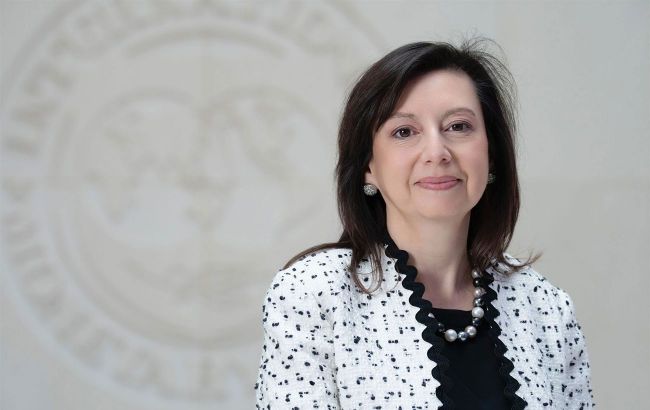 Julie Kozack, Director of the IMF Communications Department (photo: imf.org.en)
The International Monetary Fund is closely monitoring discussions on the possibility of using frozen Russian assets to finance Ukraine, according to a statement by IMF Communications Department Director Julie Kozack.
According to her, the IMF welcomes the robust discussions in Europe regarding support for Ukraine and the aim of doing so "in the context of ensuring (Ukraine's - ed.) debt sustainability."
The Fund is closely monitoring these discussions, which include options for using frozen Russian assets.
"IMF Staff and management have consistently advised that any action relating to the use of Russia's immobilized assets should respect international and domestic law and not undermine the functioning of the International Monetary System. And we're assured that European policymakers appreciate these important considerations," Kozack said.
At the same time, the IMF representative noted that the Fund's resources are intended to support the balance of payments with the goal of restoring growth and are not directly linked to the repayment of any outstanding debts.
Reparation loan for Ukraine
The European Commission has proposed providing Ukraine with a reparation loan of 140 billion euros.
It is envisioned that the credit would be backed by Russian assets frozen by the EU after the start of the full-scale invasion of Ukraine.
For Ukraine to receive such a reparation loan, the consent of all EU member states is required.
However, the initiative is being blocked by Belgium, the country that holds the largest share of frozen Russian assets.
Belgian Prime Minister Bart De Wever argues that the EU's plan to use frozen Russian assets to finance Ukraine could have serious economic and geopolitical consequences.
Belgian Foreign Minister Maxime Prévot stated that the EU's proposal for a reparation loan for Ukraine does not meet his country's requirements.
He reminded that Belgian authorities want other EU countries to cover all legal costs that may arise if the decision on the reparation loan comes into force.
Belgium also expects guarantees that EU countries will quickly allocate the necessary funds should any have to be returned to Russia.
European Commission President Ursula von der Leyen said that the Commission has prepared a proposal for a reparation loan backed by Russia's frozen assets for Ukraine. She noted that it takes into account Belgium's previously expressed concerns.
Von der Leyen proposes that a simple majority of EU members adopt the decision to use frozen Russian assets to support the Ukrainian state, rather than by unanimous vote.