IAEA’s Grossi warns Trump against Iran deal without inspections

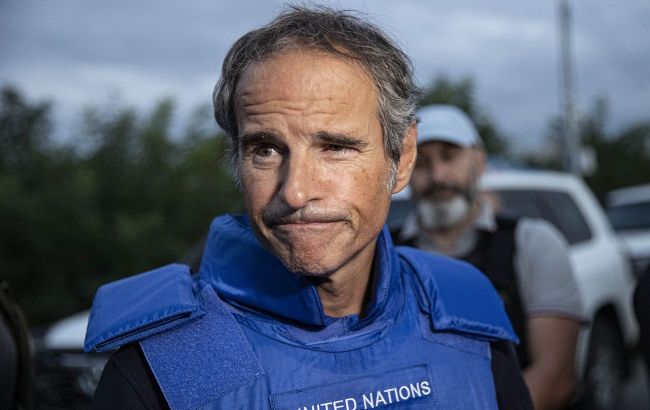 IAEA Director General Rafael Grossi (Photo: Getty Images)
Any nuclear deal between the US and Iran will turn into an illusion if international inspectors are not involved in the process. Without strict oversight, Tehran's promises carry no weight, according to an interview with IAEA Director General Rafael Grossi to The Telegraph.
Peace agreements on paper do not guarantee security, Grossi said. Only his agency can provide an objective picture of what is happening at Iran's closed facilities.
"The fact that, without verification, any agreement is no agreement. It's an illusion of an agreement," the head of the IAEA explained.
Grossi emphasized that the IAEA thoroughly understands every nuclear facility in Iran, which enables it to ensure complete impartiality. If the parties try to negotiate in private, the world will not receive genuine guarantees. Grossi doubts that any mechanism other than IAEA inspections can verify compliance with obligations.
Trump's plan and threats of military invasion
The IAEA chief also criticized the possibility of forcibly removing enriched uranium from Iran. Grossi acknowledges that the US military has the resources to do so, but physically removing the fuel is a technical nightmare.
A military operation carries colossal challenges. It is not just about entering a facility, but also about safely handling dangerous substances.
The main problems with a forceful scenario, according to Grossi:
- Complex logistics: manipulating and moving radioactive materials is extremely delicate;
- Structural damage: buildings become unstable after bombings, blocking access to storage sites;
- Proliferation risks: Any mistake during an attack could trigger a disaster.
"Nuclear domino": who is next in line for the bomb
The IAEA's biggest fear is a domino effect nuclear arms race. Countries are increasingly considering their own nuclear shield, which could lead to a dangerous era of fragmentation.
Grossi highlighted several states where discussions about their own weapons are already underway:
- Poland, South Korea, and Japan (actively discussing development);
- Türkiye, Saudi Arabia, and Sweden (considering such a possibility).
"There is talk about ‘friendly proliferation’. There are all these things which fill me with concern because I believe that a world with 20 nuclear weapon states or more would be extremely dangerous," the IAEA director said.
What is known about Iran's enriched uranium
Iran's nuclear program and the more than 400 kg of enriched uranium are the main topics of negotiations between Washington and Tehran. Trump claims that he will definitely take all the nuclear dust using excavators to the US.
At the same time, Tehran insists that enriched uranium cannot even be discussed as part of the negotiations. They have no intention of handing over the uranium to the US.
Meanwhile, Beijing proposes meeting in the middle: take the Iranian uranium to China. Or dilute it to a state where it can only be used for powering nuclear power plants, not for weapons.