Germany's Merz urges Poles to stand with Ukraine

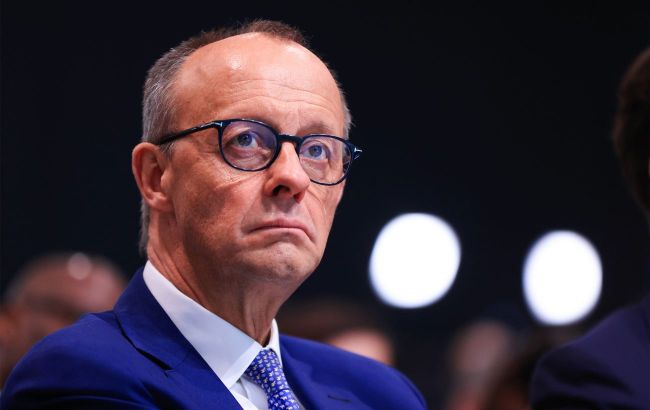 Photo: German Chancellor Friedrich Merz (Getty Images)
German Chancellor Friedrich Merz, speaking at the Ukraine Recovery Conference in Gdańsk, Poland, clearly explains why Europe stands with Ukraine and draws a parallel with Germany’s postwar reconciliation with Poland.
Merz addresses Polish people
In his speech at the conference, which Ukrainian President Volodymyr Zelenskyy did not attend due to a conflict over historical issues, Friedrich Merz began by referring to German-Polish reconciliation.
Addressing Polish Prime Minister Donald Tusk, the chancellor recalls that it was here in Gdańsk, 87 years ago, that World War II began.
"35 years ago, Germany and Poland signed their treaty of good neighborhip. This anniversary is a landmark of German-Polish relations," the chancellor states.
He also thanked the Polish people for the fact that, following the tragedy of World War II, the two countries were able to achieve peace and good neighborliness.
"For 35 years, Poles and Germans have proved even after the outrageous crimes Germans committed in Poland and to the Polish people between 1939 and 1945, peace, good neighborhood, and friendship are possible. I'm deeply grateful to the Polish people for this," says Merz.
Why Europe supports Ukraine
The German chancellor emphasizes that European countries support Ukraine not only for the sake of security, but also to defend freedom.
"And today, the big picture is the following. As Europeans, we stand shoulder to shoulder not just to defend security or defend prosperity on our continent. We are standing shoulder to shoulder to defend freedom on our continent. And that is why we are standing shoulder to shoulder with Ukraine," Merz states.
Conference in Gdańsk and why Zelenskyy does not attend
Today, June 25, the Ukraine Recovery Conference 2026 kicked off in Gdańsk, Poland.
The event will last two days and bring together up to 5,000 participants—heads of state, government representatives, representatives of international financial institutions, and business leaders.
The Ukrainian delegation is led by Ukrainian Prime Minister Yulia Svyrydenko, instead of President Volodymyr Zelenskyy, who declined to attend.
The crisis in Polish-Ukrainian relations began after Ukrainian President Volodymyr Zelenskyy granted a Ukrainian military unit the honorary name of the Heroes of the Ukrainian Insurgent Army (UPA).
Polish authorities sharply criticized this decision, and Polish President Karol Nawrocki stripped Zelenskyy of the Order of the White Eagle.
However, the Polish government described Zelenskyy’s decision not to attend the conference as the right one.
Polish Prime Minister Donald Tusk called it a gesture aimed at de-escalating tensions and acknowledged that unnecessary emotional tension had recently arisen between the presidents of the two countries.