France considers stationing 6,000 troops in Ukraine

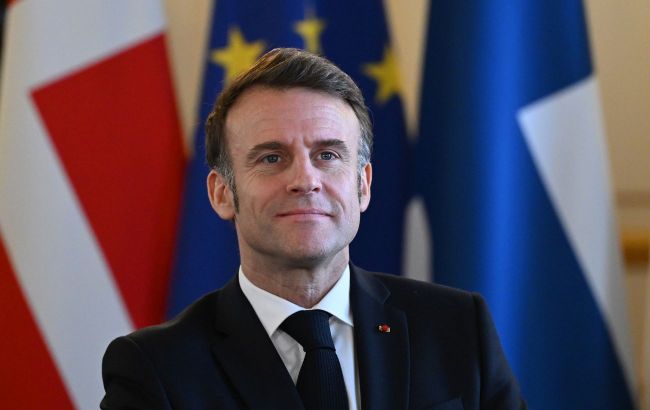 Photo: French President Emmanuel Macron (Getty Images)
French President Emmanuel Macron informed parliament of a plan to deploy 6,000 French troops to Ukraine after the conclusion of a peace agreement, reports Le Monde.
According to the media, a closed meeting was held at the Élysée Palace on January 8, attended by ministers, the country's military leadership, heads of parliamentary chambers, and leaders of factions and parties.
According to the participants, Macron presented confidential details of France's contribution to security guarantees for Ukraine and stressed that these forces would not be operating on the front lines.
Chief of the Defense Staff Fabien Mandon explained that these would not be deterrence or stabilization forces, but “forces to support the Ukrainian army.”
Macron noted that foreign troops would be stationed “far from the front line” and would be involved in escorting and training Ukrainian units.
Mathilde Panot, leader of La France Insoumise, said that France could send up to 6,000 soldiers to Ukraine.
At the same time, she questioned the reliability of American security guarantees.
“There is no reason to trust Donald Trump,” she said.
Part of the opposition, including the left-wing La France Insoumise, the Communists, and the right-wing National Rally, insists that the possible deployment of troops should only take place with a UN mandate.
Representatives of the right wing noted that in the event of an official request from Kyiv, an international mandate may not be mandatory.
French Defense Minister Sébastien Lecornu said that separate debates on this issue will be held in parliament within two to three weeks.
Security guarantees for Ukraine
On January 6, talks were held in Paris between Ukraine, the US, and the Coalition of the Willing countries on security guarantees for Ukraine as part of a peace agreement.
Ukraine's allies plan to take on real binding commitments that will apply in the event of new Russian aggression. These provisions are included in the draft Paris agreement on security guarantees for Ukraine.
Representatives of Ukraine and the US within the Coalition of the Willing also agreed on specific steps to implement and monitor the ceasefire, but the final progress of these agreements depends on the position of Russia, which has not yet confirmed its readiness to implement them.
France and Germany have long expressed their readiness to send their troops to Ukraine after the ceasefire.
Germany has expressed its willingness to contribute to a possible ceasefire in Ukraine, but without committing to sending troops.
Belgium is ready to provide aviation and naval forces to ensure Ukraine's security after the war ends.
Canada also allows for the deployment of its troops in Ukraine in the event of a peace agreement. The country's initial contribution could be the training of Ukrainian military personnel.
Lithuanian Defense Minister Robertas Kaunas also said that once peace is achieved, his country could send several hundred of its troops to Ukraine.
Spanish Prime Minister Pedro Sánchez has, for the first time, allowed Spanish troops to participate in a peacekeeping mission in Ukraine after a ceasefire as part of a potential peace agreement.
Romania will not send its troops to Ukraine, but is ready to contribute to security guarantees by strengthening security in the Black Sea.