EU explains whether simultaneous accession of Ukraine and Moldova possible

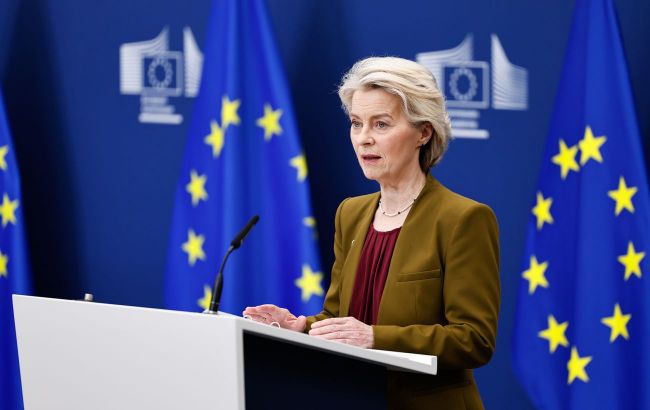 Photo: European Commission President Ursula von der Leyen (Getty Images)
The EU is shifting to an individual approach toward Ukraine and Moldova. From now on, the pace of progress toward membership will depend on the results achieved, according to European Commission President Ursula von der Leyen, following the Moldova–EU summit held on June 22.
According to the head of the European Commission, once the negotiation process begins, each candidate country is responsible for its own progress toward membership.
"After the opening of the first cluster, each candidate country is responsible for itself, because they must fulfil reform commitments, and these reforms differ for different candidate countries," von der Leyen said.
When asked about the further opening of negotiation clusters, the President of the European Commission stressed that she was assessing Moldova’s prospects specifically, as the press conference was dedicated to the Moldova–EU summit.
At the same time, she emphasized that the European Union will continue to adhere to the principle of assessing progress based on achieved results, rather than political declarations or arbitrary timelines.
"Today I am only talking about Moldova, and I believe that the merit-based process benefits Moldova much more than the 'as soon as possible' concept. Because 'as soon as possible' says nothing, in relation to what? Instead, a merit-based process says it very clearly," she said.
Von der Leyen added that at the core of accession negotiations lies a merit-based process, which is much better for Moldova, because then they can deliver results and we can fulfill our promise.
Ukraine’s EU accession
On June 15, 2026, Ukraine officially opened the first negotiation cluster, Fundamentals, as part of its European Union accession process. It covers the rule of law, the judiciary, fundamental rights and freedoms, and the functioning of democratic institutions.
Overall, to gain EU membership, Ukraine must complete six negotiation clusters and align its national legislation with European standards.
The opening of the remaining five clusters is expected in the second half of 2026. At the same time, further progress in the negotiations will depend on the implementation of reforms and the support of all EU member states.
For more details on possible obstacles and the positions of member states, read the RBC-Ukraine material, Ukraine's 2030 EU goal: What could slow it down.