Earth will feel the collision of two supermassive black holes: When will it happen

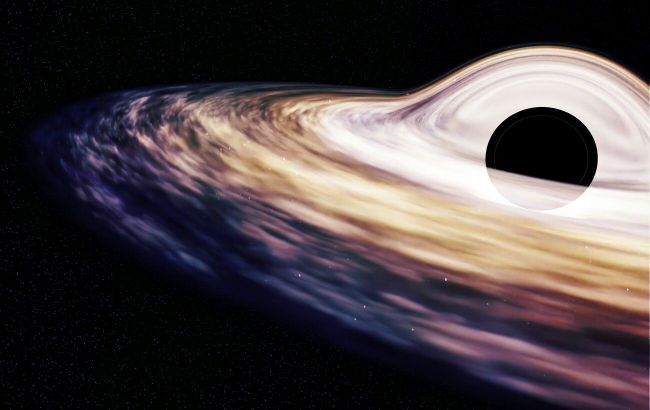 Astronomers prepare for a cosmic mega-explosion (photo: Unsplash)
An international team of astronomers has discovered that the intensely bright blazar in the galaxy Markarian 501, located 500 million light-years from the Solar System, is actually a system of two supermassive black holes, according to a scientific study published in the journal Monthly Notices of the Royal Astronomical Society.
Unexpected discovery of a double jet
Blazars are among the brightest objects in the universe. They are active galactic nuclei powered by supermassive black holes and emit powerful jets of high-energy radiation toward Earth.
For years, astronomers observed a strange change in the orientation of the jet in Markarian 501, something that could not be explained by conventional models.
To solve the mystery, researchers from the Max Planck Institute for Radio Astronomy analyzed more than 83 datasets from the international Very Long Baseline Array network of radio telescopes.
The results showed that instead of one large jet, there are actually two separate jets. The second jet twists in a counterclockwise loop around the center.
This means that each jet is powered by a separate giant black hole, with masses ranging from 100 million to 1 billion times the mass of the Sun.
Read more: Pentagon declassifies 72 new UFO files: what the military recorded
Einstein ring
In June 2022, astronomers observed a unique event: the cosmic giants aligned in a perfect line, allowing the enormous gravity of the first black hole to bend the light from the second black hole's jet.
The phenomenon produced an almost perfect circle known as an Einstein ring. This gravitational lensing effect provided definitive evidence that the system contains a pair of black holes.
The black holes are now astronomically close to one another:
- They complete a full orbit around each other in a clockwise direction approximately every 121 days.
- The distance between them is 250 to 540 times greater than the distance between Earth and the Sun.
- They are steadily moving closer together and, according to scientists' calculations, will collide and merge into a single enormous black hole in less than 100 years.
What does this mean for science?
When the inevitable merger occurs, it will trigger an enormous burst of gravitational waves — powerful ripples in the fabric of space-time.
These waves will be far stronger than any similar events humanity has detected before.
Current Earth-based detectors, as well as future space observatories, will be able to clearly capture the signal. This will give scientists a unique opportunity to study in unprecedented detail the nature, evolution, and internal properties of supermassive black holes.