Dutch intelligence assesses when Russia could move toward conflict with NATO

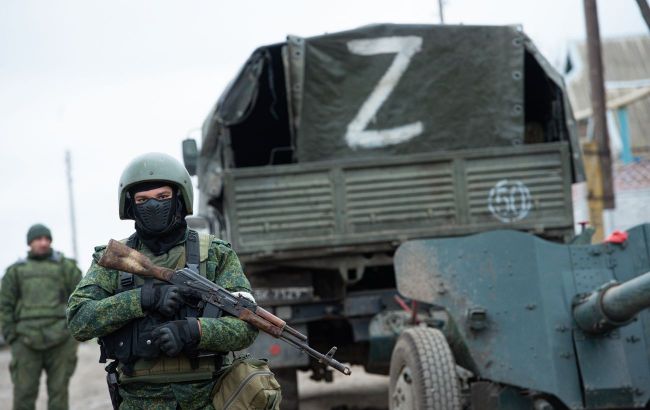 Photo: Russian military personnel (Getty Images)
The document notes that while the war in Ukraine continues, a full-scale conflict with the Alliance remains unlikely. At the same time, Moscow is already preparing for a possible confrontation, including considering scenarios of limited territorial actions aimed at politically destabilizing NATO.
Analysts emphasize that the war against Ukraine has existential significance for the Kremlin, as it concerns not only territory but also Russia’s role in the global order and the preservation of the current political regime.
Despite significant losses, Russia continues to rebuild and expand its armed forces. The main focus is on personnel recruitment, weapons production, and ammunition stockpiling. Particular attention is being paid to the development of air defense systems, long-range weapons, and unmanned technologies.
The report also states that combat experience gained in the war against Ukraine is increasing the effectiveness of the Russian military.
In addition, Russia has intensified hybrid influence methods in Europe, including sabotage, espionage, and information operations. After a temporary decline in 2024, the intensity of such activities is rising again.
Analysts believe that amid weakening arms control mechanisms and the development of new technologies, security risks for Europe continue to grow.
Europe is preparing for new threats from Russia
The Baltic and Northern European countries are increasingly recording signs of possible provocations from Russia.
In particular, Moscow has attempted to test NATO’s response through scenarios such as the so-called Narva Republic in Estonia, under the pretext of "protecting Russian-speaking populations."
Against this backdrop, Russia continues its pressure rhetoric toward regional countries. For example, Secretary of the Security Council of the Russian Federation Sergey Shoigu has threatened Finland and the Baltic states, citing a "right to self-defense" in connection with drone flights.
At the same time, Estonia is preparing for possible provocations and is already increasing defense spending beyond NATO-recommended levels.
Poland is also working through scenarios of a potential conflict, including an attack on the Suwalki Gap and hybrid operations involving drones and infrastructure sabotage.
Sweden does not rule out that Russia could attempt to seize one of the islands in the Baltic Sea in order to test NATO’s response.