On brink of revolt? Why Russian elites and society are losing faith in Putin


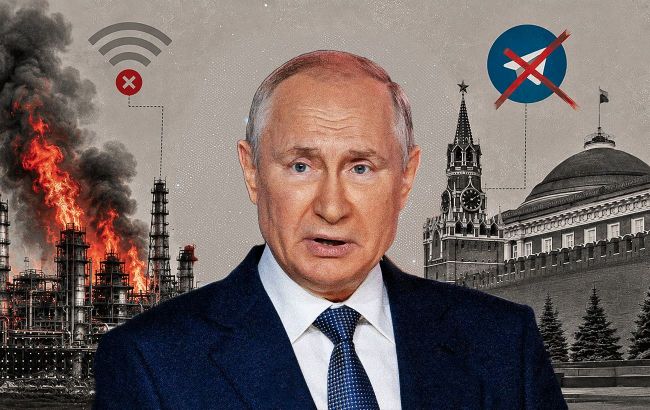 Russian President Vladimir Putin (collage by RBC-Ukraine)
Z-propagandists and Instagram celebrities are openly criticizing the Kremlin. The Russian army's "victories" are becoming a subject of ridicule, while the economy continues sliding downward.
What is happening inside Russia now, why signs of crisis are appearing only now, and whether this could lead to bigger consequences — read in the RBC-Ukraine article.
Key points:
-
Discontent is finally growing in Russia. By spring 2026, the opinion that "life cannot go on like this" is taking shape in Russia, uniting Z-patriots (ultra pro-war supporters), elites, and previously apolitical ordinary citizens against the backdrop of prolonged war.
-
Economic and military deadlock. For the first time since 2023, economic decline has been recorded due to exhaustion of reserves, while the lack of significant battlefield victories has become obvious to everyone.
-
Crisis of social contract. Total bans, internet shutdowns, and Ukrainian deep strikes (long-range attacks deep inside Russian territory) on Russian rear areas have destroyed the comfortable everyday life of ordinary people, provoking public criticism of authorities.
-
Future of the regime. Analysts predict two main scenarios — further tightening of restrictions following the Iranian model, or the beginning of a new Time of Troubles (a period of internal chaos and power struggle in Russian history). Commentators note that Russian elites are beginning to see the removal of Putin as a way to save the system itself.
"I hope they will pay for this with their lives. Otherwise, this is complete f****** madness," one popular Z-channel (pro-war Russian Telegram channel) commented on Zelenskyy's decree allowing the Victory Day parade to take place in Moscow on May 9.
Other propagandists reacted in a similar tone, with a general message that "demilitarization of Ukraine has reached a point where Kyiv now decides whether we hold a parade or not."
Complaints from Russian ultra-patriots demanding to "fight for real" and accusing Putin of not being bloodthirsty enough are, of course, nothing new. Spiritual leader of this movement, Igor Strelkov-Girkin, received four years in a penal colony because of such narratives.
But by April-May 2026, as many observers in Russia and especially abroad note, a consensus is emerging inside the aggressor state around the idea that "life cannot go on like this." And this view is shared, each in their own way, by radical Z-propagandists, representatives of Russian elites, big business, and even politically indifferent ordinary people who, during the fifth year of full-scale war, had remained "outside politics."
Crisis has come
Speculation about the rapid and inevitable collapse of Russia has circulated in the Ukrainian information space since 2014, following the first wave of Russian aggression. Many argued that any empire, especially one as internally fragile as Russia, would inevitably fall apart.
People celebrated any signs of national self-awareness among groups like Bashkirs or Erzya (ethnic minorities inside Russia), drawing colorful maps showing dozens of new states appearing on Russian territory.
Maps became more numerous, deadlines kept moving further: 2017, 2018, 2019… and so on until full-scale invasion in 2022.
After the first wave of assault was repelled, new hope appeared — that this time, the empire had truly bitten off more than it could chew and was doomed to suffocate under sanctions. That did not happen either. Instead of quickly tightening the noose around the aggressor's neck, West only slowly tightened the scarf around it.
Even Prigozhin's mutiny in 2023 failed to trigger centrifugal processes, although that was probably the closest Russia came to collapse.
But now the number of symptoms and publications about them has become too large to ignore.
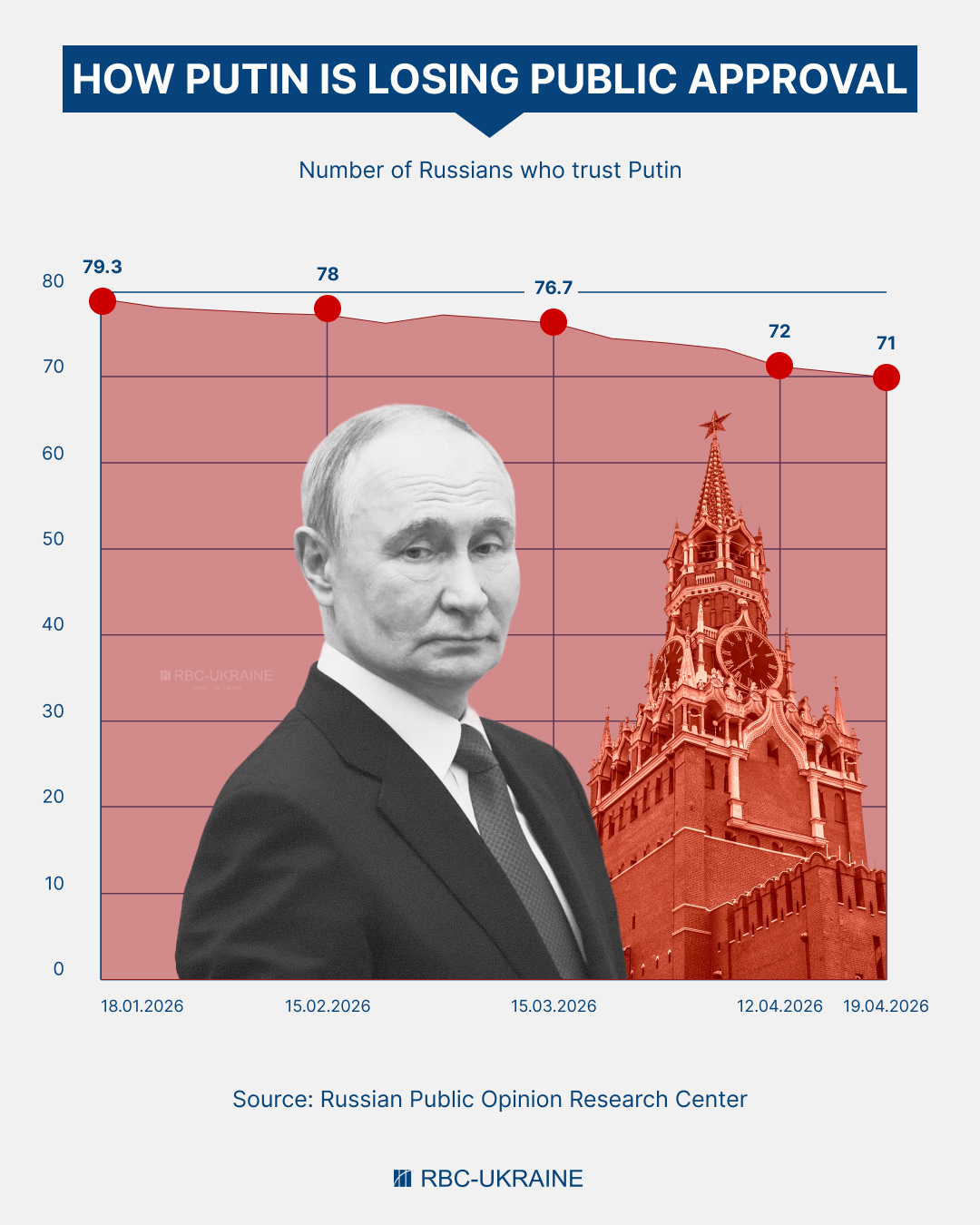 Putin's approval rating remains high, but a negative trend is becoming obvious (infographic: RBC-Ukraine)
Several causes of crisis are highlighted. Among the most obvious is the economy, which is visibly suffering from sanctions and a massive imbalance in military production. The military-industrial complex became the only engine of the economy, while still providing GDP growth and wages even higher than before the full-scale invasion.
A major gift for the aggressor became Trump's Iranian adventure, which caused a rapid rise in oil prices. It became a very "black swan" Kremlin strategy — endure pressure, outlast the West, and wait for something unexpected to happen. Swan arrived, but Ukrainian Defense Forces quickly clipped its wings — and an increase in oil revenues turned out far smaller than expected. Meanwhile, the budget deficit already exceeds the annual target by one and a half times.
That is why the atmosphere during the April public economic meeting with Putin noticeably differed from usual. Authorities had to admit economic decline in the first quarter of 2026, for the first time since 2023.
Of course, the president immediately found "objective reasons" for this — for example, the fact that the current year had fewer working days than the previous one (February 23, a public holiday in Russia, fell on Monday this year, apparently because of cunning Anglo-Saxons).
One step below the tsar, where top boyars (senior Kremlin officials) stand, more realistic explanations are being voiced — and importantly, voiced publicly. For example, the minister of economic development said growth has ended because "economic reserves have been exhausted."
Unfortunately, this alone does not mean fewer missiles and drones will be produced. Russia lives by the logic of an old Soviet joke about rising vodka prices: "Dad, does this mean you will drink less now? — No, son, this means you will eat less." As long as there is last ruble left in the budget, it will be directed — or at least authorities will try to direct it — toward military goals.
But the problem is that military goals are not going very well either. Repeated "captures" of Kupiansk were probably mocked even more inside Russia than in Ukraine.
As opposition-minded Russian commentators note, the state narrative portraying the war against Ukraine as a new Great Patriotic War (Russian term for World War II) eventually backfired on authorities themselves — once the current war became longer than WWII for the Soviet Union several months ago.
And while grandfathers, whose portraits are carried on sticks during Victory Day marches, captured Berlin, their grandsons still cannot capture Mala Tokmachka (a small village in Ukraine's Zaporizhzhia region).
At the same time, Ukraine has started striking more painfully, with long-range attacks reaching deeper and deeper into Russian territory. And if, as the Kremlin insists, "special military operation is going strictly according to plan," then what kind of plan is this?
Frankly speaking, thought itself is not complicated, but it turned out Russian "deep people" (ordinary loyalist population) needed more than four years to arrive at it.
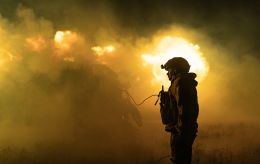
Probably the final straw was the fact that even most isolated ordinary citizens, those supposedly not interested in politics, can no longer ignore the smell from oil refineries burning a thousand kilometers away from the frontline.
Collapse of the social contract
And all this is happening against the backdrop of more and more restrictions introduced under the slogan of "strengthening security." In reality, however, restrictions keep increasing while security keeps decreasing. This breaks the regime's compromise with the population, described as: "You cannot oppose war, but you are allowed to stay outside it."
Constant mobile internet shutdowns, forced introduction of Max messenger instead of familiar Telegram, intensifying fight against VPNs — the state has directly invaded the comfortable world of apolitical public, which until now somehow managed to live without worrying about all those Pechenegs and Anglo-Saxons (Russian propaganda clichés about external enemies).
That is why voices expressing dissatisfaction have started appearing — from Instagram celebrity Viktoria Bonya to Z-blogger Ilya Remeslo. At first, it seemed the system would react as usual.
State TV propagandist Vladimir Solovyov, giant of patriotic schizophrenia, called Bonya a "worn-out whore," while Remeslo was quickly sent to a psychiatric hospital. But — surprisingly — Solovyov soon apologized, while Remeslo left the hospital and continued criticizing the regime and even — unbelievably — the tsar himself.
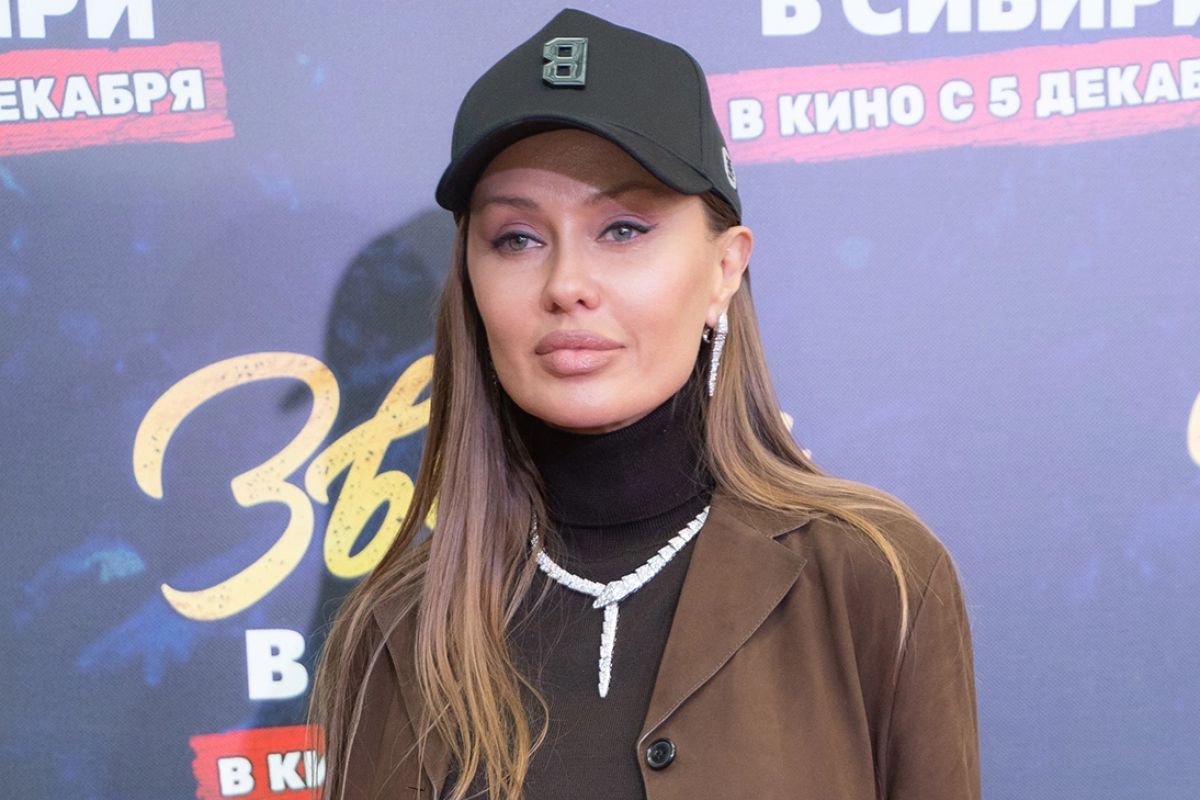 Viktoria Bonya (photo: vot-tak.ru)
"What Remeslo writes every day about the inevitability of Putin's end — and nothing happens to him... This means that the idea that Putin must be replaced is becoming very important. Within the elite, opinion is forming that to save the regime, Putin must be removed. Remeslo reflects the imperial tradition that to save the empire, you must remove Putin. Russian tradition does not forgive a tsar or a dictator for losing a war," one of the leaders of the Russian opposition, Garry Kasparov, told RBC-Ukraine.
Others also say things are clearly not fine inside the Russian elites. In particular, there is growing confrontation between FSB (Russia's Federal Security Service), whose answer to every problem is total bans, and the domestic political bloc of the Presidential Administration.
Latter still has to prepare for autumn elections — yes, paradoxically, this procedure still exists in Russia, and authorities even prepare for it. Elections have no real meaning since the result is always known in advance, but they still serve a formal purpose — making sure everything appears smooth. FSB, which has completely lost all limits, interferes with this. Moreover, if everything turns into endless bans, then there is simply no place left for politics, even in the surrogate form it existed in Russia in recent years. And therefore no need for its political "curators."
Big Russian business, which evacuated from the West after sanctions, also dislikes the unlimited strengthening of FSB influence.
That is why current "freedoms," such as statements by Bonya and Remeslo or publication of Putin's approval ratings slowly but steadily declining, may actually reflect this internal elite struggle. And yes, it should not be forgotten that in a repressive country, opinion polls are roughly the same as elections.
"The issue is not so much repression itself as repression without purpose," a former senior Russian official wrote anonymously in a column for The Economist.
He further concludes that the situation has reached a dead end. In fact, the most recent analysis is purely descriptive in nature: things are bad and getting worse, the population is dissatisfied, while the leader has completely lost touch with reality and the aura of greatness.
This is good and almost wonderful — but what will it lead to? And will it lead anywhere at all? Roman Anin, editor-in-chief of Important Stories (an independent Russian investigative outlet), sees two scenarios: an Iranian one, where screws are tightened even further, and a new Time of Troubles (a period of internal chaos and power struggle in Russian history), similar to the turmoil that followed the rule of Ivan the Terrible.
The third path is also possible: the population will remain angry, restrictions will continue increasing, Kremlin factions will keep fighting among themselves, and nothing will happen. From people whose most active representatives once stood in line to climb into police vans during protests, such an outcome can also be expected.
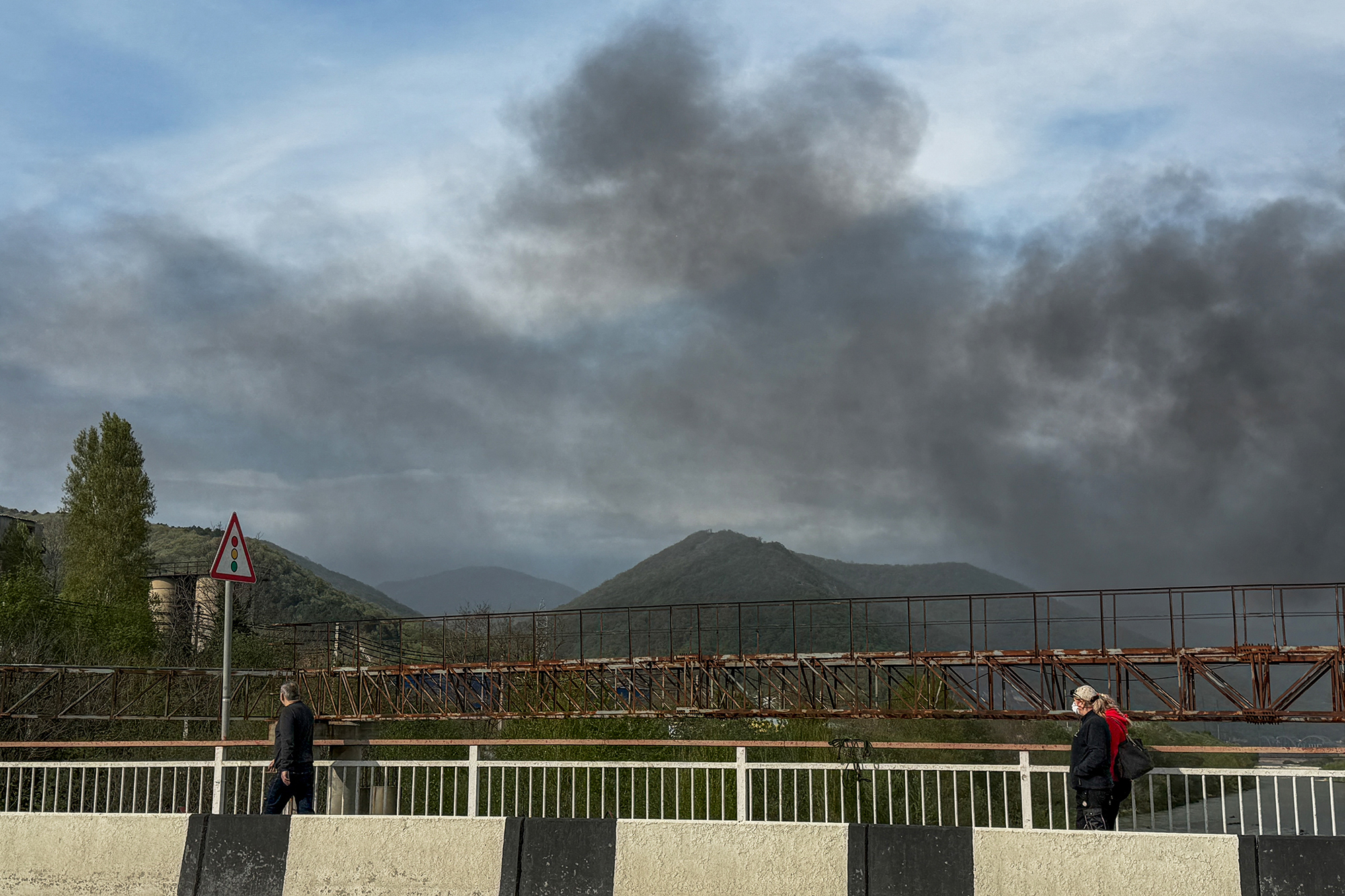 Smoke rises from a burning oil refinery in Tuapse (photo: Russian media)
What is clear, however, is what Ukraine should do — continue pushing the situation further by all possible means. Maybe it will work.
After all, as one Russian political figure once said long ago, "history proves that all dictatorships are temporary." That political figure was Vladimir Putin.
Quick Q&A
Why are people in Russia talking about the crisis only now?
The main reason is the accumulated effect of "fatigue." War has already entered its fifth year, lasting longer than the Great Patriotic War, while promised victories never arrived. Economic reserves are starting to run out, prices are rising, and Ukrainian drones are reaching deep into Russian rear areas, destroying the belief that war is far away and will not affect ordinary people.
How are ordinary people who previously stayed "outside politics" reacting?
Their familiar and comfortable world is collapsing because of everyday problems — from blocking familiar messengers and VPNs to the smell of burning oil refineries. State has broken unwritten deal: "you stay out of politics — we do not interfere with your life." As a result, dissatisfaction has started breaking through even among those who always remained silent.
Is it true that Russian elites want to remove Putin?
Conflict is growing inside the ruling elite. FSB security officials want to ban everything, while political blocs and business circles understand that total restrictions lead to a dead end. According to some opposition figures, part of the elite is beginning to believe that to save the system and empire itself, they may have to sacrifice the leader who is losing the war.
What awaits Russia in the near future?
Analysts see several possible paths: either an Iranian scenario with maximum tightening of restrictions, or the beginning of internal turmoil and struggle for power. However, the possibility also remains that the system will continue to exist in a state of slow decay, where people remain angry but never move to active resistance.