Donbas concessions would not end the war, but fuel Russia's next offensive — NYT

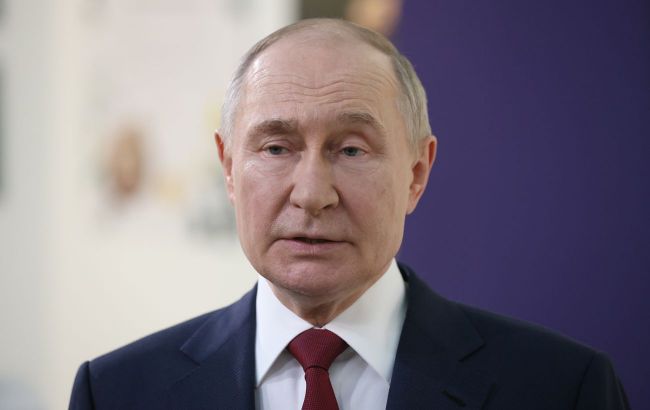 Photo: Russian leader Vladimir Putin (Getty Images)
Any concessions in the Donbas as part of a peace agreement will not end the war, but will instead give Russia time to prepare for a larger-scale offensive deeper into Ukraine, according to The New York Times.
Analysts warn that Russia’s persistent demand to gain full control over the Donetsk region may be more than an attempt to save face.
Experts fear that the surrender of Sloviansk and Kramatorsk would deprive Kyiv of its strongest defensive line in the east.
The part of the Donetsk region that remains under Ukrainian control is one of the most heavily fortified sections of the front, as defensive structures there have been built since 2014, long before Russia’s full-scale invasion.
As analysts note, if a peace plan collapses after the transfer of territory—a scenario many consider quite realistic—Russia would find itself in an ideal strategic position to launch a new invasion deeper into a weakened Ukraine.
Russia wants the Ukrainian Armed Forces to leave Donbas
Earlier, Ukrainian President Volodymyr Zelenskyy said that the territorial issue, particularly regarding Donbas, is key. It was discussed by the delegations of Ukraine, Russia, and the United States during talks in Abu Dhabi on January 23–24.
Russian leader Vladimir Putin is demanding that Ukrainian troops withdraw from Donbas in order to conclude a peace agreement to end the war. This is one of Russia’s key demands.
At the same time, the Institute for the Study of War notes that Russia’s territorial and political demands are far broader than the Donbas-focused statements the Kremlin presents to Western audiences.
According to media reports, during the Abu Dhabi meeting, the Ukrainian and US delegations discussed the deployment of neutral peacekeeping forces in the occupied part of the Donetsk region.