Don't miss February 28 planetary alignment, next event comes in 2034

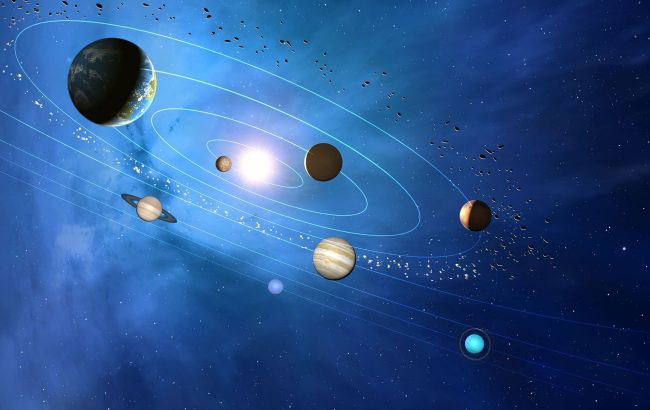 How to see the planet parade on February 28 (photo: Getty Images)
On February 28, six planets — Mercury, Venus, Jupiter, Saturn, Uranus, and Neptune — will align in a single line across the evening sky. Four of them will be visible to the naked eye. However, the observation window will last only a few dozen minutes.
RBC-Ukraine explains what is known about this planet parade and how to observe it, citing NASA and astronomical publications.
What is a planetary alignment and why is it rare
A planetary alignment is a popular term used to describe a phenomenon when several planets are visible in the sky at the same time. Smaller groupings of three to five planets occur relatively often, but seeing six planets simultaneously is rare.
This will be the largest alignment since the seven-planet alignment in February 2025. The next comparable five-planet alignment is expected only in late October 2028, while the next six-planet alignment visible after sunset will occur in February 2034. That makes the February 28 event that should not be postponed.
Which planets can be seen and how
Not all six planets will be equally easy to observe. Here is a breakdown from the easiest to the most difficult.
Jupiter is the easiest to spot
Jupiter will be the brightest and most noticeable planet in the planetary alignment. At sunset on February 28, it will appear high in the eastern sky, above the Moon, near the bright stars Castor and Pollux in the Gemini constellation.
It will be almost impossible to miss.
Venus — bright but low
Venus will be the brightest of all six planets. It will be visible just above the western horizon immediately after sunset. Look for a bright star low in the west — that will be Venus.
Saturn — close to Venus
Saturn and Venus will appear grouped together low above the western horizon during evening twilight. Together with Mercury, they will form a noticeable cluster of planets.
Mercury is the hardest to see
Mercury will appear very low above the western horizon in the Pisces constellation shortly after sunset. It will be the most difficult planet to observe, as it quickly sets below the horizon.
Uranus — binoculars required
Uranus will be high in the sky in February 2026, similar to Jupiter. However, it is nearly impossible to see with the naked eye, so binoculars or a small telescope will be needed.
Neptune — only for experienced observers
Neptune will appear low above the western horizon at sunset, near Saturn.
Important: a telescope is required to see it, but start observing after the Sun has fully set. Never point optics at the Sun — this can cause serious eye damage.
When and where to watch
The best viewing window opens about 30 minutes after local sunset.
Where to stand:
-
an open space with a clear western horizon
-
away from city lights
-
a high point — a hill, roof, or open field
The planets will appear most closely grouped at slightly different times depending on the city. For most locations, the peak is February 28, but in some cities the best view may occur on March 1–2.
What to bring:
-
binoculars — for Uranus and attempting to spot Neptune
-
telescope — for Neptune
-
a stargazing app, such as Star Walk 2 or similar
Realistic scenario: what you’ll actually see
The main challenge is that four of the planets are close to the Sun and will be visible only briefly in bright twilight.
A realistic scenario for most observers:
-
Jupiter — everyone will see it
-
Venus — most people
-
Saturn — those who get outside on time
-
Mercury — very few
-
Uranus — only with binoculars
-
Neptune — only experienced astronomers with a telescope
Even seeing just a few planets will still be an unforgettable experience — a reason to stop, look up, and remember your place in the Solar System.
Bonus: the Moon will be nearby
The Moon, about 90% full, will also be in the sky, appearing very close to Jupiter. This will create an especially beautiful sight.
February 28 is the perfect reason to go outside after sunset and look up. Even if you only see Jupiter and Venus, that’s already two worlds of the Solar System in one view.
And if you’re lucky with the weather and the horizon, you might see even more. The next chance like this won’t come until 2034.