China changes mobilization law for first time in 16 years

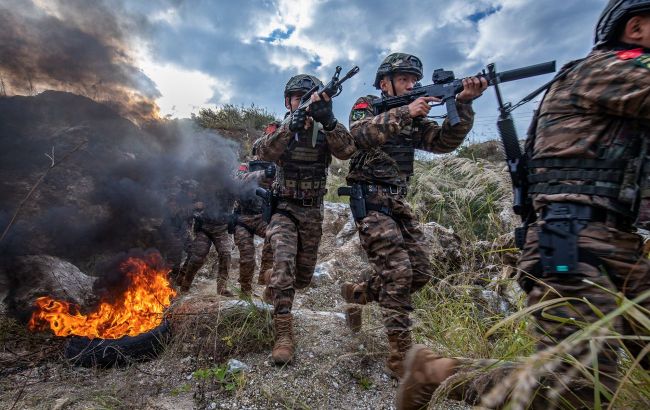 Photo: Chinese military personnel during exercises (Getty Images)
China has revised its mobilization law for the first time since 2010. The new version expands the state's powers in the event of war and allows private individuals' and companies' property to be requisitioned for military needs, Nikkei reports.
China strengthens mobilization law
China's mobilization law, with tougher requirements for Chinese citizens and businesses, will take effect in October. The mobilization is intended to ensure the country's transition from peacetime to wartime and provides for the use of the economy, infrastructure, and human resources for defense needs, the outlet writes.
After mobilization is declared, the authorities will be able to requisition:
- Civilian vehicles,
- Infrastructure facilities,
- Energy facilities.
Private companies and citizens will be required to comply with these orders.
According to Nikkei, the law will also apply to foreign companies in China. They may be ordered to produce goods for state needs in the event of an emergency.
The law also provides for the use of developments in advanced fields for mobilization, including:
- Artificial intelligence,
- Robotics,
- Drones.
The authorities, together with private companies, will be required to create stockpiles of strategically important materials and rare earth metals.
Government agencies will be required to prepare information on all capabilities and technologies that the authorities could use in the event of war.
Tensions over Taiwan
The changes to the law come amid military tensions around Taiwan.
Chinese aircraft and ships regularly conduct exercises near the island.
Thus, on September 29-30, Taiwan's Ministry of National Defense detected:
- Nine Chinese military aircraft,
- Seven military vessels,
- Six Chinese government vessels.
In July, China conducted two-day live-fire exercises in the Taiwan Strait.
Taiwan prepares
Taiwan is also preparing for a possible conflict. In August, the island held the ten-day annual Han Kuang military exercises. Taiwan's Defense Minister Wellington Koo said that the military must be prepared for the possibility that Chinese exercises could escalate into war.
The island's defense spending in 2026 amounts to 3.32% of GDP. The Defense Ministry's budget increased by 25% compared with 2025.
For 2027, the government has proposed increasing defense spending by another 18%.
In December 2025, the US approved a record $11.1 billion arms sale to Taiwan, including:
- 82 HIMARS launchers,
- 60 M109A7 self-propelled howitzers,
- Loitering munitions,
- ALTIUS drones.
However, some US weapons already ordered by Taiwan are being delivered with delays. Taiwan ordered 66 new F-16 fighter jets back in 2019, but has not yet received a single one. US senators said more than $15 billion in military aid has been delayed.
Earlier, RBC-Ukraine reported that US President Donald Trump said that he discussed Taiwan during meetings with Chinese President Xi Jinping this week. At the same time, he refrained from reiterating Washington's position on the island.
In addition, Trump's advisers believe that China could attack Taiwan within five years. This would halt the supply of chips and hurt the US economy and the development of AI.