Can Ukraine really receive NATO's €140 billion pledge?

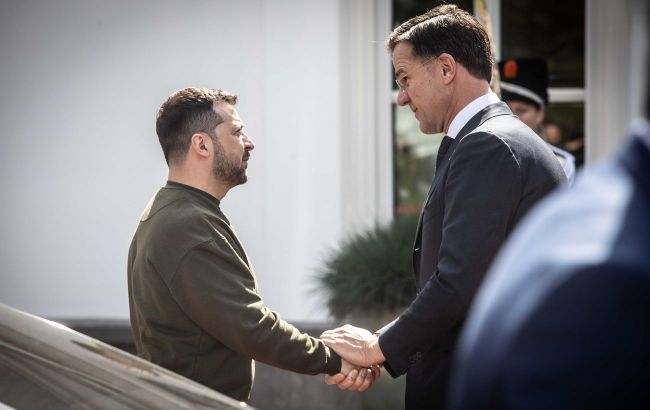 Photo: President Volodymyr Zelenskyy and NATO Secretary General Mark Rutte (Getty Images)
NATO has taken on major commitments to support Kyiv as direct US funding comes to an end. The Alliance plans to allocate €140 billion to Ukraine over 2026 and 2027, but how realistic is it that Kyiv will receive the full amount?
RBC-Ukraine examines the issue, citing Neue Zürcher Zeitung (NZZ).
At this year's NATO summit in Ankara, the Alliance's 32 member states formally committed to the aid target. Ukraine is expected to receive €70 billion in 2026 to fund military equipment, troop training, and broader strategic support.
The same level of funding has been pledged for 2027. The decision reflects the new political reality in Washington.
Trump ends direct funding
Donald Trump has halted direct US funding for Ukraine, leaving European allies to shoulder most of the burden. US Ambassador to NATO Matthew Whitaker said Washington has already done more for Ukraine than any other country.
As a result, Europe must now find the necessary resources on its own. According to NZZ, success will depend on a "fair distribution" of the financial burden among European capitals, but significant disagreements remain.
Who is contributing the most?
Support is unevenly distributed across Europe. Germany and the United Kingdom remain the leading contributors. According to the Kiel Institute for the World Economy, current commitments include:
- Germany has allocated €11.5 billion in its 2026 budget.
- The United Kingdom plans to provide about €4.4 billion.
- Norway has earmarked an impressive €7.6 billion, with 80% designated for weapons.
- Sweden added another €1 billion earlier this year.
Denmark and the Netherlands also remain reliable partners, consistently providing assistance, although their spring aid packages were smaller than previous ones.
Countries lagging behind
Not all of Europe's major economies are increasing their contributions. France, Italy, and Spain continue to trail the leading donors. According to NZZ, their contributions fall short of what would be expected given the size of their economies, creating tensions within NATO.
As of the end of April, only about €10 billion had actually been delivered. If the current pace continues, allies may provide only around €30 billion by the end of the year instead of the pledged €70 billion. The report argues that procurement and logistics will need to accelerate dramatically to meet the target.
Experts also urge caution. Past experience shows that ambitious pledges do not always translate into actual deliveries, and figures from the Kiel Institute highlight that gap.
Over the past four and a half years of the war, European institutions and governments have pledged roughly €400 billion in support. However, Ukraine has received only about €180 billion so far — less than half of the promised amount.
The goal of providing €140 billion over the next two years is ambitious. According to NZZ, achieving it will be extremely difficult without stronger commitments from France and Italy. Europe must demonstrate that it is capable of sustaining support for Ukraine on its own.
Context
As previously reported, the NATO summit took place in Ankara on July 7-8 and was one of the year's key international events.
Allies approved a final declaration calling for higher defense spending and reaffirming their long-term support for Ukraine.
One of the summit's main events was the meeting between Ukrainian President Volodymyr Zelenskyy and US President Donald Trump, after which Trump said US-Ukraine relations were entering "a new beginning."