Billions in exchange for time: Why Trump’s high-profile deal with Iran may fail


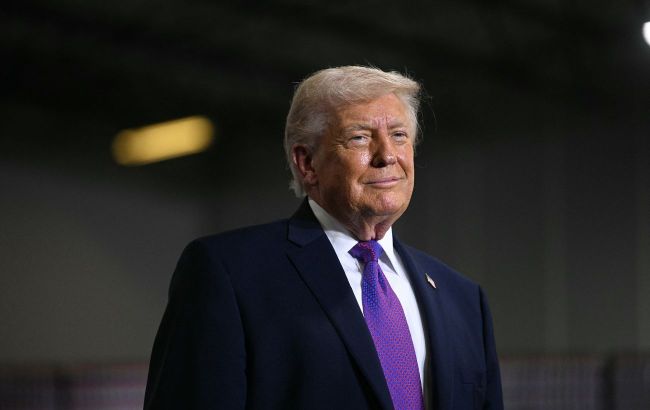 Photo: Donald Trump (Getty Images)
Donald Trump has announced the imminent signing of an agreement with Iran. Although Tehran has this time confirmed the deal, the prospects for lasting peace in the Middle East remain remote.
What exactly the agreement between the United States and Iran entails, and whether Trump has truly managed to "end another war," read in an RBC-Ukraine material.
Key points:
- Peace agreement: Donald Trump said a compromise has been reached between the United States and Iran, mediated by Pakistan.
- Nuclear program: The most contentious issue — the dismantling of Iran’s nuclear capabilities — has been postponed to a second round of talks, putting the entire deal at significant risk of collapse.
- Terms: Iran will resume shipping through the Strait of Hormuz, while the US will lift the naval blockade and unfreeze $24 billion in Iranian assets.
- Temporary ceasefire: The parties will sign a preliminary 60-day memorandum, with the official ceremony scheduled for Friday, June 19.
- Israel’s position: Tel Aviv was excluded from the negotiations, which could push Israel to act independently to ensure its security.
US President Donald Trump said that Washington and Iran have reached a peace agreement. This is not the first such statement from the White House leader. Moreover, it was made on his birthday — essentially as a "gift" to himself. However, this time positive signals are also coming from the other side.
Pakistani Prime Minister Shehbaz Sharif, who is acting as a mediator, confirmed the statement on Twitter (X).
The agreement has also been reported in Iran. According to Iranian Deputy Foreign Minister Kazem Gharibabadi and the Supreme National Security Council, the text of the agreement has been finally finalized. The official signing ceremony will take place on Friday, June 19.
What was agreed and what was not
Initially, the plan is to sign not a full agreement, but only a preliminary 60-day ceasefire memorandum. According to Axios, Iran is expected to immediately resume shipping through the Strait of Hormuz, while the US will lift the naval blockade on Iran.
According to Iran’s Fars News Agency, the memorandum guarantees Iran revenue from the use of the Strait of Hormuz. In practice, this means that Iran would retain some level of control over it. Future management of maritime services in the Strait of Hormuz will be determined by Iran and Oman.
As reported by Shehbaz Sharif, both sides have announced the immediate and final cessation of hostilities on all fronts, including Lebanon.
Iranian outlet Mehr News adds that the memorandum also provides for the unfreezing of $24 billion in frozen Iranian assets.
However, there are no independently confirmed details of the agreement from either the US or Iran. Most importantly, the memorandum does not address the root cause of the conflict.
Why a final agreement is still in question
The US and Iran are expected to work out a solution regarding Iran’s nuclear program at a later stage, after the memorandum is signed. This issue was the main cause of the conflict that escalated in the spring of this year.
At that time, Israel and the US attacked Iran in an effort to eliminate its ability to develop nuclear weapons.
Over the course of 40 days of war, most of Iran’s military and political leadership was eliminated. At the same time, those who replaced them turned out to be even more radical.
Moreover, unexpectedly for the US, Iran gained a powerful lever of pressure on the US and its allies — the ability to block the Strait of Hormuz and thereby influence the global economy, fuel prices, and Trump’s approval ratings.
All of this led to Trump having to unilaterally pause the war and try to find the least damaging exit for himself politically.
At the same time, Iran understands that in the short term at least, time is on its side. Unlike the US, Tehran does not have to take its own approval ratings into account, and the only truly decisive factor for Iran is the state of its economy.
As a result, Tehran dragged out the negotiations for about two months. Eventually, Trump ran somewhat out of patience, and throughout the past week, while talks were still ongoing, the US also struck targets inside Iran.
Why Iran agreed to concessions
Tehran realized that the cost of further delay could outweigh the benefits of maintaining leverage over the Strait.
Despite its demonstrative willingness to play a long game, Iran was forced to lock in an interim result due to the critical exhaustion of its own resources.
Intense US strikes last week, along with the threat of a new full-scale war with Israel — even without US involvement — may have given Iran’s new leadership the impression that the cost of further delay would become too high.
On the other hand, Iran managed to secure a highly favorable two-stage negotiation structure. Tehran immediately receives the lifting of the blockade and access to part of its frozen assets upfront, while the most sensitive issue — its nuclear program — is postponed to a second stage.
Thus, according to ISW, the 60-day ceasefire could serve for Iran as a strategic pause and an opportunity to regroup.
This, in turn, would allow Tehran to enter the next rounds of negotiations from a stronger position. Whether the talks will ultimately succeed remains uncertain.
Implementation challenges
For Iran, the nuclear program is a cornerstone of national security and an ideological foundation of its foreign policy. As Trump has stated, its elimination is a key objective for the United States. How to reconcile these two opposing positions remains unclear.
In addition, third parties will play an important role in future negotiations. Among the key actors is Israel. Even a temporary reduction in tensions between Washington and Tehran is not in Tel Aviv’s interest.
"As of now, there are no real preconditions (for an agreement — ed.), because a credible deal would require Israel’s consent as well. And Israel has been excluded from Trump’s negotiations. As is clear, Israel’s interests are not being taken into account. From this perspective, at the very least, Israel will do everything to make sure it is heard and noticed," said Oleksandr Leonov, executive director of the Center for Applied Political Studies Penta, in a comment to RBC-Ukraine.
Even during the preparation of the memorandum, several issues important for Israel were left off the agenda. For example, the US and Iran did not address Iran’s missile program or restrictions on support for Tehran’s allies such as Hezbollah.
Over the past two months, there have been several rather tense conversations between Trump and Israeli Prime Minister Benjamin Netanyahu. The US president has demonstrated that he has leverage over him, but Israel still retains the ability to act autonomously.
At the same time, despite constant threats and even sporadic strikes, Trump is not ready to escalate fully in order to force Iran to abandon its nuclear program. There are several reasons for this — from the approaching congressional elections in the US to the depletion of American arsenals.
Meanwhile, during the two-month negotiating pause, Iran will be able to somewhat improve its economic situation and continue buying time. Thus, instead of bringing lasting peace closer, the preliminary deal with Tehran may actually push it further away.
Quick Q&A
– When will the US and Iran officially sign the ceasefire agreement?
– The official signing ceremony of the preliminary memorandum is scheduled for Friday, June 19. The document provides for a full cessation of hostilities on all fronts for a period of 60 days.
– What restrictions will be lifted on Iran after the memorandum is signed?
– Washington is committed to fully lifting the naval blockade on the Islamic Republic and unfreezing $24 billion in Iranian assets. In return, Tehran must immediately reopen safe maritime navigation for international vessels through the Strait of Hormuz.
– What will happen to Iran’s nuclear program under the new agreement?
– The issue of dismantling the nuclear program has been completely excluded from the first stage of the deal. The US and Iran have agreed to develop a joint solution later, after the signing and implementation of the 60-day ceasefire memorandum.
– Why does Israel oppose the US–Iran peace deal?
– Tel Aviv considers the agreement unfavorable because Donald Trump excluded Israel entirely from the negotiation process. In addition, the document does not address Iran’s missile program or its funding of militant groups such as Hezbollah, leaving Israel the option to act independently.