Belgium's position on Russian assets may leave it isolated — Politico

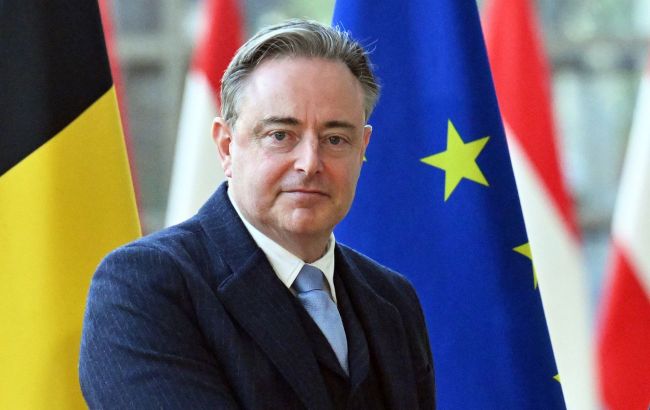 Photo: Bart de Wever (president.gov.ua)
The European Union may apply the same approach to Belgium as it did to Hungary if it continues to block the decision to grant Ukraine a reparations loan, according to Politico.
Belgium's isolation
At the upcoming summit on December 18, the key task for leaders will be to convince Belgian Prime Minister Bart De Wever, who is vetoing the loan. The agency's sources note that if he continues to put forward new conditions and obstruct the decision, he will effectively find himself isolated, similar to what is happening with Hungarian Prime Minister Viktor Orbán.
If Brussels refuses to support the plan, Belgian diplomats, ministers, and leaders may lose their influence in the negotiations, and their position will no longer be taken into account. According to Politico sources, even phone calls from Belgium may go unanswered.
Among the theoretical options is the possibility of adopting a decision by a qualified majority, bypassing the Belgian veto. However, diplomats emphasize that this scenario is currently not being considered.
Plan B and Plan C for Ukraine
According to the agency, the European Commission has proposed an alternative way to support Ukraine: issuing joint debt, which would be secured by the next seven-year EU budget.
However, Hungary has already refused to support the issuance of Eurobonds, and unanimous support from all member states is required to raise funds through the EU budget.
Therefore, Plan C remains under consideration: individual countries can use their own budgets to continue financial assistance to Ukraine. Formally, this idea is not included in the Commission's proposals, but diplomats are actively discussing it.
Germany, Northern European countries, and the Baltic states are considered the most likely participants.
However, such a move carries risks: solidarity is a key advantage of EU membership, and if only some countries shoulder the financial burden, it could cause a deep rift within the bloc. Experts warn that in the future, Germany may refuse to bail out a bank in a country that currently does not support funding for Ukraine.
"Solidarity is a two-way street," says one diplomat.
Theoretically, there is another way: to approve a reparations loan by a qualified majority, effectively bypassing the Belgian veto. However, according to diplomats, this option is not currently being seriously considered.
Reparation loan
The European Commission previously proposed to provide Ukraine with a so-called reparation loan, which was to be financed from frozen Russian assets. Its adoption requires the unanimous support of all EU countries, but the initiative is currently blocked by Belgium, where most of these assets are held.
Due to the delay in the process, the European Commission has begun to consider other options for supporting Ukraine. Kyiv is calling for a political decision to be made in December and for a $163 billion loan to be agreed, including €115 billion for defense and €50 billion to support the state budget.
Belgium remains the main opponent of the decision, fearing legal consequences and refusing to give its consent. The European Commission claims that it has taken into account almost all of Brussels' comments and prepared an updated proposal.
Meanwhile, the Belgian Prime Minister caused a scandal by saying that Russia's defeat is undesirable and that no one believes in Ukraine's victory.