Andy Burnham set to become UK next prime minister

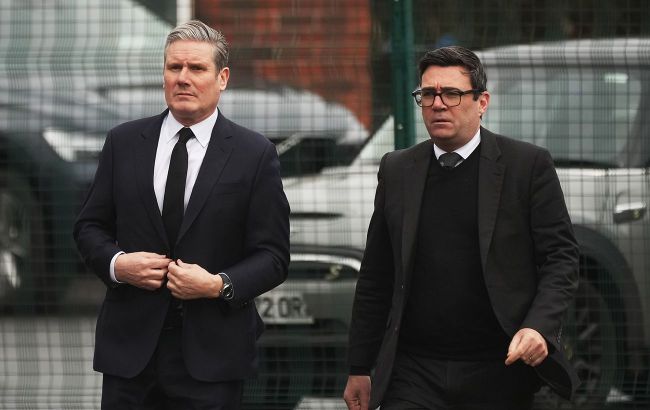 Photo: Andy Burnham, the future prime minister of the United Kingdom, alongside his colleague Keir Starmer (Getty Images)
Andy Burnham will become Britain’s next prime minister—he was backed by 349 Labour MPs, including the entire current cabinet led by Keir Starmer, according to The Guardian.
How MPs voted
On Monday, the MP for Makerfield received 27 more nominations, bringing the total number of votes in his favor from 322 last week to 349. Only 54 MPs remained undecided, including Starmer and Shabana Mahmood, who cannot nominate candidates due to her role as chair of the party’s executive committee.
This means that no other contender can now secure the 81 nominations required to even enter the leadership race.
When will Burnham become prime minister
Burnham is set to replace Starmer as leader of the Labour Party on Friday, July 17, and as early as the following Monday, July 20, he will move into the residence on Downing Street as prime minister.
During an online meeting with the Labour parliamentary caucus, he called on MPs to unite behind his leadership.
What promises did Burnham make?
Burnham promised to form a broad-based cabinet, in keeping with the tradition of the Labour movement—all appointments next week will reflect the contributions, experience, and dedication of representatives from all wings of the party.
He also promised to create "team and culture where everyone is valued, seen and listened to," striving to be accountable, accessible, and open to MPs—so that feedback flows from the parliamentary group through local communities and back to the party leadership.
Tribute and thanks to Starmer
Burnham began the meeting by paying tribute to Anne Widdecombe, stating that the thoughts of Labour members were with her family and friends, and calling for the police to be given the resources and time to investigate her death.
He also thanked Starmer, who is in his final days as prime minister, for passing the Hillsborough law, noting that the prime minister had kept the promise he made to the families of the victims of the 1989 tragedy.
The Hillsborough law is legislation requiring officials to be transparent during investigations, passed in honor of the families of the 97 people who died at Hillsborough Stadium in 1989, whom the police had falsely blamed for the tragedy at the time.
Even before his official confirmation, Burnham had already outlined his plans regarding Ukraine, promising to continue support at the same level and naming several foreign policy priorities as head of government.
The political crisis in Britain intensified after the Labour Party's crushing defeat in the local elections. As early as May, a group of influential government members, including Foreign Secretary Yvette Cooper, agreed on a common position regarding the need for a change in leadership. It was Burnham who was named Starmer’s leading successor at that time.
After his resignation, Starmer himself may head one of the most influential organizations in the world—according to media reports, he is considering the possibility of becoming NATO Secretary General.