Advisor to Ukraine's Defense Minister explains why Russia used 40 Lancets to attack Kyiv

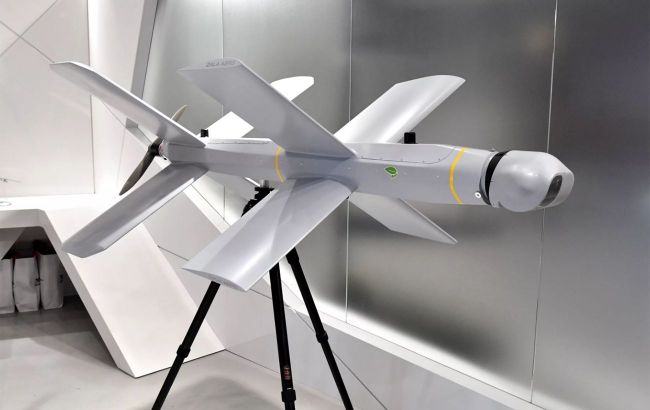 Photo: Lancet drone (Russian media)
"Recently, our air defense has been working very effectively, while Russian officials desperately need to give Putin (the Russian President Vladimir Putin – ed.) and the people of Russia at least some notable news. That’s how the information project Lancet on Kyiv is born," he said.
"Flash" noted that for this purpose, the Russian forces are preparing a whole operation using Shaheds and Lancets. Its goal is to demonstrate, at any cost, to the authorities and citizens of Russia the wreckage of Lancets in Ukraine’s capital.
He suggested that the Russian army used the electric Lancet specifically because the hype around this drone had died down, and the manufacturers needed a "good story" for new purchases.
Hoping for a tailwind
"For this purpose, they launched 40 Lancets at Kyiv. Imagine, our enemy is wasting 40 expensive units, which are intended for other missions, just for show. They add Shaheds carrying fragments of Lancets, and in the morning, this entire swarm heads to Kyiv," the defense minister’s advisor said.
He added that the Lancet is a short-range strike drone, designed for 30–80 kilometers, so the Russian forces were counting on a favorable wind toward Kyiv and launched the drones from the closest point to the city.
"The base Lancet has zero chance of reaching the 200 km to Kyiv. That’s why they remove the warhead from the Lancets and install an additional battery instead of the combat part. They replace the batteries with expensive, non-standard new-technology cells," "Flash" explained.
No damage, except for a fragment at Maidan
He noted that only a few enemy drones "somehow" reached Kyiv, causing no damage, but delivered a fragment of a Lancet to Maidan (Independence Square, the central town square of Kyiv - ed.).
In addition, the defense minister’s advisor thanked the invaders for this operation, since 40 Lancets could have caused serious damage by striking Ukrainian equipment and troops at the front, as well as power substations.
What preceded this
On Monday, March 16, the invaders attacked Kyiv with strike drones. One of the drones, a Lancet, reached the very center of Kyiv and fell on Independence Square.
Andriy Kovalenko, head of the Center for Defense Strategies under the RNBO (The National Security and Defense Council of Ukraine), noted that it is possible the Russian forces dropped the drone fragments using AI, as such a drone could not have flown all the way to Kyiv from the territory of the aggressor country.