Russian AI drone reportedly reaches central Kyiv for the first time

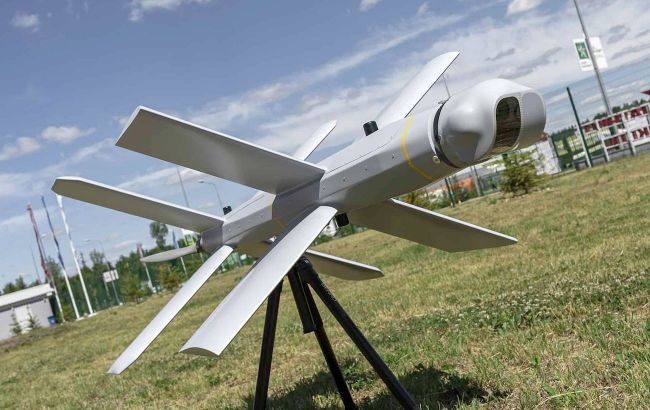 Photo: Russia allegedly used a new AI-powered drone in an attack on Kyiv for the first time (mil.in.ua)
Russian forces attacked Kyiv with strike drones in the morning. One of the UAVs, a Lancet, reportedly reached the very center of Kyiv and crashed on Independence Square, according to Defense Express.
According to preliminary data, the drone that fell in the center of Kyiv is a Lancet-type UAV. This is indicated by the fragments of the device that were found. In particular, a distinctive X-shaped tail with a pusher propeller was visible, which is typical for this type of drone.
There is a high probability that an artificial intelligence system could have been used in this kamikaze drone. It was likely configured to operate as part of a “swarm,” with autonomous navigation, independent target search, and the ability to carry out strikes without a direct connection to an operator. Unusual markings in the form of colored circles may indicate this.
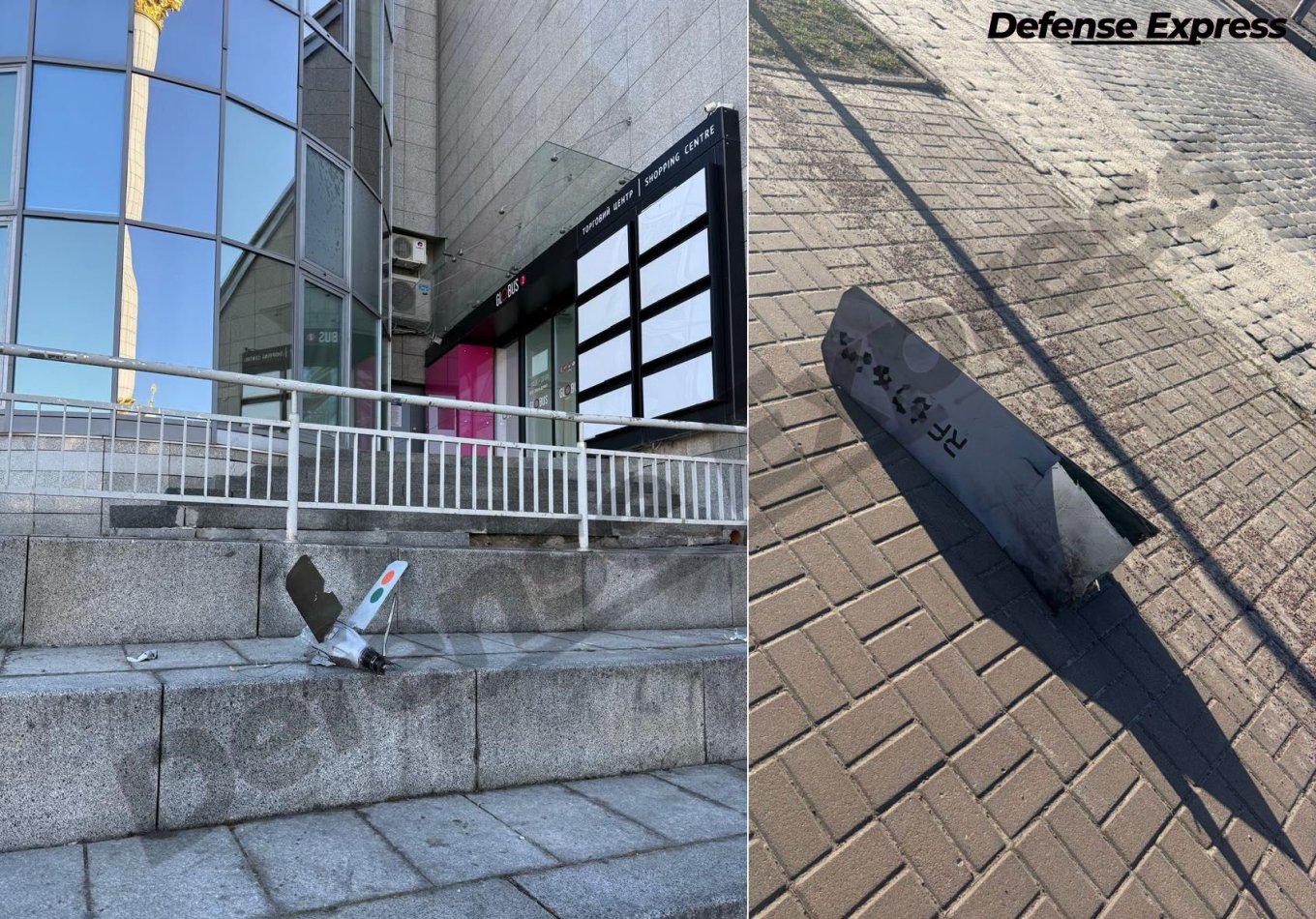
Photo: a Russian AI drone reached the center of Kyiv (defence-ua.com)
Similar markings have already been observed on Russian autonomous V2U drones. It is also possible that mesh modems or mobile communication networks were used to communicate with this device.
As for the flight range of the Lancet, it is usually said to be about 50 km, but this figure actually refers to the radius of stable communication. At the same time, Russia has claimed that such drones regularly cover distances of up to 90 km, with the maximum recorded range allegedly reaching 136 km.
What the Defense Ministry says
Advisor to the Ukrainian Minister of Defense Serhii Beskrestnov said that no Lancet drones can reach Kyiv, because they are strike UAVs with a small payload designed for frontline targets. They do not have the battery capacity or radio-control capabilities required for such a distance.
“I believe that the fragments were likely deliberately dropped from Shahed drones as part of the enemy’s information special operation. I am very sorry that one media outlet decided to play along with the enemy and chase hype on this topic,” the defense minister’s advisor added.
According to him, the military continues to collect information to analyze the incident: studying radio signals, radar data, and photos from interceptor drones.
The head of the Center for Countering Disinformation at the National Security and Defense Council, Andriy Kovalenko, also said it cannot be ruled out that the Russians dropped the AI drone fragments, since such a drone could not have reached Kyiv from Russian territory.
Russia’s morning attack on the capital
It should be recalled that on the morning of March 16, Russian occupiers attacked Kyiv and the surrounding region with drones. During the unusual morning strike on the Kyiv region, the Russians launched more than 30 drones of various types. Most of them were strike drones, while some were reconnaissance drones.
As clarified by Kateryna Pop, spokesperson for the Kyiv City Military Administration, the debris fell in open areas and there are currently no casualties.
More details about the consequences of the Russian morning strike on Kyiv can be found in the RBC-Ukraine report.