Abu Dhabi talks yield progress except on territorial issues


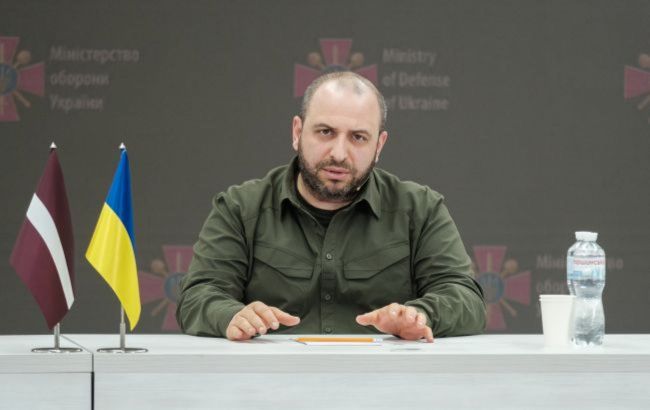 Photo: Ukraine's National Security and Defense Council secretary Rustem Umerov (Vitalii Nosach, RBC-Ukraine)
Greater progress was made on military-related issues during talks between the delegations of Ukraine, the US, and Russia in Abu Dhabi, while no decisions have yet been reached on territorial matters, according to a well-informed source familiar with the details of the negotiations.
In general, the Abu Dhabi talks concluded in a constructive manner, the source said.
The interlocutor noted that this was the first substantive trilateral meeting involving Russian and US representatives. According to the source, the first round, held yesterday, served largely as an introductory session. On Saturday, the delegations met in an expanded format and then split into two subgroups: one political and one military.
"Actually, the two sections negotiated separately. Today, the Russian representatives behaved in a reasonable manner. However, this is their established negotiation tactic: they begin aggressively, and only in the second phase does the process become more constructive. Today, the tone of the discussion was different," the source said.
According to the source, little progress was achieved in the political subgroup. Ukraine maintains that territorial issues can only be discussed based on the current line of contact, while Russia continues to insist on the withdrawal of Ukrainian forces from the non-occupied parts of the Donetsk region.
"However, the military subgroup managed to make progress. The discussions focused on whether a disengagement of forces is necessary, how a ceasefire would be monitored, how a cessation of hostilities would be implemented, the creation of a center for monitoring and coordinating ceasefire issues, and which countries could be represented there," the source said.
The military subgroup agreed to prepare their respective proposals on further steps toward a ceasefire within a week, ahead of the next meeting.
In addition, according to the media, the Russian delegation initially stated that it did not want NATO, the OSCE, or European countries that support Ukraine during the war to be involved in monitoring efforts or the proposed control center.
At the same time, the source noted that the issue of an energy-related truce was not raised during the Abu Dhabi meeting. The parties agreed to continue negotiations in the same subgroup format approximately one week later.
Abu Dhabi talks
On January 23, the Ukraine-US-Russia talks started in Abu Dhabi. The Ukrainian delegation was led by National Security and Defense Council secretary Rustem Umerov.
Ukrainian President Volodymyr Zelenskyy noted that territorial issues, particularly the situation in the Donbas, would be the central topic of the meeting. Ahead of the talks, the Kremlin indicated that it views the withdrawal of Ukrainian troops from Donbas as one of its key conditions.
Zelenskyy held a briefing with Ukraine's negotiating team before the talks. Following the first day, Umerov shared some details of the discussions, and Reuters reported that the parties focused primarily on territorial issues but were unable to reach a compromise.
By January 24, Zelenskyy said that representatives of all three countries had discussed a wide range of topics and described the talks as constructive. According to media reports, that day included not only trilateral meetings between Ukraine, the US, and Russia but also direct bilateral discussions between the Ukrainian and Russian delegations.
Read here the full details of the first trilateral Ukraine-US-Russia meeting and its background.