Why Hungary detained Ukrainian cash couriers, triggering a diplomatic scandal


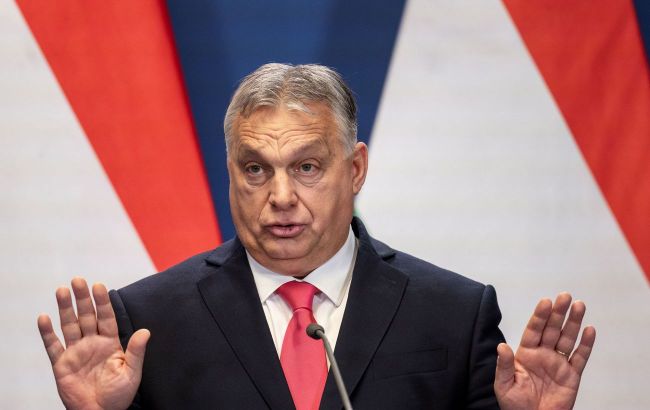 Photo: Viktor Orbán, Prime Minister of Hungary (Getty Images)
The detention of Oschadbank cash-in-transit collectors in Hungary has triggered a diplomatic scandal. Kyiv says hostages have been taken, while Budapest claims there are “suspicions of money laundering.”
Read everything about the situation with the detained collectors and the cash they were transporting in the RBC-Ukraine report.
Key points
- Ukraine’s National Police opened a case under articles on hostage-taking and unlawful deprivation of liberty.Criminal case.
- Actions of the National Bank. The National Bank urgently sent a delegation to Budapest led by the deputy governor.
- Reaction of Ukraine’s Foreign Ministry. Ukrainians are advised to refrain from traveling to Hungary. Kyiv is preparing measures at the EU level and does not rule out sanctions.
- Fate of the collectors. Hungarian authorities decided to deport all seven Ukrainian bank employees.
- Hungary’s accusations. Budapest says there are suspicions of “money laundering,” claiming the operation was allegedly supervised by former officials of the Security Service of Ukraine and the Air Force of the Armed Forces of Ukraine.
- Location. The vehicles ended up on the territory of Hungary’s Counter Terrorism Center.
- Detention. Two Oschadbank armored cash vehicles and seven employees were stopped in Hungary. They were transporting $40 million, €35 million and 9 kg of gold from Austria.
What happened, Oschadbank’s position
Late in the evening of March 5, Oschadbank said that two of the bank’s cash-in-transit vehicles, along with seven collection service employees, had been detained in Hungary. The bank stressed that the detention was groundless.
According to GPS data, the vehicles are currently in central Budapest near one of Hungary’s security agencies.
As RBC-Ukraine learned from sources, it is about the territory of Hungary’s Counter Terrorism Center. On the day of the operation, Hungarian Prime Minister Viktor Orbán personally visited this special center.
The whereabouts of the bank employees remain unknown. Hungary is blocking consular access to them.
At night, Ukraine’s Foreign Minister Andrii Sybiha said Hungary had taken Ukrainians hostage and seized the funds.
According to Oschadbank, the cash vehicles were transporting $40 million, €35 million, and 9 kilograms of gold.
The bank said the vehicles were carrying out a regular route from Austria, in accordance with agreements between Raiffeisen Bank and Oschadbank, and that the entire cargo had been processed in line with international customs procedures.
Oschadbank demands the immediate release of the people and the return of the property.
Hungary’s version
Budapest officials agree that the vehicles were transporting valuables from Austria to Ukraine. Hungary’s Tax and Customs Administration said the detention was due to “suspicions of money laundering.”
The Hungarian side claims that “the operation may have been supervised by a retired SBU general,” but they do not say who exactly they mean.
Budapest is also demanding explanations regarding the total volumes of currency imported by Ukraine through Hungarian territory since the beginning of the year.
According to Hungary’s Foreign Minister Péter Szijjártó, Budapest suspects that it is about "money from the Ukrainian military mafia.”
“We have several serious questions. First of all, this is a huge amount of cash, and the question arises: why do Ukrainians need to transport such a huge amount of cash? If this is really a transaction between banks, then the question arises why banks do not make transfers between themselves, why it is necessary to transport such a large amount of cash, moreover, through Hungary,” he claims.
Detained collectors to be deported
Hungarian government spokesman Zoltán Kovács said Hungarian customs officers had established the identities of all seven Ukrainians involved in transporting the valuables.
Budapest claims the operation was coordinated by a former SBU general, while his deputy was a former major of the Ukrainian Air Force. According to the Hungarian version, people with military experience may also have been involved in the transportation.
Based on these conclusions, Hungarian authorities decided to expel all seven detained Ukrainians from the country.
National Bank sends team to Budapest
National Bank Governor Andriy Pyshnyy said he had urgently sent a team to Budapest to clarify the situation.
“My deputy Oleksii Shaban and a team from the bank are urgently leaving on a business trip to Budapest to clarify the situation. We are keeping the matter under control,” Pyshnyy said.
The NBU is also preparing appeals to partners and regulators, in particular regarding compliance with CIT control procedures in the eurozone and the actions of the Hungarian side.
The National Bank is demanding official information from Hungarian authorities about the reasons for the detention of Oschadbank employees.
Reaction of the Ukrainian authorities
Foreign Minister Andrii Sybiha called Hungary’s actions part of Orbán's domestic political campaign and blackmail.
“Orban's list of demands for Ukraine this morning was particularly telling. This is what typically happens after people are taken hostage: demands. We will not tolerate this state banditism,” Sybiha wrote on X.
The foreign minister stressed that Ukraine reserves the right to take appropriate measures and is preparing actions at the EU level, including possible sanctions.
“We expect strong responses from our partners,” he added.
The Foreign Ministry is convening the foreign diplomatic corps and advising Ukrainians to refrain from traveling to Hungary.
Ukraine’s National Police opens investigation
Law enforcement officers opened criminal proceedings under two articles:
- Article 146 of the Criminal Code of Ukraine (illegal deprivation of liberty or kidnapping);
- Article 147 of the Criminal Code (hostage-taking).
Police also appealed to Europol, Hungary’s Tax and Customs Administration, and the police. They are coordinating actions aimed at establishing all the circumstances of the incident. Investigative actions are ongoing.
Orbán's political provocation. What experts say
Political scientist Volodymyr Fesenko believes this is a deliberate provocation from Orbán, who wants to drag Ukraine into a political conflict ahead of elections.
“Orbán wants the conflict to move to a higher level. So that it is no longer just informational but tangible. So that it becomes a legal conflict. So that Orbán has grounds to accuse us of anti-Hungarian actions. Not simply that he is personally offended, but that Ukraine allegedly humiliates Hungarians and so on. He will not talk about the fact that he himself does this. He wants to provoke us,” Fesenko explained in a comment to RBC-Ukraine.
He advises acting strictly within the EU legal framework and avoiding mirror detentions of Hungarians.
Also, responding through European institutions that can remind Hungary’s prime minister of the EU’s common rules. Legal mechanisms within Hungary should also be used.
Fesenko stressed that despite authoritarian tendencies, Hungary is still not a fully authoritarian state and remains part of the European legal space.
So, it cannot indefinitely hold people in custody, especially foreigners, without proper procedures and legal grounds. Hungarian authorities will have to release the Ukrainian citizens eventually.
Financial consequences: What will happen to cash in Ukraine
Financial analyst Andrii Shevchyshyn told RBC-Ukraine the situation is unusual but not critical.
He says it will create logistical difficulties for Oschadbank but will not lead to a critical shortage of currency in bank cash desks, as there are other routes.
Currency is delivered to Ukraine via several routes — including through Poland, Slovakia, and Moldova — so if problems arise in one direction, banks can redirect shipments, Shevchyshyn explains.
According to him, about $808 million in cash currency was imported into Ukraine in January alone, while the average volume in the fall was about $1.1–1.2 billion per month.
The detained amount is significant but accounts for only about one-tenth of the monthly volume of cash imports. So this is more a non-standard logistical situation than a threat to the currency market.
It remains uncertain where exactly this cash was supposed to go, since there are different sources. The analyst gives an example that cross-border cash circulation also occurs through currency operations by Ukrainians abroad.
Cash hryvnia accumulates in border regions of neighboring countries, which banks or financial institutions later exchange and return to the financial system.
That is why such transportation may include various types of currency operations, not only the delivery of cash to bank branches.
The incident occurred amid another escalation in relations between Ukraine and Hungary.
Budapest demands uninterrupted transit of Russian oil through the Druzhba pipeline. Orbán accuses Ukraine of artificially creating obstacles.
Kyiv, however, says the pipeline was damaged by Russians and argues that if Hungarians continue blocking the allocation of a €90 billion EU loan for Ukraine, there is no point in restoring the pipeline that would continue supplying Russian oil.
Ukrainian President Volodymyr Zelenskyy yesterday sharply reacted to Orbán's position, threatening to give the address of “one person in the EU" to the Armed Forces of Ukraine if the blocking of the €90 billion continues.
Orbán, in turn, escalated the pressure and said he would force Ukraine to restore oil pumping through the Druzhba pipeline.