'No one knows why Mariupol fell so fast.' Azovstal hero Ruslan Serbov breaks silence


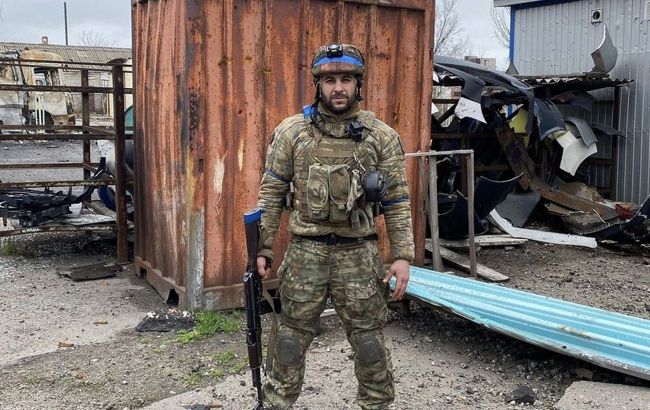 Ruslan Serbov (callsign David) at the Azovstal steel plant in 2022 (photo: provided by the interviewee)
In the spring of 2022, after Mariupol had been completely encircled, Ukraine launched a unique military aviation operation — high-risk Mi-8 helicopter missions to the Azovstal steel plant to deliver weapons, medical supplies, and reinforcements, while evacuating wounded defenders.
One of the 72 volunteers who flew into the surrounded city to reinforce its defenders was Ruslan Serbov (callsign David), a fighter with the Azov Regiment (a unit of Ukraine's National Guard). In an interview with RBC-Ukraine, he recalls the fierce fighting, his severe injury, Russian captivity, and life after receiving a prosthetic leg.
Key points:
-
A historic airlift. Ukraine carried out an unprecedented helicopter operation to deliver reinforcements to the besieged city of Mariupol.
-
A mission with slim odds of survival. The chances of reaching the city were 50-50. The helicopter that delivered Ruslan Serbov's group was shot down on its return flight.
-
Overwhelming enemy superiority. Mariupol's defenders faced repeated assaults from Russian forces that outnumbered them roughly ten to one and had overwhelming advantages in armor and air power.
-
A life-changing injury. A guided missile severed Ruslan Serbov's leg while he was evacuating a fellow soldier. He was later taken into Russian captivity.
-
Life after the front line. After returning home, the veteran wrote books about the defense of Mariupol and founded his own tactical firearms training camp.
-
Free prosthetic care. State-funded prosthetic treatment in Ukraine is fully free of charge for both military personnel and civilians.
"Nothing like this had ever been attempted": The daring airlift to Azovstal
In the spring of 2022, after Mariupol had been surrounded by Russian forces, every land and sea route to the Azovstal steel plant, where Ukrainian defenders continued to hold out, had been cut off. Only one route remained — the air. Ukraine then launched a desperate operation that would later become one of the boldest attempts to reach a besieged city during the war.
"No one had ever attempted to fly more than 100 kilometers into a deeply layered enemy air defense system while enemy fighter aircraft were patrolling overhead. Nothing like this had ever been attempted in human history," Andriy Biletskyi, then the commander of the Azov Regiment and now commander of Ukraine's Third Army Corps, recalled in 2022.
The operation was organized by the Main Intelligence Directorate of Ukraine (HUR, Ukraine's military intelligence agency). According to Kyrylo Budanov, who headed the agency at the time, seven Mi-8 helicopter missions were carried out to the besieged city of Mariupol. Volunteers were recruited for the flights, fully aware that any of the helicopters could be shot down. Months later, journalists reported that the Armed Forces of Ukraine had lost at least three of the seven helicopters used in the operation.
The pilots flew through dense Russian air defenses at night and at extremely low altitudes — sometimes just a few meters above the ground. Once they reached the steel plant, everything happened within minutes. Under constant attacks, the crews unloaded tons of weapons, medical supplies, and provisions, delivered reinforcements, and evacuated as many seriously wounded defenders as possible.
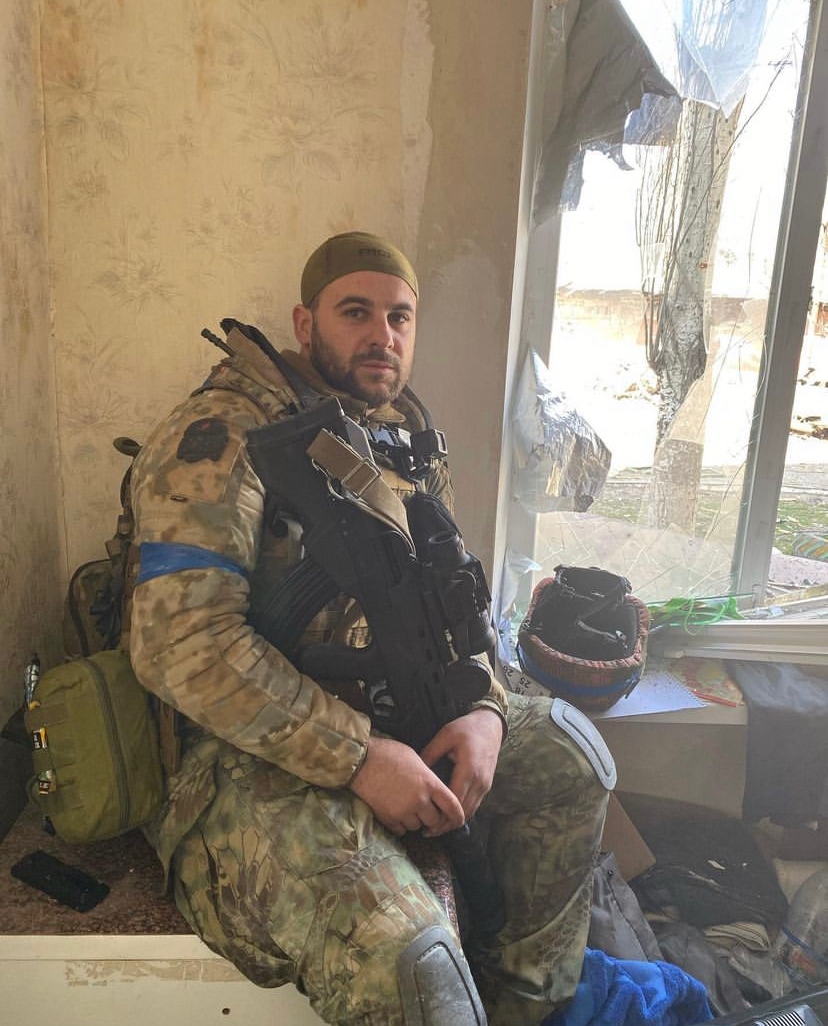
Ruslan Serbov voluntarily flew by helicopter to the Azovstal steel plant after Mariupol had been completely encircled by Russian forces (photo: provided by the interviewee)
During the fifth mission, Russian forces shot down the first Mi-8 helicopter. The seventh and final mission ended in a double tragedy: one helicopter was hit and crashed in Russian-occupied territory, while a search-and-rescue helicopter dispatched immediately from Dnipro to assist it was also shot down with a man-portable air-defense system.
"They are still lying there together, like in a movie — side by side," participants in the operation recalled in the summer of 2022.
The daring airlift to the Azovstal steel plant enabled Mariupol's defenders to continue resisting for several more weeks despite overwhelming Russian forces. The actions of everyone involved have since become part of Ukraine's wartime history.
"What else was I supposed to do — stay in Kyiv?": Flying into besieged Mariupol
During the helicopter missions to the Azovstal steel plant, 72 fighters from the Azov Regiment were flown into the besieged city. Ruslan Serbov was one of those volunteers who traveled to Russian-encircled Mariupol in the spring of 2022 to reinforce the city's defenders.
"I was one of the 72 fighters who flew into the surrounded city. There were several such missions, and mine was on the last helicopter that arrived there, on April 5," he recalls in an interview with RBC-Ukraine. At our request, he spoke in greater detail about those events.
For Ruslan, the decision to fly into Mariupol was a conscious one. At the start of Russia's full-scale invasion, the city had already been cut off, and he felt he had to be there. At the time, he was carrying out combat missions in Ukraine's Kyiv region.
"I knew I was needed there. Sitting in Kyiv, taking pictures — I do not like people who, as they say, want to seem rather than be. You can talk about being a great soldier or a great warrior, but people are judged by their actions. The same is true of a person, of a man — everything is judged by actions. You can say a lot of things, but in the end, your actions speak for you."
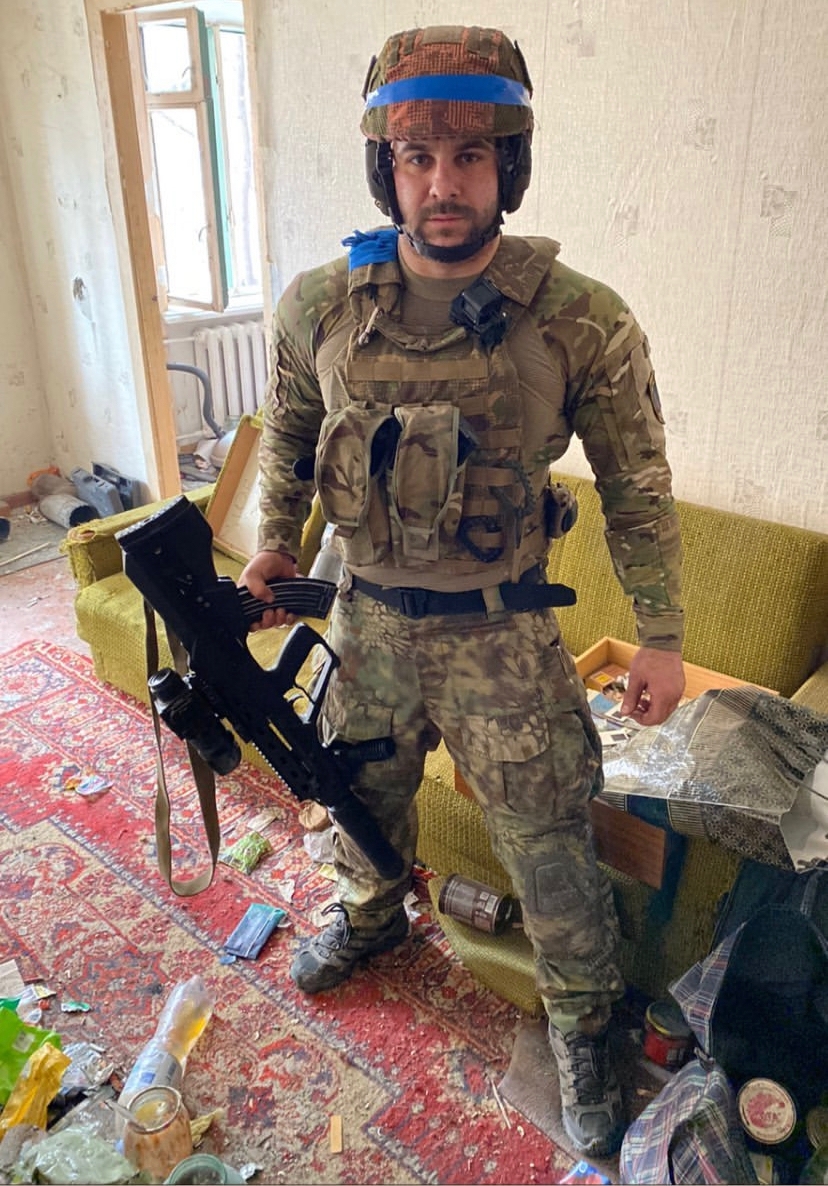
Ruslan Serbov (photo: provided by the interviewee)
The situation in Mariupol was already extremely difficult. Ruslan had served in Ukraine's Marine Corps in 2015 before spending three years with the Azov Regiment. He had trained continuously for years and learned to take initiative. When the opportunity came to fly to Azovstal, he accepted without hesitation.
At that point, aviation was the only remaining way to reach the surrounded garrison because every land route had been cut off.
"Flying there was the only option because everything was blocked, and the city was surrounded. It was impossible to get there by road or on foot," Ruslan recalls.
He understood the risks of the mission. Many helicopters had already been shot down.
"Of course, I understood that. Why did I do it? I do not know. That is just who I am — I made the decision, and that was it. What else was I supposed to do — stay in Kyiv? The helicopter that dropped us off was shot down on its way back. Another helicopter flew after it, and it was shot down too. Just making it there was fifty-fifty. Reaching the city was one thing, but surviving there was another. Still, I could not have done otherwise," Ruslan says of his motivation.
What was the hardest part of defending Azovstal?
Every day at the Azovstal steel plant was extremely difficult, and the situation could change in an instant, the veteran recalls.
"Everything could be decided in a split second. It is impossible to describe in words. It was brutal," he says.
Ruslan remembers recording what was happening around him with a GoPro camera. At times, almost no information was coming out of besieged Mariupol, and those videos became an important source of information for people waiting for any news about the city's defenders.
"Everyone saw those GoPro videos. After I arrived, I filmed whenever I had the chance. Of course, people watched them — they wanted to know what was happening," Ruslan says.
Meanwhile, Russian forces kept attacking from every direction, something every defender at Azovstal could see and hear.
"There was enemy equipment and infantry everywhere around us. We had no air support, while they had bombers and helicopters. You could clearly see five of our men holding a position while 50 Russian troops were assaulting it, backed by two tanks and two armored personnel carriers. It was constant — wave after wave, from every direction," the defender recalls.
The hardest part, he says, was the lack of food, the exhaustion, and the heavy casualties.
"And there were not actually that many people you could rely on. At every position, only a handful were carrying the burden. Everything depended on those who kept fighting desperately. Many others simply did not take part in the fighting. That was very difficult psychologically," he says.
After arriving at Azovstal, Ruslan says he was deeply disappointed to discover that not everyone there was prepared to fight.
"At first, it was discouraging. Before I arrived, I thought we were the last stronghold, that maybe there were only a hundred of us left. Then I realized there were far more people than I had imagined. If everyone had taken part in the fighting, perhaps something could have been different. Not everyone was willing to fight," he says.
He also says he is disappointed that, in his view, too few people ask how Mariupol came to be surrounded so quickly.
"Everyone talks about the terrible losses and how many people were killed. But no one asks how Mariupol was surrounded so quickly, or how Russian forces advanced so rapidly through Kherson and Berdiansk. I do not have the answer. Those questions need to be asked and examined. I was just a soldier doing my job, but why did it happen this way? We still do not know," the veteran says.
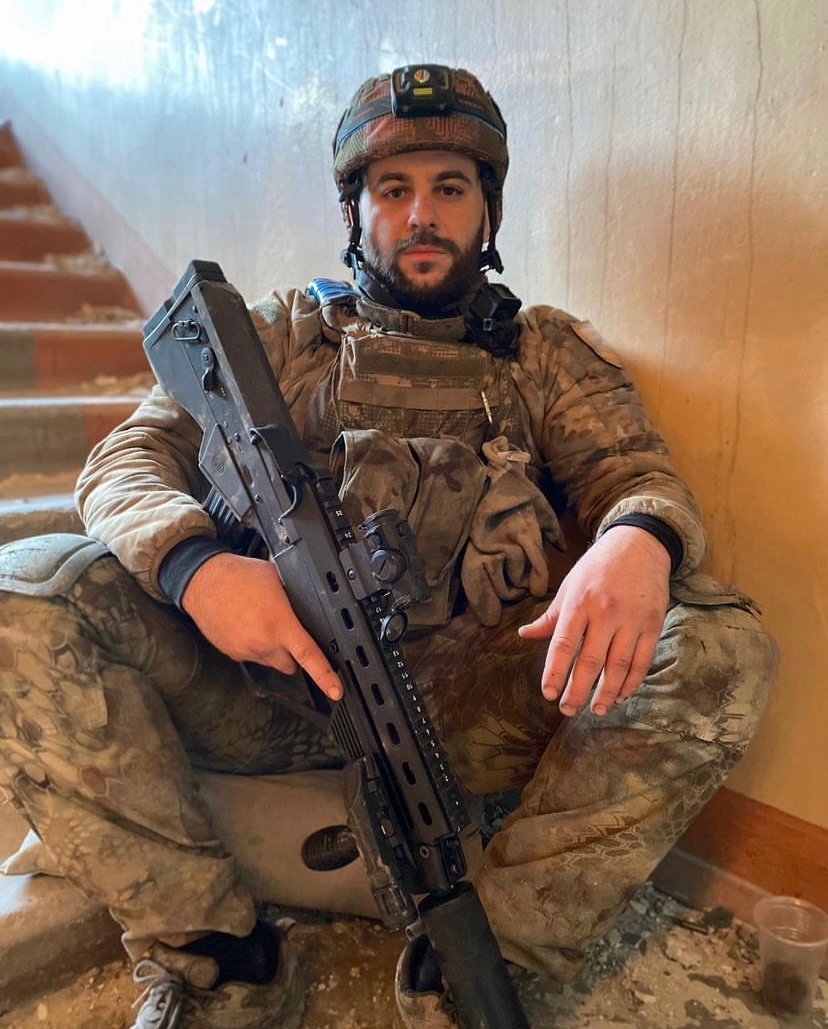
Russian forces vastly outnumbered the defenders at the Azovstal steel plant, but the Ukrainian troops fought to the very end, the defender says (photo: provided by the interviewee)
"The missile simply sliced off my leg": Wounding, captivity, and the road home
Heavy fighting continued around the Azovstal steel plant throughout those days. The arrival of reinforcements, including Ruslan, proved crucial. During one of the battles, he was helping evacuate a seriously wounded fellow soldier when he suddenly saw a guided anti-tank missile flying directly toward him.
"The missile simply sliced off my left leg as if it were a knife, and then kept flying. The guys gave me first aid, and I managed to make my way to a position near the hospital, where the surgeons were," the fighter recalls.
In reality, it was not a hospital but an improvised medical center where lives were being saved with whatever supplies were available. Ruslan received pain relief and emergency treatment there, which ultimately saved his life.
That same day, an agreement came into effect under which the Azov fighters left the Azovstal steel plant and entered Russian captivity in an effort to preserve the lives of the defenders.
He remained in Russian captivity for a month and a half until June 29, when a prisoner exchange involving seriously wounded Ukrainian service members took place. Ruslan was among those released and was immediately admitted to a hospital after returning to Ukraine.
"After the exchange, I spent more than another month in the hospital because we were not given antibiotics in captivity, and there was nothing to relieve the pain. I developed osteomyelitis, which is when the bone becomes infected," Ruslan recalls.
After returning home, he underwent several operations as doctors repeatedly removed damaged tissue from his leg. Eventually, the medical team completed the necessary treatment, and by the end of August 2022, Ruslan was fitted with a prosthetic leg.
He rebuilt his life himself: Books, sports, and firearms training
After receiving his prosthetic leg, Ruslan Serbov quickly returned to the gym and the swimming pool. He believes his recovery was possible in part because he had maintained an active lifestyle long before he was wounded. He did not have to build his physical condition from scratch and says there was little formal rehabilitation at the time — he rehabilitated himself.
"Everything happened quite quickly. I had always trained and was used to constantly being active. I do everything I used to do before. Nothing has changed. I recently competed in a jiu-jitsu championship. I train, compete, and wrestle. I do not sit still — I am always on the move," Ruslan says.
He took full responsibility for his own recovery. In 2022, he says, the rehabilitation system often felt like a set of formal procedures with what he describes as a lingering Soviet-era approach. Since then, he believes the system has improved significantly, but at that time, structured rehabilitation after prosthetic fitting was still something new.
"I did not really experience rehabilitation as such. Today, soldiers have access to rehabilitation programs, but back then, I had to do it all myself," the fighter says.
At the same time, he notes that the situation may have changed since then and that every wounded service member's experience depends on the severity of their injuries. Ruslan says he knows many fellow soldiers with much more serious injuries who now attend specialized rehabilitation centers and are satisfied with the treatment they receive.
Four years have now passed, and Ruslan has fully returned to an active sporting life.
"Now I train all the time and also train others — both civilians and military personnel. I founded and run my own tactical training camp. I conduct live-fire training sessions at a shooting range. It is my own business. I registered as a sole proprietor. Nobody sponsors me. I do not receive grants or outside support — I built and continue to develop everything myself," the defender says.
Civilians pay to attend Ruslan's training sessions, and that income allows him to provide free training for military personnel. Some come to improve their skills, while others use their leave from service to maintain their combat readiness through live-fire practice.
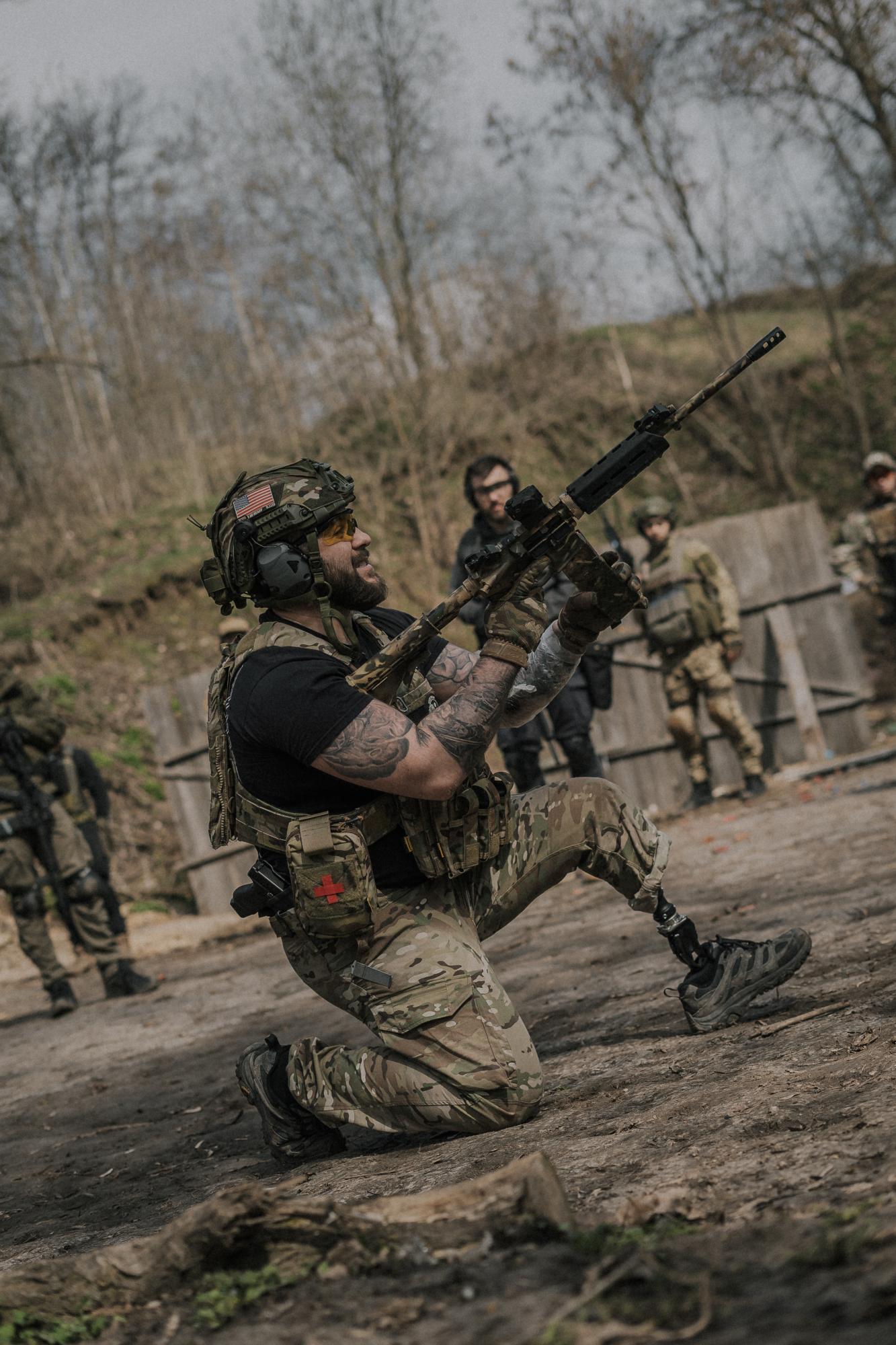
After returning from the front, Ruslan has continued training and now conducts live-fire firearms training courses (photo: provided by the interviewee)
"For example, if a group of civilians comes for training, I can invite five service members to attend free of charge at their expense. So when civilians sign up, I can provide free training for the military. If there are no civilian clients, unfortunately, I cannot do that," he says.
Interest in firearms training was much higher at the beginning of Russia's full-scale invasion. Today, there are fewer requests, although he says demand remains steady overall.
Ruslan also wanted to preserve the history of Mariupol's defense. He has written two volumes of "Mariupol. Book of the Brave", and a third book is expected to be published soon. While the first two books are autobiographical accounts of the events in Mariupol in 2022, the third is a work of fiction.
"I did not pay a single penny": Prosthetic care and attitudes toward veterans
Ruslan stresses that prosthetic care in Ukraine is provided free of charge.
"I did not pay a single penny, and neither does anyone else. In Ukraine, the prosthetics program is completely free — for both military personnel and civilians. The prosthetic limbs may not always be the very best, but they are still good. They are not bad at all. I have never even heard of anyone who had to pay for one. If someone says otherwise, it is most likely not true," the fighter says.
He explains that the entire process is handled through official government procedures.
"You submit your documents to the Administrative Services Center and the social protection office, and that is it," Ruslan says.
Over the years, he has used several prosthetic legs but relies on only one in everyday life, emphasizing that there is no universal option.
"I have several at home from different manufacturers. It is all very individual. People say, 'This is the top sports model,' but what is best for me may not be the best for someone else, and vice versa. The prosthetic leg I used before was considered uncomfortable by many people, but I found it comfortable," he says.
At the same time, he notes that there are practical inconveniences. If a prosthetic component breaks, for example, users have to submit separate applications to have it replaced.
Speaking about accessibility, Ruslan says he personally does not need any special accommodations.
"It is a completely different story for the guys with very severe injuries who use wheelchairs. They notice that many public spaces are still not adapted for them, and sometimes changes are made only for appearances. I can walk up and down regular stairs. I do everything everyone else does," Ruslan says.
Public discussion in Ukraine increasingly focuses on making cities more accessible and on society's need to adapt to the growing number of veterans living with prosthetic limbs, including accepting that reality on a personal level.
Ruslan adds that he has not experienced any unusual treatment because of his injury.
"At first, I paid attention to people's facial expressions and how they reacted. Eventually, I stopped. Children are curious — that is just how children are. Overall, I do not really notice it, perhaps because I usually wear trousers rather than shorts. I do not roll them up. I do not want anyone to feel sorry for me or pity me. I can outperform plenty of people with two legs," the defender says.