'If you feel pain, you're alive': Ukrainian veteran shares his story of survival


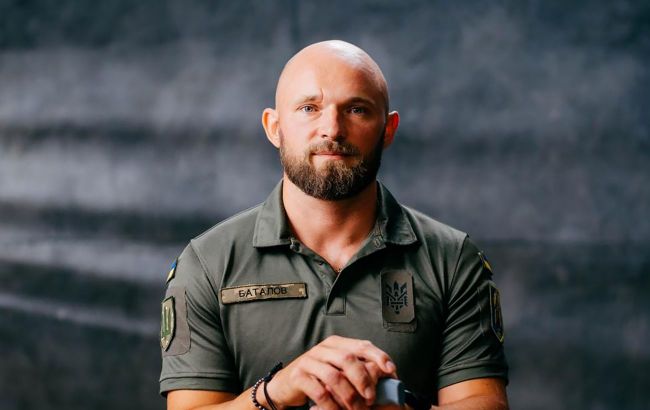 Photo: Oleksandr Batalov (provided to RBC-Ukraine by the interviewee)
Losing a limb in war marks the beginning of an entirely different reality, where every step initially comes with pain. But discipline and a determination to recover can turn a devastating injury into new opportunities. That is exactly what happened to Oleksandr Batalov.
How preparing for military service helped save lives in combat, why pain in the intensive care unit became his greatest ally, the challenges veterans face when getting prosthetic limbs, and how adaptive sports help wounded defenders return to active life — veteran and Anconcord Foundation Director Oleksandr Batalov shares his story in an interview with RBC-Ukraine.
Key points:
- Military preparation: Oleksandr spent a year before joining the military studying tactical combat casualty care and battlefield tactics on his own. Those skills later helped him survive and save a fellow soldier.
- Six and a half hours in hell: After being wounded by an explosion near Klishchiivka, he waited for evacuation under constant shelling for hours. His main goal was to stay conscious.
- The cost of opportunity: Government funding is often insufficient to cover the cost of advanced prosthetic limbs, while veterans may have to wait up to a year to qualify for a more sophisticated model through the state.
- Foundation and projects: As head of the organization, the veteran is developing adaptive sports programs and humanitarian demining courses.
- Acceptance as the foundation: The most important step after an injury is accepting the physical and psychological changes instead of exhausting yourself by fighting them.
- The importance of community: The foundation's projects help veterans build supportive networks, learn new professions, and sometimes even start families.
The path to the Armed Forces and self-training instead of basic military training
In the first days of Russia's full-scale invasion, Oleksandr went to the military enlistment office. However, so many people had volunteered to defend the country that he was asked to wait after leaving his phone number.
His family later moved to a nearby region to support his parents and relocate them to a safer place. During that time, Oleksandr joined other volunteers in helping on the ground, taking part in volunteer efforts and supporting the military in every way he could.
After Russian forces were pushed back from the capital, Oleksandr realized he still hadn't received a call from the Territorial Center of Recruitment and Social Support and no longer wanted to wait. Instead, he decided to use the time to prepare for military service. He chose a tactical training program, where he gained fundamental military skills.
"I started investing in myself: in knowledge, experience, and constant training. I understood that as long as I had a job and could earn a living, I could provide myself with everything I needed to learn," the veteran recalls.
The demanding training and intensive learning continued for nearly a year. It was not until 2023 that Oleksandr received a call from the Territorial Center of Recruitment and Social Support, inviting him to update his military records. By then, he was already well prepared, and within a week, he was assigned to a military unit.
"I knew how to use tourniquets and other equipment. I understood that this knowledge could save both my life and the lives of my fellow soldiers. That's why I saw this training as an investment in myself," the veteran says.
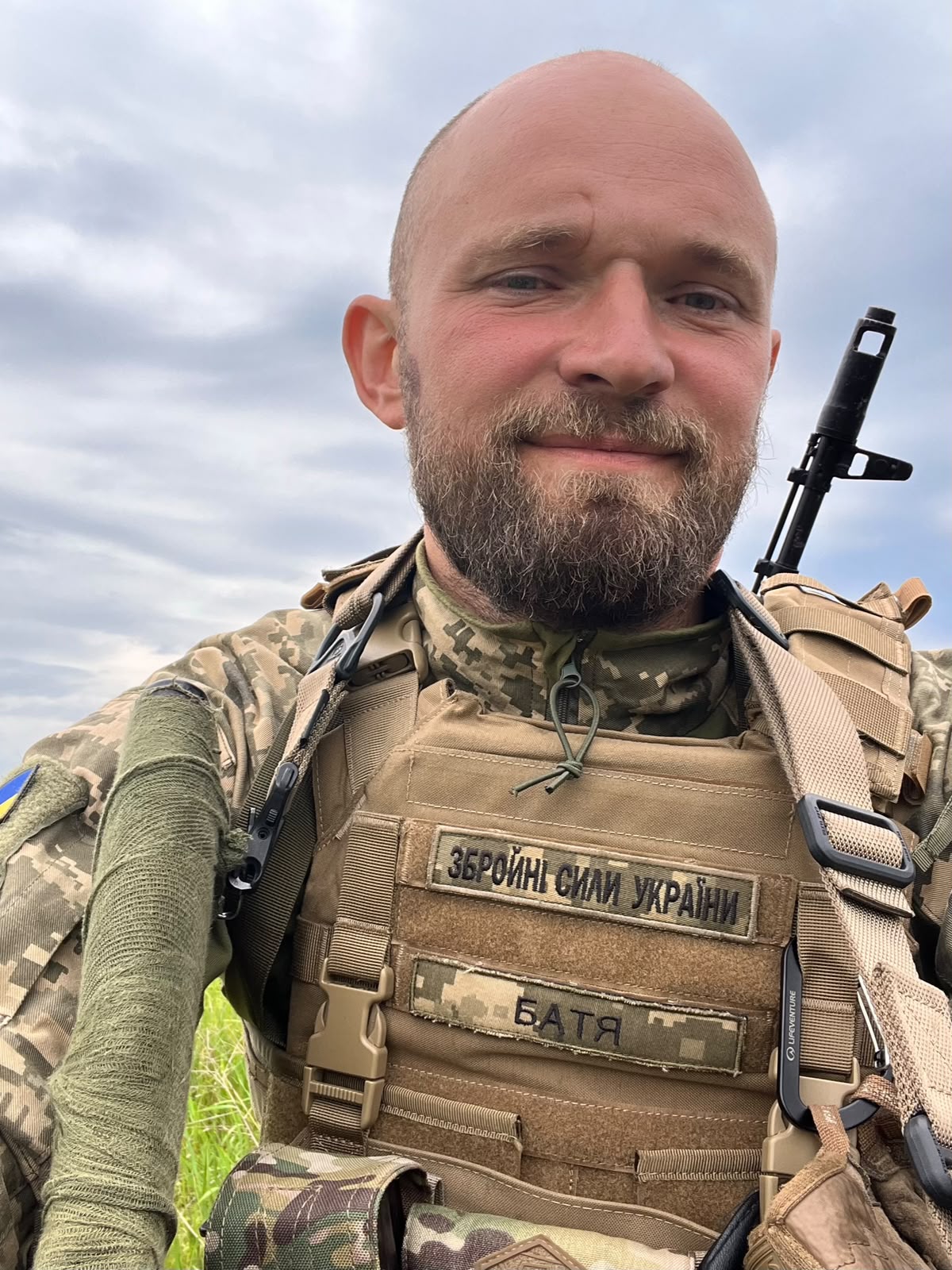 Photo: Oleksandr Batalov (provided to RBC-Ukraine by the interviewee)
Deployment to Donbas and training fellow soldiers
Oleksandr began his military service on February 14, 2023. At the time, there was little opportunity to choose a specific unit, as recruitment platforms were not yet operating the way they do today. In practice, the choice came down to two options: the Armed Forces of Ukraine or the Territorial Defense Forces.
As the unit's formation was delayed, Oleksandr decided not to waste time. He approached his commander with a proposal to train his fellow soldiers himself.
"I had everyone out on the stadium, groups of ten at a time so we wouldn't attract too much attention," he recalls.
Thanks to those training sessions, the unit became a close-knit and physically prepared team even before heading to the training ground. After completing official training, the unit was ordered to deploy to the front line. They were then sent to the Donetsk region, where they spent more than two months in some of the fiercest fighting.
"You want to live, and you hold on to that." Saving a fellow soldier and being wounded
Oleksandr suffered the injury that changed his life forever on July 19. That day, his unit was tasked with assaulting a tree line and securing a strategically important position.
"We moved out, everything was going well, no problems. We had developed our own system of coordination, and everything worked smoothly," the veteran recalls.
Then close combat began, and enemy artillery quickly joined the fight. The unit had been spotted. Through the roar of explosions, Oleksandr heard a fellow soldier with the call sign "Loki" shout, "I'm 300!"
The soldier was unable to apply a tourniquet himself.
"I ran over and realized it was horrific. His leg had been completely severed, almost as if by a scalpel," Oleksandr says.
He had to act while under fire. Moments earlier, Oleksandr's finger had been badly injured, but he did not even take off his glove, leaving it in place to keep the finger stabilized. The first tourniquet slipped because of the nature of the wound, so he immediately applied a second one. Despite a damaged artery, he managed to stop the bleeding. Once he was sure his fellow soldier was alive, Oleksandr immediately returned to the fight.
When he ran out of ammunition, he reached into his backpack for more magazines and was just about to stand up.
An explosion went off.
"I couldn't understand whether I had stepped on something or something had landed nearby. I wasn't expecting it. I fell," he recalls.
Even in that moment, his training took over. Oleksandr knew that mines are almost never planted individually. He immediately shouted to his fellow soldiers that he had hit a mine and ordered them to approach with extreme caution.
It was only a few months later that he learned what had really happened. When his comrades reached him, they discovered another powerful pressure-activated mine lying just a few centimeters away.
"They told me, 'You know, if you had started moving your arms or rolled onto your side, it would have gone off. There wouldn't have been anyone left to evacuate,'" the veteran says.
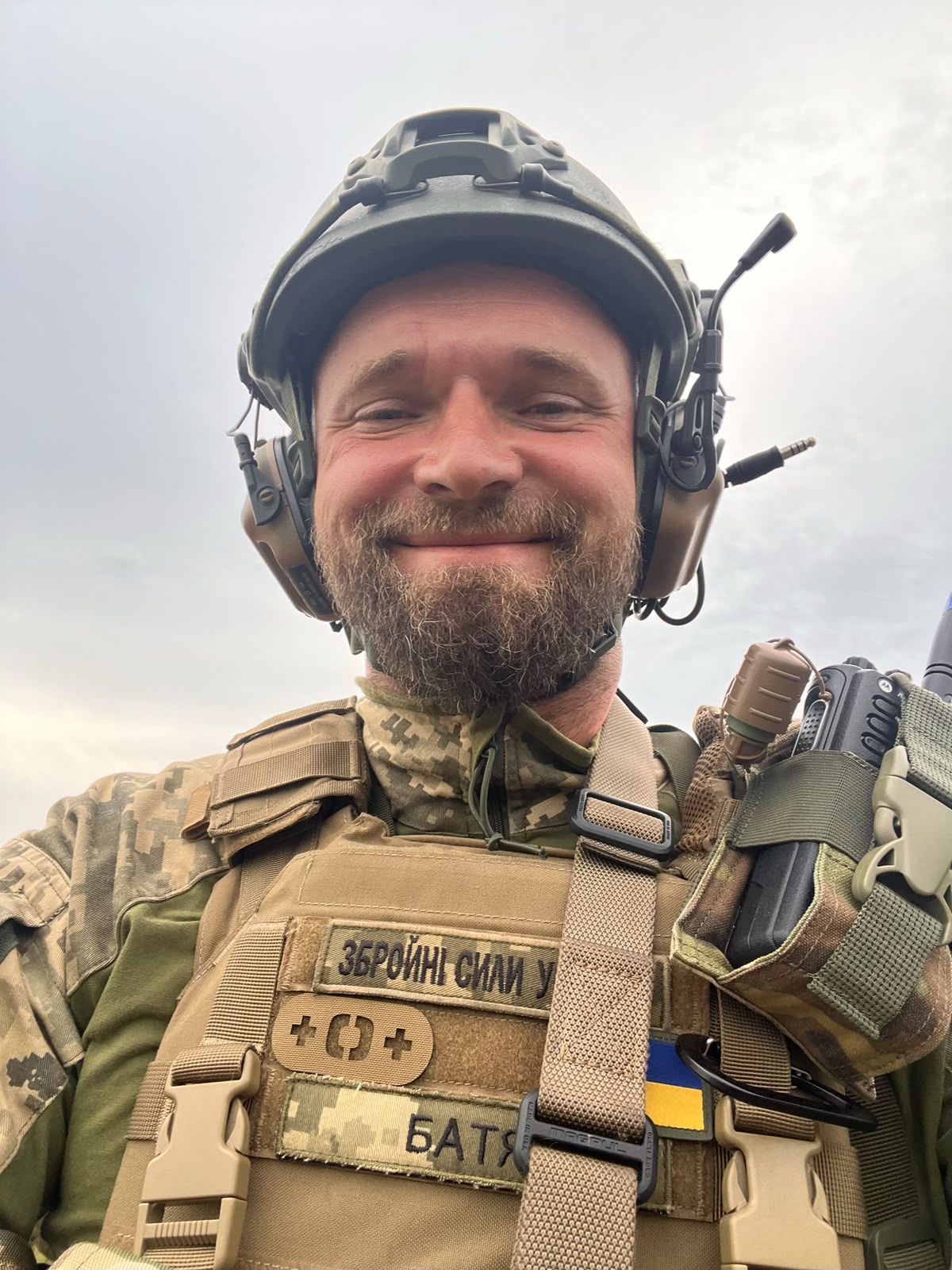
Photo: Oleksandr Batalov (provided to RBC-Ukraine by the interviewee)
During the evacuation, the unit was assisted by soldiers from the 3rd Separate Assault Brigade. Oleksandr was dragged about 100 meters to the crater left by a 120 mm mortar shell, which served as a temporary shelter. However, due to intense enemy shelling, evacuation vehicles were unable to reach them for hours.
"You wait six and a half hours for someone to come get you. The shelling is relentless. You don't know what's going to happen next. But you want to live, and you hold on to that," Oleksandr says.
Throughout the ordeal, he followed one rule: do not lose consciousness at any cost.
When asked what helped him stay awake, the veteran answers without hesitation:
"I guess it was the pain that kept me going. If you can feel it, you're alive. The pain shock actually helps bring you back. I was basically pulling myself through it."
"I'm not going to stay in bed": Intensive care and coming to terms with a new life
The sound of tracked vehicles approaching meant rescue.
"It was the best sound of my life. When you hear the tracks, you know it's your own guys," the veteran recalls.
At the first hospital, doctors quickly stabilized Oleksandr and began preparing him for surgery. He managed to tell the medical team everything they needed to know: when and how he had been injured, his blood type, and other critical information.
Oleksandr regained consciousness in an ambulance. His leg could not be saved. After waiting 6.5 hours for evacuation, doctors had no choice but to amputate it.
He spent two days in the intensive care unit while doctors waited for his kidneys to begin functioning again after severe traumatic shock. Even in that condition, Oleksandr surprised the medical staff. Before his injury, he had been in excellent physical shape, weighing 90 kilograms of muscle.
"The nurses came over and said they didn't know how to lift me to change the blood-soaked pad underneath me. So I got up on my healthy leg myself to make it easier for them," Oleksandr says with a laugh.
His first thought after the amputation was, "I'm not going to stay in bed."
That decision ultimately shaped his approach to rehabilitation, recovery, and life after his injury.
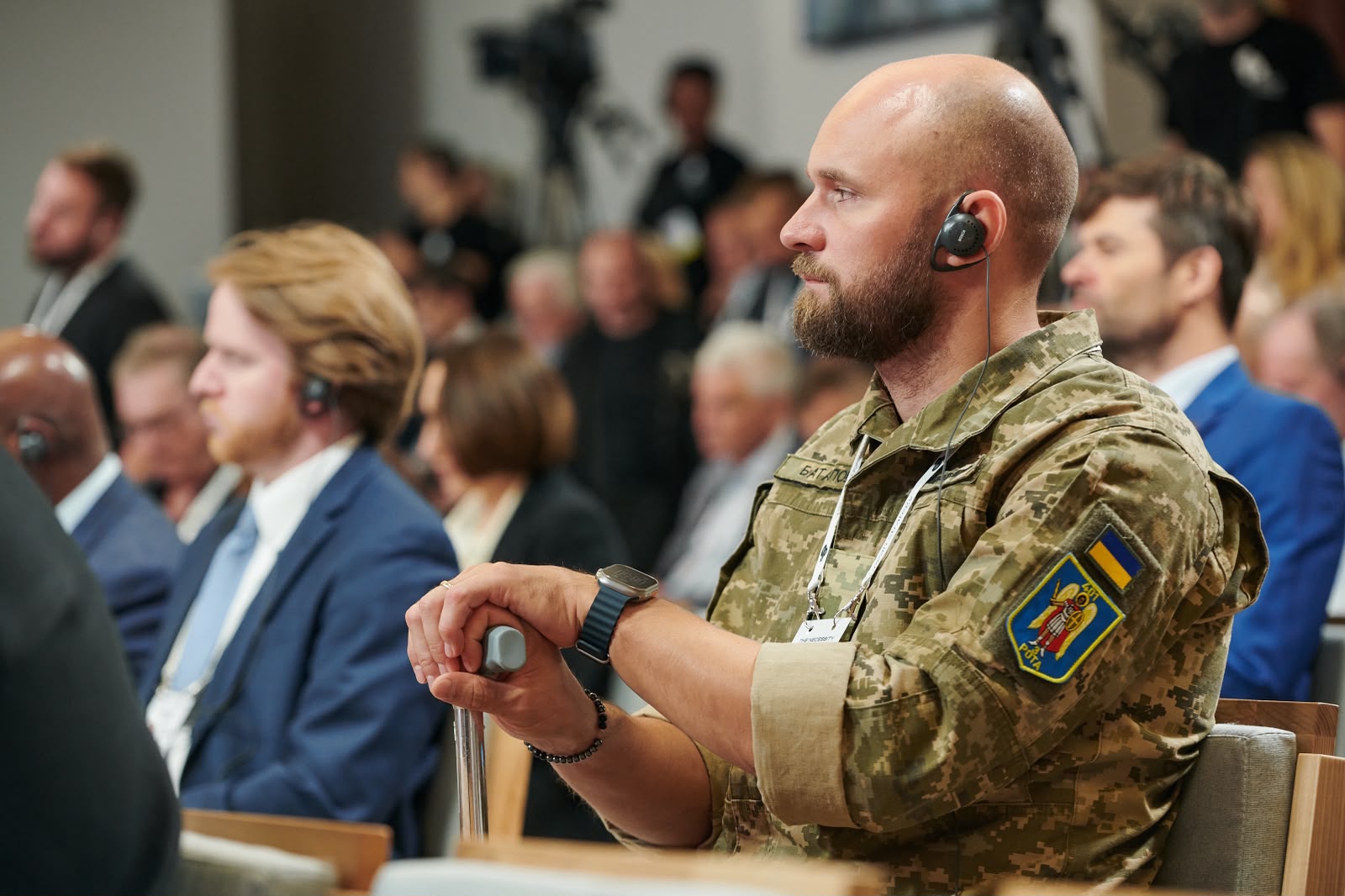
Photo: Oleksandr Batalov (provided to RBC-Ukraine by the interviewee)
Every time he closed his eyes, he was back on the battlefield
The period after surgery became another major challenge. Oleksandr rapidly lost weight, shedding at least 20 kilograms.
After assessing his condition, he began working with a psychologist during the very first week, realizing he could not cope on his own. The horrors of war did not haunt him in his dreams — he relived them while awake. For nearly two months, he could barely sleep. Every time he closed his eyes, his brain, like a time machine, instantly transported him back to that very battle.
His only relief came through EMDR therapy (Eye Movement Desensitization and Reprocessing, along with related techniques that are becoming increasingly popular worldwide and in Ukraine – ed.).
However, the traditional approach requires movements of the hands or feet, but Oleksandr's limbs were badly injured and immobilized in casts.
"I couldn't do it that way. But there are other options. You can use only your eyes, or even just tighten your glute muscles, and it still works. That's what we did. Even in that condition, you find a way," the veteran says.
The therapy does not erase the past, but it helps the brain process traumatic memories, gradually freeing up space for normal thoughts and emotions.
At the same time, Oleksandr warns wounded veterans against relying solely on fellow soldiers for psychological support, as it often leads to retraumatization. When the men from his unit visited and began describing the operation in detail, he found himself reliving the same chaos all over again. He is convinced that such experiences should only be processed with trained professionals.
Oleksandr's hospital room was constantly filled with friends. It was exhausting at times, but also incredibly meaningful.
"After anesthesia, you're still trying to pull yourself together, and then someone walks in, and you have to smile. But that actually helped a lot. People brought you back to life. The nurses joked that if anyone was walking down the hallway, they were definitely coming to see Sanya," he recalls.
His rehabilitation actually began not at a specialized rehabilitation center but in the intensive care unit in Dnipro, when he made the firm decision to keep moving instead of giving in to suffering. As soon as his doctor allowed him to sit up or stand, he immediately started getting up and trying to do things on his own.
At first, he would simply wheel himself outside for a couple of minutes to watch people go by. That was all he could manage because he was so weak after undergoing one surgery after another.
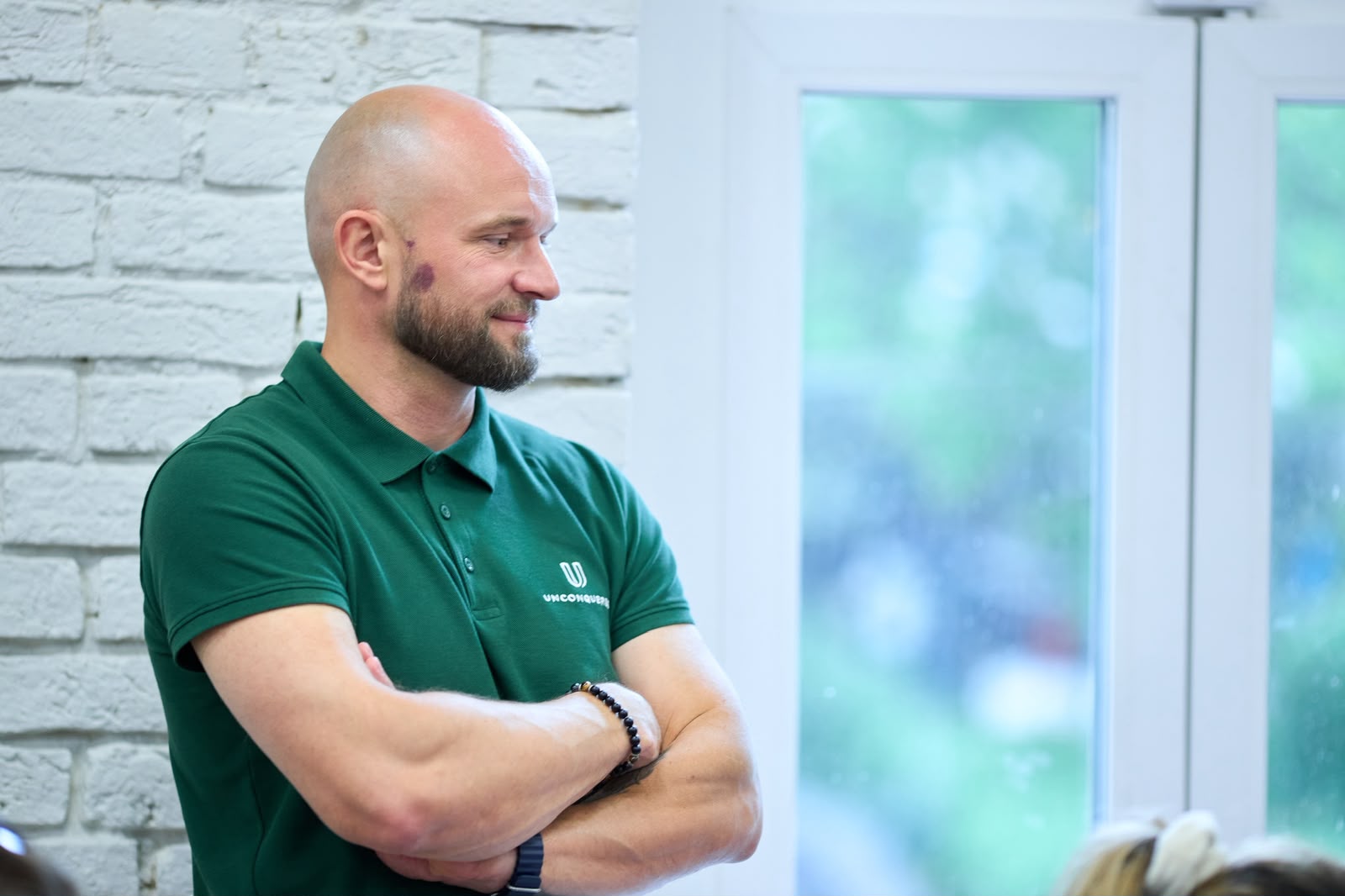
Photo: Oleksandr Batalov (provided to RBC-Ukraine by the interviewee)
"If you come here just to suffer, there will be no rehabilitation": The joy of standing on two legs again
After leaving the hospital, Oleksandr was referred to the RECOVERY rehabilitation center. He spent three and a half months there because he had a clear mindset.
"If you come here just to suffer and do nothing, there will be no rehabilitation. I knew exactly what I wanted, and my goal was to stand on two legs again."
His greatest motivation was getting a prosthetic leg. Oleksandr expected the process to be quick, but at his first appointment, the prosthetist told him, "We can't fit you with a prosthesis yet. Your residual limb isn't ready — there's too much excess skin."
As a result, he needed reconstructive surgery to reshape the residual limb and prevent future inflammation in those areas. He had to undergo another operation. Three weeks later, everything had healed, and the prosthetists gave him the green light.
Nearly five months passed between the day he was wounded and the moment he was finally able to stand on two legs again.
"You shift your weight onto the second leg, and it holds you up. It's such an incredible feeling. You know it won't be easy, but just realizing you can stand again gives you so much confidence," the veteran says.
Many people think a prosthesis is about comfort. But, according to Oleksandr, there is no such thing as comfortable prosthetics — they are about restoring your abilities.
The government and charitable foundations fully covered his treatment and reconstructive surgery. However, Oleksandr was not satisfied with the amount allocated for his prosthesis because it would only pay for a standard hydraulic knee, which he believed posed a higher risk of falls.
"I said right away that I wasn't going to use a hydraulic knee. So we paid the difference ourselves to get a newer prosthesis," the veteran recalls.
Later, Oleksandr received a state-of-the-art Genium X3 electronic knee, valued at more than €70,000. It is reliable, water-resistant, offers longer battery life and greater functionality, but it also has one drawback — its weight.
"The whole prosthesis weighs about 6.5 kilograms, while my residual limb is only 22 centimeters long. That small limb has to move a huge lever. It's like walking around all day with a dumbbell attached to your leg. You're constantly working your muscles. Physically, not everyone can handle that kind of weight."
His rehabilitation ended abruptly when a Russian missile struck near the rehabilitation center. The blast wave blew open the windows, and patients were evacuated. Since Oleksandr had already received his prosthesis, he was discharged immediately.
That marked the beginning of a new chapter in his life — serving as an ambassador for veterans and speaking at international events in Munich and Washington.
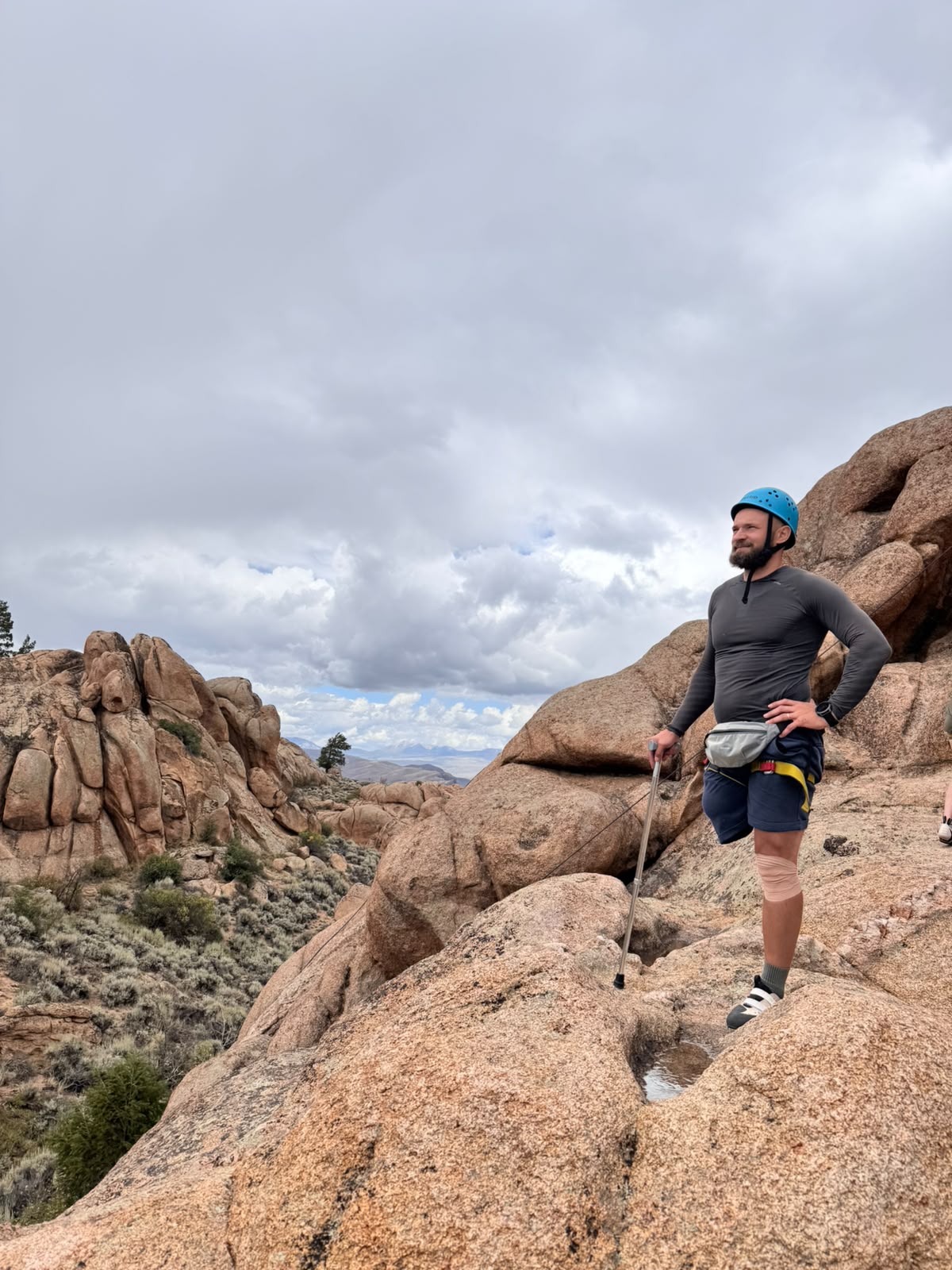
Photo: Oleksandr Batalov (provided to RBC-Ukraine by the interviewee)
Reaching new heights in the US, a new role, and breaking stereotypes
Speaking at international events helped Oleksandr realize that his personal story could inspire others and drive meaningful change. Soon afterward, he applied to the Anconcord Foundation's adaptive sports program in the United States. Following a selection process led by the foundation's founder, Olena Vyshnevetska, he was chosen to join the group.
The American adaptive sports center completely changed his perception of what is possible after a serious injury. He was impressed by its approach: regardless of the nature of a person's injury, everyone is given access to a wide range of activities, with specialists adapting the equipment and conditions to meet individual needs. During the program, the group tried dozens of sports, from specialized bicycles to rock climbing.
It was rock climbing that became a turning point for Oleksandr. With two arms and one leg, he made it to the top.
"When I joked that it was the easiest route, the instructor said, 'Actually, that was the hardest one.' That was the moment I truly realized that after an injury, nothing is impossible."
After returning to Ukraine, Oleksandr became the director of the Anconcord Foundation.
"Veterans need confidence that they won't be left on their own and that there will be people beside them who have walked the same path," he says.
Today, Oleksandr leads the foundation's projects aimed at supporting veterans through adaptive sports and professional retraining. He considers the opportunity to break stereotypes the greatest value of his work.
Helping transform the lives of his fellow veterans is what Oleksandr describes as his life's mission.
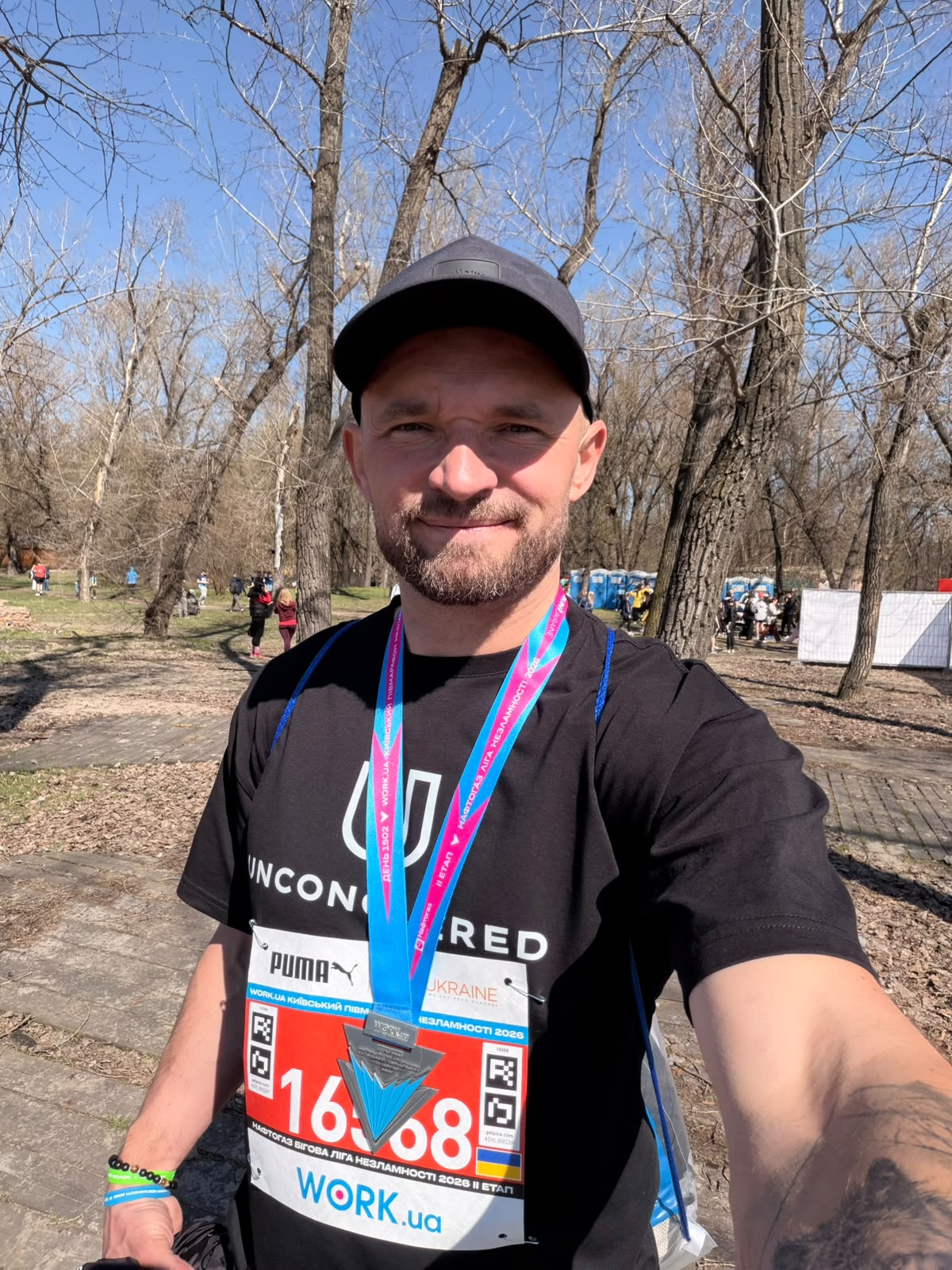
Photo: Oleksandr Batalov (provided to RBC-Ukraine by the interviewee)
Adaptive sports and more than 200 applications for 25 spots
Today, the foundation is actively expanding the American model in Ukraine. In June, it organized a special camp for veterans in one of Ukraine's regions. The goal was to give participants a chance to spend time in nature, connect with one another, and rediscover their strength through adaptive sports.
"Sports had a huge impact on me after I tried golf, basketball, and other activities," Oleksandr says.
The foundation also plans to establish its own rehabilitation facility, including a glamping site where adaptive sports and recovery programs can be held.
The June camp generated overwhelming interest. Organizers received more than 200 applications but were able to accept only 25 participants. All expenses are covered by the foundation with support from Ukrainian businesses, making the program free of charge for veterans.
Because of the limited number of spots, the team introduced a thorough selection process that included both physical and psychological assessments. This is not a relaxing retreat with hammocks but an intensive program featuring swimming, kayaking, rock climbing, cycling, and other activities.
"We see that some people simply aren't ready yet. Sometimes three years have passed since a veteran was wounded, and during the interview they begin to cry. In those cases, we first recommend working with trusted psychologists," says the foundation's director.
According to Oleksandr, veterans who were wounded several years ago do not always have sufficient access to high-quality recovery programs. That is why the foundation is developing projects that demonstrate what comprehensive rehabilitation through adaptive sports can look like, combining professional guidance, a supportive community, and an individualized approach for every participant.
The foundation aims to create in Ukraine conditions similar to those available to veterans in the United States. For the June camp, the team carefully selected not only the participants but also the coaches, bringing in only certified specialists with proven experience who clearly understood how to work with injured veterans.
Oleksandr became closely familiar with American standards while competing in the Air Force and Marine Corps Trials in California.
"Everything there is truly built around adaptive sports. You arrive, and there isn't a single curb between the street and the building. Everything is designed for people using wheelchairs or prosthetic limbs, and the respect shown to service members is simply incredible," he recalls.
The Ukrainian team of 13 veterans delivered an outstanding performance, winning 43 medals. Although Ukrainians had never before claimed first place in team events, they won gold in sitting volleyball, silver in wheelchair rugby, and finished fourth in basketball.
How to move forward after losing fellow soldiers and suffering severe injuries
Many veterans who have endured intense combat and the loss of fellow soldiers struggle to move forward, not physically, but psychologically. Oleksandr emphasizes that it is important to understand that those who were killed cannot be brought back, and the outcome of that battle cannot be changed. What can be changed is how we choose to live afterward.
The first step, he says, is accepting the changes to both your body and your mind. Without that acceptance, a person remains trapped in an exhausting conflict with themselves. When there is no one to guide them, an adaptive sports camp can become the best form of therapy. There, a veteran meets someone with even more severe injuries who is living life to the fullest and begins asking, "What can I do?"
As surprising as it may sound, Oleksandr believes that for many veterans, their injuries have paradoxically opened up new opportunities. He is convinced that people who truly want change will look for it rather than shut themselves off from the world.
In addition to its camps, the Anconcord Foundation runs several other initiatives. Among them are humanitarian demining courses attended by veterans and their family members.
Today, the foundation is working to bring all of its programs to Ukraine, eliminating the need for difficult international travel and reducing the burden on injured veterans. By gathering feedback from service members, the foundation engages with government ministries and is helping modernize outdated state systems.
"Some people want to learn a new profession. Others want to try adaptive sports. We help everyone find their own path. But the most valuable thing is the community, where you don't have to explain anything because everyone has gone through similar experiences," Oleksandr says.
It is in that safe environment, he believes, that people begin to realize they can change their lives.
"I've seen it many times. People find themselves here and become a real source of support for one another. In the end, it all depends on the individual. The most important thing is to choose life and truly live it," he concludes.