Ukraine's air force explains how Russia's Shahed drones have evolved


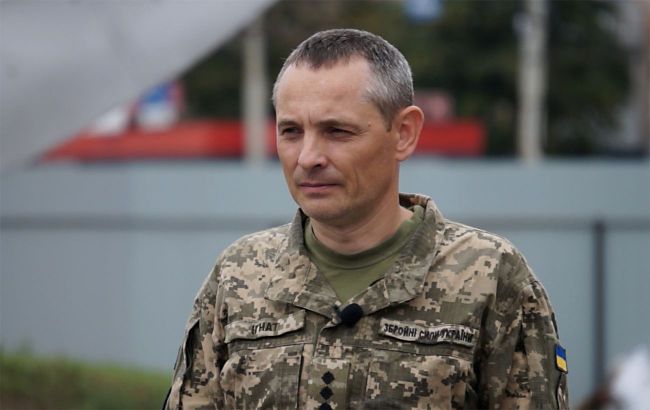 hoto: Yurii Ihnat (suspilne media)
Russia is increasingly relying not only on missiles but also on modernized unmanned aerial vehicles, particularly Shahed drones. They have evolved and become the primary airborne threat to Ukraine, said Yurii Ihnat, head of the Communications Department of the Air Force Command of the Ukrainian Armed Forces in an interview with RBC-Ukraine.
Shahed drones as the key air threat
According to Ihnat, Shahed drones are currently one of the most serious challenges for Ukraine’s air defense. They are used en masse, fly in the hundreds, and attack not only at night but also during daylight hours.
UAVs are detected not only near the front line. They are regularly spotted over major cities, including the capital. Jet-powered drones have also been observed.
Flying at different altitudes: how Russia complicates interception
Russian drones can operate:
- at high altitudes, beyond the reach of mobile fire groups;
- at low altitudes, using terrain features such as reservoirs and riverbeds.
Ihnat noted that this forces the Ukrainian army to use a wide range of interception tools, including anti-aircraft drones, aircraft, helicopters, naval assets, and ground-based units.
At the same time, in densely populated areas, interception methods are chosen primarily with civilian safety in mind.
Combined tactics and Russian reconnaissance
Ihnat said the enemy carefully plans UAV flight routes. Russia uses:
- satellite intelligence;
- secret intelligence;
- analysis of Ukrainian air defense positions;
- weather conditions.
This allows Russian forces to select optimal altitudes and routes to minimize drone losses.
Why it is difficult for mobile groups to shoot down drones
The capabilities of mobile fire groups are limited:
- Effective machine-gun engagement altitude is up to 1 km;
- Effective MANPADS engagement altitude is up to 4 km, but the effective operating altitude is around 2 km.
When drones fly higher, intercepting them becomes significantly more difficult.
Upgraded Shaheds with Starlink and cameras
Russia is using various modifications of Iranian-made UAVs:
- Shahed-131 / Shahed-136 (known in Russia as Geran-1 and Geran-2);
- drones equipped with cameras, SIM cards, modems, and even Starlink terminals.
These drones:
- are harder to suppress with electronic warfare systems;
- can be controlled online;
- are used for both strike and reconnaissance missions.
"I remember that the first Shahed with Starlink was discovered about six months ago. Ukrainian authorities are now actively looking for countermeasures together with partners," Ihnat said.
Relay drones and Molniya UAVs
Some drones are used as signal relays, extending the operational range of other UAVs. Russia applies this approach with both Shahed drones and reconnaissance UAVs such as the Orlan.
Molniya drones are also widely used. These drones cost around $500 and can carry FPV drones deep into Ukrainian defenses. Sometimes they are equipped with fiber-optic guidance to extend range.
Ihnat emphasized that Ukraine, together with its partners, is actively working to counter these emerging threats. Studying enemy technologies and developing more effective solutions remains a key task in the ongoing drone war.
Use of Starlink by Russian forces
The Russian army is increasingly using American Starlink terminals on strike drones, allowing them to bypass Ukrainian electronic warfare systems and improve strike accuracy, media reports say.
As Defense Ministry advisor Serhii Beskrestnov noted, drones with online control were used, in particular, during the attack on a passenger train in the Kharkiv region.
In response, Ministry of Defense Mykhailo Fedorov said that Ukraine contacted SpaceX and discussed possible ways to counter this threat.
Later, Beskrestnov clarified that, at Ukraine’s request, SpaceX has already begun implementing initial measures to block the use of Starlink terminals by Russian forces.
Additionally, reports emerged that Elon Musk took initial steps to stop the unauthorized use of Starlink in Russia’s interests.
Today, the Cabinet of Ministers adopted a resolution to implement a white list for Starlink satellite internet terminals. As a result, only verified and registered terminals will operate in Ukraine, and all others will be disconnected.