Attack intensity declining: What is really happening with Russia’s missile arsenal?


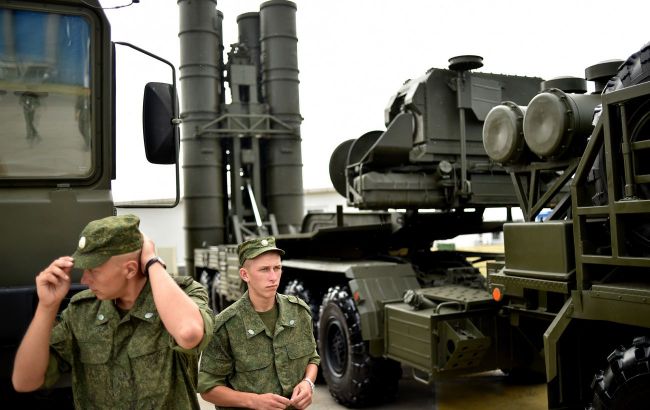 Illustrative photo: Russian army is even using air defense missile systems to strike Ukraine (Getty Images)
Objective figures show a decline in the intensity of Russian attacks across Ukraine. More than half of the total missile arsenal used by the enemy was expended during the first year of the full-scale war, states Ivan Kyrychevskyi, a serviceman of the 413th Raid Unmanned Systems Forces (SBS) Regiment and a weapons expert at Defense Express, in a comment to RBC-Ukraine.
Read also: Russia heavily strikes Kyiv, Kharkiv, Zaporizhzhia: Extensive damage, fires and dozens injured
Key points
Missile statistics: Since the start of the full-scale invasion, Russia has fired over 12,000 missiles of various types. Of these, 6,600 were launched during the first year of the war.
Attack intensity: Despite apparent activity, the intensity of Russian attacks on Ukraine is currently declining.
Partner assistance: The missiles that are intercepting Russian ballistic weapons today may have been put on partners’ production lines as long as two years ago, as the manufacturing cycle from production to rollout takes 20–25 months.
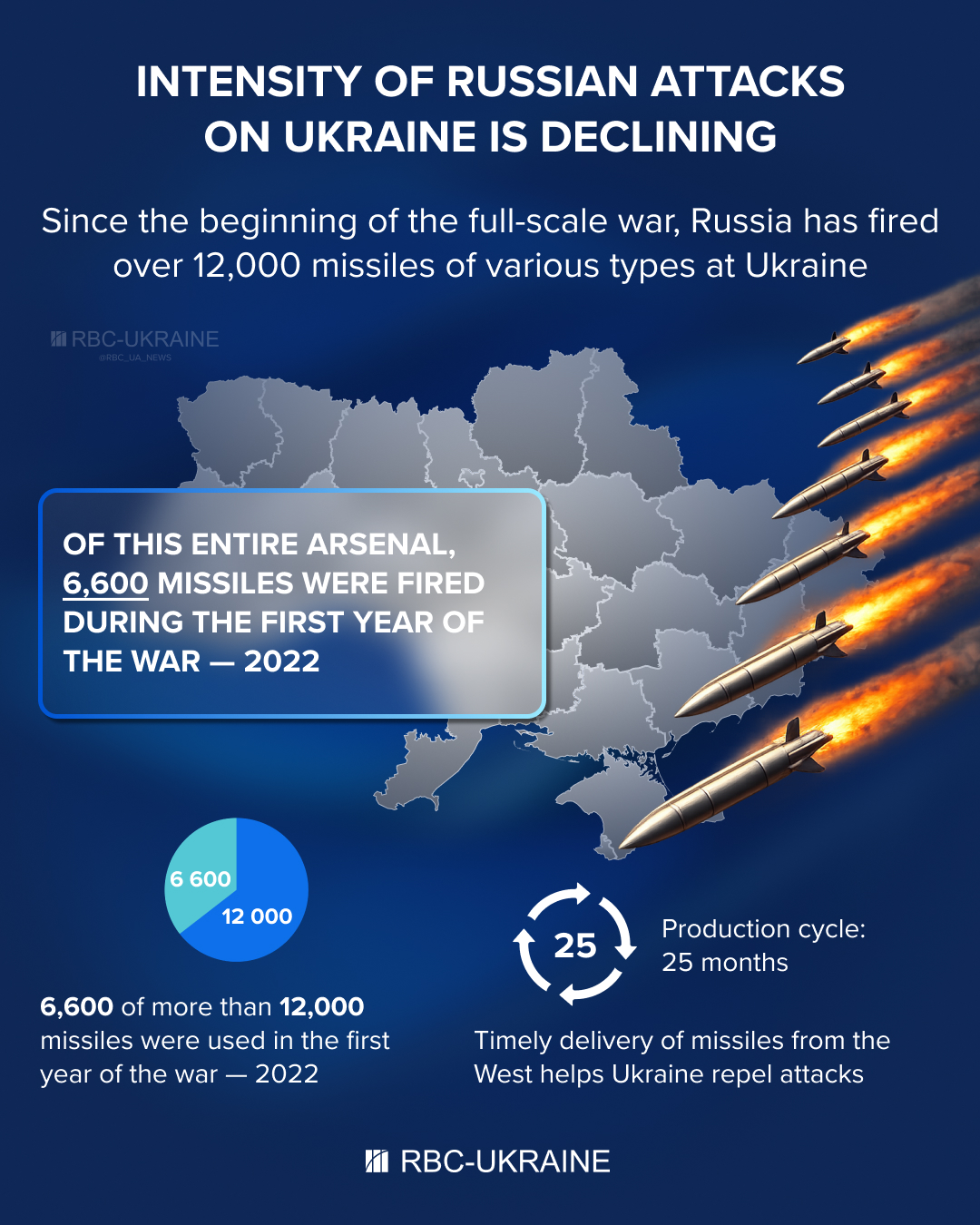
Over 12,000 Russian missiles have been fired at Ukraine since the start of the war, with 6,600 launched in the first year alone: the figures show that the intensity of attacks is now declining (RBC-Ukraine infographic)
Missile arithmetic: Pace of attacks is slowing
As the expert notes, since the start of the full-scale war, the enemy has fired over 12,000 missiles of all types at Ukraine, including ballistic and cruise missiles, S-300s, Tochka-U, and several others.
Of these, 6,600 missiles — more than half of the total arsenal — were launched in just the first year of the war.
"At first glance, it may seem that the Russians are increasing both the intensity of attacks and production, but in reality, the intensity of strikes is declining," he says.
The expert points out that, even though not all hits on infrastructure are reflected in public statistics, the overall pace and rhythm of attacks show a downward trend.
Although missile production in Russia continues, it cannot be described as a "conveyor belt of daily massive terror" using the same ballistic weapons.
"We cannot say that they regularly launch attacks with dozens of missiles, especially dozens of ballistic ones, thankfully. Moreover, their production has a fixed rhythm, and the timing does not work in their favor when looking at absolute numbers," Kyrychevskyi says.
Air defense success: How the West helps intercept Russian missiles
During the latest combined attack carried out by Russian forces on the night of February 26, Ukraine’s air defenders achieved a highly successful result, neutralizing 406 out of 459 targets. Notably, all Kh-101 cruise missiles and Zircon anti-ship missiles were intercepted.
Why was Ukraine able to repel the attack so effectively this time? Largely because most of the enemy missiles were shot down using air defense missiles agreed upon during the last Ukraine Defense Contact Group meeting.
"Our partners managed to provide missile support. There’s also the fact that the production cycle for air defense missiles is longer than for the long-range missiles Russia uses against us," notes Kyrychevskyi.
The expert also explained the specifics of Western defense production. According to him, whichever Western missile type you take, the production cycle from start to rollout is 20–25 months.
"Right now, the specifics of the production cycle at Western defense companies are working in our favor. The air defense missiles, which may have been initiated about two years ago, have been produced and deployed just in time," the expert concludes.
FAQ
What is the situation with Russia’s missile arsenal?
Production continues, but it cannot keep up with the pace of attacks seen at the start of the war. Massive daily attacks with dozens of ballistic missiles are not a regular occurrence at the moment.
Is Russia increasing the intensity of its attacks?
Not exactly. Overall figures show that the intensity of attacks is declining, although isolated episodes can still occur.
How long does it take to produce a Western air defense missile?
The production cycle for a Western-type missile is 20–25 months. This means that today’s air defense capabilities are the result of strategic decisions made by partners almost two years ago.
Also read: