Ultimatums or dialogue? What Ukraine can expect from Péter Magyar and Hungary's new government


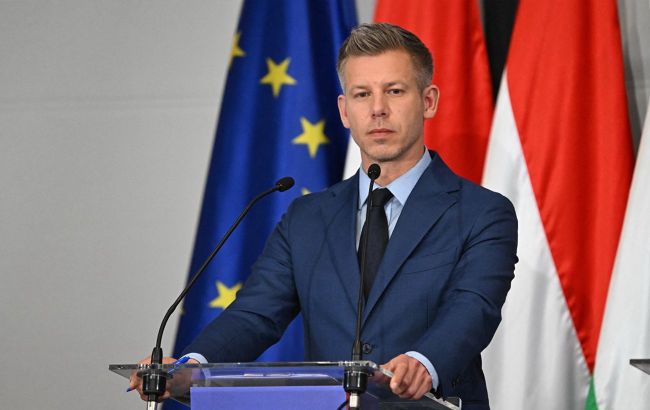 Péter Magyar (Photo: Getty Images)
The day after tomorrow, May 9, Péter Magyar will become Hungary's new prime minister, consigning Viktor Orbán to political oblivion. With his election victory, there is now a real chance that Budapest will stop undermining Ukraine’s interests in every possible way.
How likely is it that an agreement can be reached with the new Hungarian prime minister, and what stands in the way—read in the RBC-Ukraine article.
Read also: Orbán loses Hungary election despite Trump and Putin's help: RBC-Ukraine report from Budapest
Key points:
- Previous demands: Magyar presented Kyiv with 11 points regarding minority rights that almost entirely mirror Viktor Orbán’s rhetoric
- Constructive approach: Unlike his predecessor, Magyar is committed to reaching an agreement with Ukraine
- Not just the Hungarian minority: The new government has other priorities that could affect the intensity of the dialogue with Ukraine
- Financial leverage: The EU will unfreeze €17 billion for Hungary only on the condition of a genuine normalization of relations with Kyiv.
In Ukraine, Péter Magyar’s landslide victory in the election was met with relief. His predecessor, Viktor Orbán, had made Ukraine his main enemy and caused Kyiv a great deal of anxiety.
Expectations were partially met. Hungary unblocked a €90 billion EU loan that is crucial for Ukraine. For its part, Ukraine ensured the resumption of operations on the Druzhba oil pipeline, through which Budapest receives Russian oil.
Similarly, the veto on opening negotiation chapters for Ukraine’s EU accession should be lifted. President Zelenskyy hopes that all six of them will be officially launched within two months.
However, Magyar began using rhetoric toward Kyiv that was very similar to his predecessor's. First and foremost, it concerns the rights of Hungarians in Ukraine.
"It is time for Ukraine to lift the restrictions on rights that have existed for more than a decade and to restore all cultural, linguistic, administrative, and higher rights to the Hungarians of Zakarpattia," Magyar wrote on social media on April 28.
According to him, the concessions in the field of education announced by the Ukrainian government for 2025 are promising but insufficient.
According to Bloomberg, these conditions largely mirror the 11 demands regarding the rights of the Hungarian minority in Ukraine that Viktor Orbán presented to Kyiv back in 2024. Moreover, Magyar publicly stated that he would like to meet with Ukrainian President Volodymyr Zelenskyy in Berehove, a city in Ukraine’s Zakarpattia region with a predominantly Hungarian population.
Kyiv reacted cautiously to this proposal. Advisor to the President of Ukraine Dmytro Lytvyn noted that bilateral meetings are coordinated through bilateral channels and that public announcements are not the format in which Kyiv plans to conduct negotiations.
"By raising the issue of the rights of ethnic Hungarians in Transcarpathia, he is sending a signal to both the Hungarian minority and Kyiv that Budapest will continue to defend minority rights, but likely through negotiations rather than constant confrontation," Rast'o Kužel, executive director of Memo 98 (Slovakia), an organization that monitors political processes in Europe, tells RBC-Ukraine.
For Ukraine, this is dangerous if only because the process of European integration involves frequent and regular votes that must be supported by all EU members. And this creates additional risks, if, despite the statements, Budapest once again remembers what a veto is.
Hungarians in spotlight
The context in which Magyar made his statement on April 28 is significant. It came following his meeting with Zoltán Babják, the head of the Berehove City Territorial Community. Although according to RBC-Ukraine, Babják initiated the meeting, this fact in itself is positive.
The Hungarian minority in Ukraine lives in a compact area in several border regions of Zakarpattia. The only reliable data on its size dates back to 2001, when a census was conducted in Ukraine. At that time, there were 156,000 Hungarians. However, since then, their number has decreased significantly, just as the population of Ukraine as a whole has.
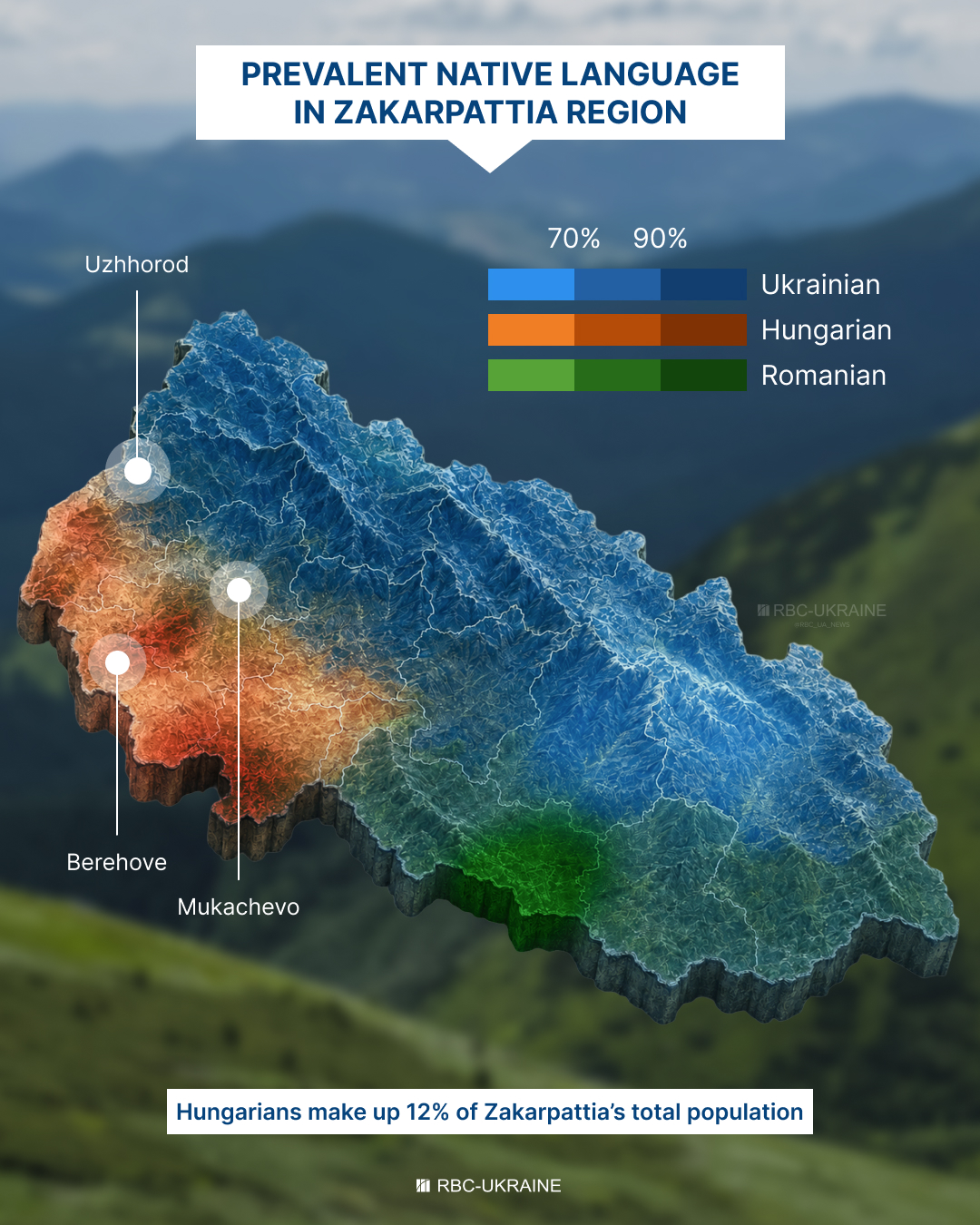 The Hungarian minority constitutes a significant portion of the population in Zakarpattia (infographic: RBC-Ukraine)
Hungarians in Zakarpattia have their own political representation, which Budapest previously used to advance its own interests. In this regard, the key figure was previously László Brenzovics, the head of the party and association Transcarpathian Hungarian Cultural Association (abbreviation in Hungarian – KMKSZ). He is currently in Hungary, and the Security Service of Ukraine (SBU) has opened a criminal case against him for infringing upon Ukraine’s territorial integrity.
Magyar’s team apparently decided to establish contacts with a more moderate figure. After the meeting, Zoltán Babják himself wrote on social media that there is no question of any infringement of the national community’s rights, since these issues have been regulated by the state and implemented in practice.
At the same time, there is every reason to believe that Magyar is not fully in the loop, according to the agency’s sources in both Ukraine and Hungary. For example, he noted that higher education in Ukraine remained monolingual and that high school graduation exams are taken in Ukrainian, neither of which is true. But the new government’s desire to get to the bottom of the matter remains.
"In reality, the spirit of these demands (which Orbán put forward to Ukraine in 2024—ed.) will remain, but the difference is that the future government genuinely wants to resolve the issue," notes Gergely Nyilas, a journalist for the leading Hungarian news agency Telex.
In addition, some factors contribute to the improvement of relations between Kyiv and Budapest. At the same time, because of them, substantive agreements may be somewhat delayed.
Homework
For Péter Magyar, the top priority right now is replacing the old guard within Hungary, from all government agencies to state-owned companies.
Another priority, linked to the first, is securing EU funds that were frozen during the Orbán era due to the assault on democracy and the rule of law. The latter must be done as quickly as possible, over the summer. To achieve this, Magyar must dismantle the corrupt structures of the Orbán era.
"This means reviewing all these contracts, tenders from companies linked to Fidesz, privatizations, or, sometimes, the opposite, when the state bought out a company at a price very favorable to the businessman, that happened too," Gergely Nyilas tells the agency.
Interestingly, this also applies to Ukraine, notes Roland Tseber, an ethnic Hungarian and member of the Zakarpattia Regional Council, in a comment to RBC-Ukraine. Some of the funds intended to help Ukrainian Hungarians may simply have been embezzled. Possible future minister responsible for this area, Minister of Social Relations and Culture Zoltan Tárr, is expected to conduct an audit.
"They (the new government – ed.) will check what has been done over the past 10 years, where and how the money went, and how various grants, programs, and funding, what Hungary financed abroad, were implemented. Believe me, there will be a lot of interesting things there," Tseber is convinced.
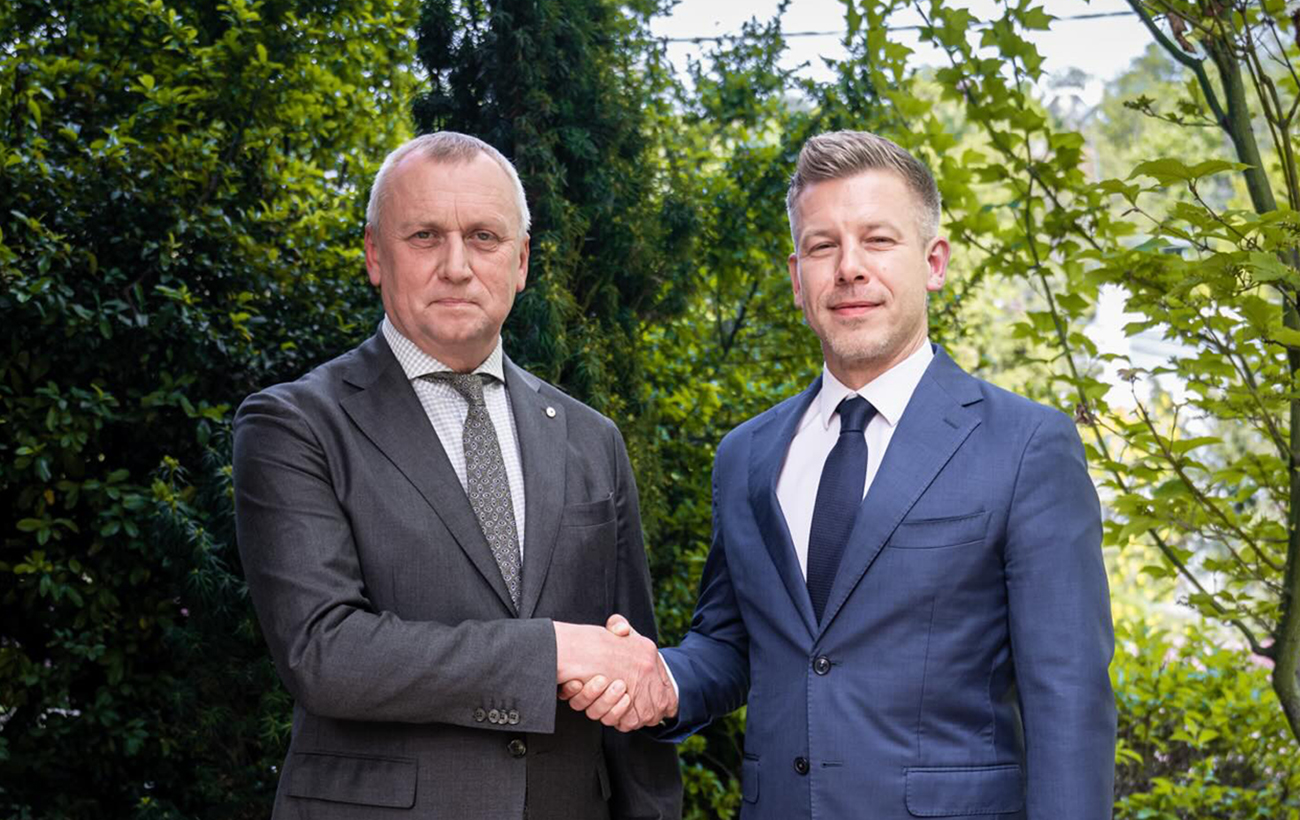 Péter Magyar and Zoltán Babják, Head of the Berehove Community (photo: facebook.com/peter.magyar.102/)
When it comes to Hungarians abroad, Magyar also faces a more pressing issue. There is a long-standing conflict between Hungary and Slovakia regarding the so-called Beneš decrees.
These documents, adopted in Slovakia after World War II, effectively designated Hungarians as enemies of the state and allowed for the mass expulsion of people and the confiscation of their land without any compensation. Slovakia has still not officially repealed these provisions, which allow courts to this day to seize private plots of land belonging to ethnic Hungarians for the benefit of the state.
"Orbán and Fico, the Prime Minister of Slovakia, had a very good personal relationship, and that is why the Hungarian government did not particularly address the issue of the Beneš Decrees. So now this issue will actually be raised," says Gergely Nyilas.
All of this is compounded by the need for Magyar to demonstrate to his voters a completely new approach to politics, where the Ukrainian dimension is inextricably linked to other issues.
"Statements regarding Hungarians in Ukraine are also a way to reassure conservative voters within the country and show that a change in government does not mean abandoning the protection of Hungarian national interests," adds Rast'o Kužel.
The good news is that Ukraine has an important ally here, whose position Magyar simply cannot ignore.
From Kyiv to Budapest via Brussels
Aware of Magyar's intentions and position, the European Union has sufficient leverage. First and foremost, this involves the potential release of approximately €17 billion in European funds for Hungary, Rast'o Kužel emphasizes in a comment to RBC-Ukraine.
The European Commission is already preparing a roadmap for the new government with specific deadlines by the end of August. This involves fulfilling 27 points, a list of reforms in the areas of the judiciary and anti-corruption, without which the funds will not reach Budapest’s accounts. Importantly, the requirements also include the normalization of relations with Ukraine.
"Brussels will likely act more cautiously following the Polish experience (when Warsaw's funding was also restricted due to an attack on democratic institutions—ed.), but Magyar's strong mandate gives him more opportunities to carry out reforms and restore trust with the EU," Kužel notes.
So, although Magyar, in his own words, is unlikely to become one of Ukraine’s most active supporters, he also does not seem to intend to play the role of a spoiler within the European Union, as Orbán did, and, increasingly, Robert Fico.
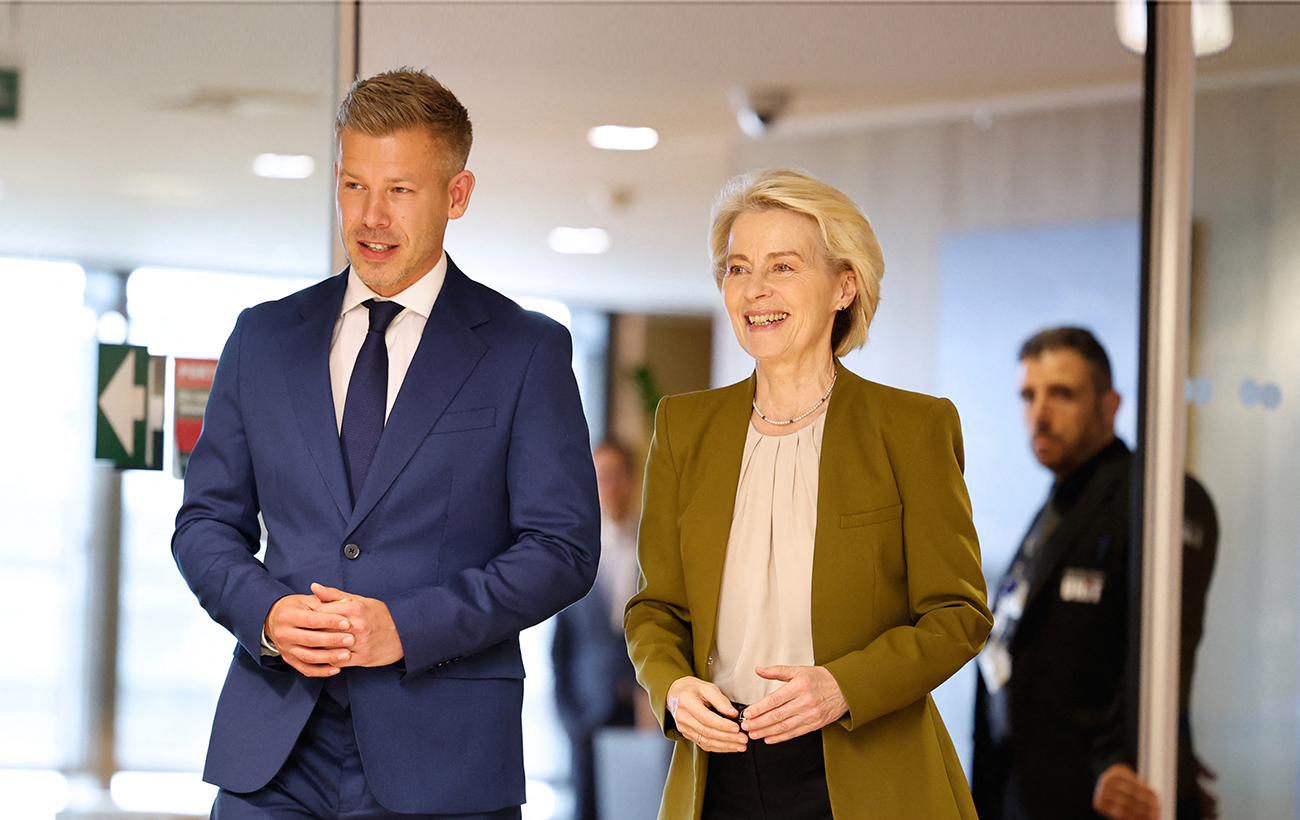 Péter Magyar and European Commission President Ursula von der Leyen (photo: Getty Images)
The Hungarian government will be formed next week, and after that, some official contacts will be possible, Deputy Prime Minister for European Integration Taras Kachka says. According to him, there are currently many technical contacts taking place between Budapest and Brussels. In particular, regarding the opening of negotiation clusters.
"But for now, this is more a matter of technical discussions, as the formation of the government in Hungary needs to be finalized. From what we understand, everyone is focused on reaching a decision as quickly as possible," Kachka says.
In addition to Péter Magyar himself, another key figure here will be Hungary’s new Minister of Foreign Affairs, Anita Orbán (who is not related to Viktor Orbán).
"Reaching an agreement won’t be easy, but we need to unite and take steps to improve relations. And when it comes to the Hungarians of Transcarpathia, we need to talk to the people directly involved and to those who make the decisions," emphasizes Roland Tseber.
There are already various grassroots initiatives on how to engage with the new Hungarian government. In particular, these involve representatives of the Hungarian community in Ukraine, but the final format of cooperation will become clear somewhat later.
Although the government in Budapest has changed, the new leaders remain pragmatic and tough. No matter how much social media commentators might wish otherwise, international politics is never black and white. And this will need to be taken into account in future dealings.
Quick Q&A
— What are the main demands Péter Magyar has made of Ukraine regarding the Hungarians of Zakarpattia?
— Hungary’s new prime minister insists on the full restoration of the minority’s cultural, linguistic, and administrative rights to the level that existed over ten years ago. Specifically, this involves 11 points of demands concerning the expanded use of the Hungarian language in the educational and public sectors.
— When might the new negotiation clusters regarding Ukraine’s EU accession be officially opened?
— The Ukrainian side expects all six negotiation clusters to be launched within the next two months. Technical consultations between Budapest and Brussels are already underway, but the final decision depends on the completion of the formation of the new Hungarian government.
— What conditions must the Hungarian government meet to receive the frozen funds from the European Commission?
— Brussels has prepared a roadmap of 27 reforms in the areas of anti-corruption and the judiciary, which Budapest must implement by the end of August 2026. A separate item on this list is the requirement to normalize relations and remove political barriers for Ukraine.