Druzhba pipeline countdown: How US and EU tighten pressure on Orbán's energy power


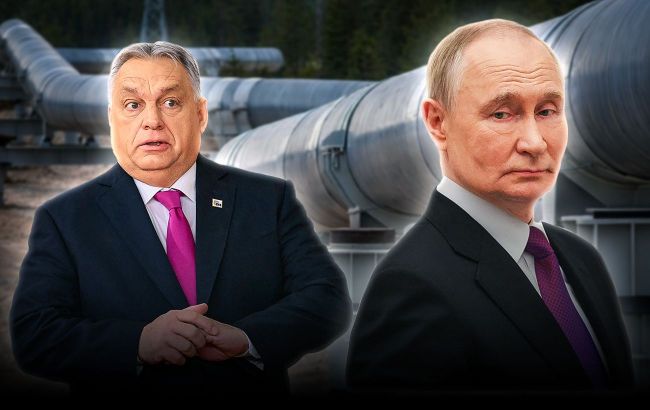 Viktor Orbán and Vladimir Putin (collage: RBC-Ukraine)
The European Union and the United States are beginning to definitively oust Russian energy resources from Europe, leaving Orbán with a difficult choice.
Read how the major restructuring of the energy market is depriving the Kremlin of its last levers of influence on the continent in the RBC-Ukraine's article.
Read also: Energy blackmail or election campaign: What's driving Orbán and Fico's standoff with Ukraine
Key points
- April 15: The European Commission will present a legal ban on Russian oil imports via Druzhba.
- Majority instead of unanimity: Brussels plans to bypass Hungary's veto through the REPowerEU regulation, which does not require the consent of all countries.
- Contract with Chevron: Hungary has already begun diversification by signing an agreement to supply American gas.
- US pressure: Washington is increasing pressure on Hungary, forcing it to buy its own gas instead of Russian gas.
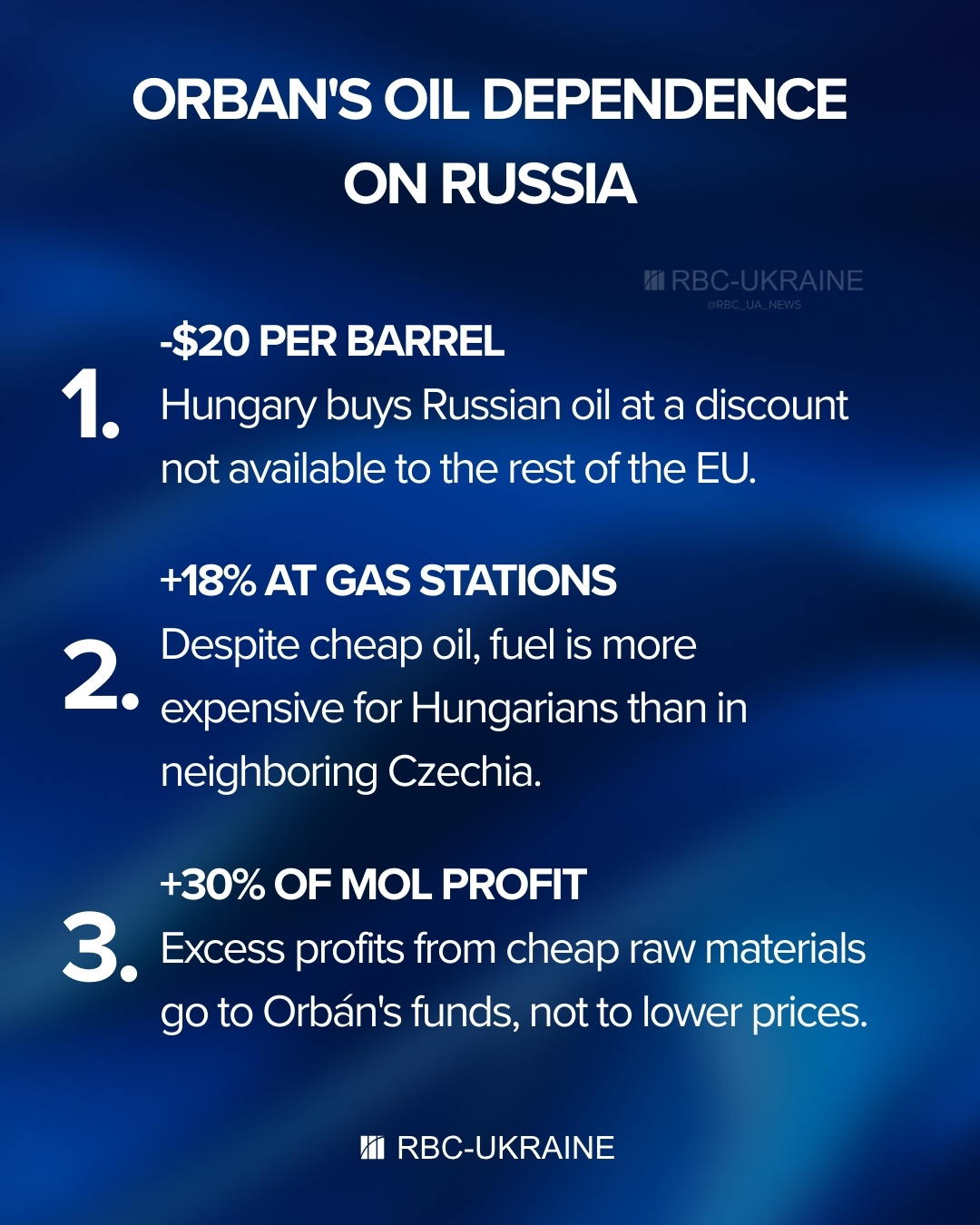 Hungary and Slovakia remain the largest buyers of Russian hydrocarbons in Europe (infographic: RBC-Ukraine)
Electoral turmoil continues in Hungary – for the first time in many years, Viktor Orbán may lose power. But at the same time, another process is underway – the redistribution of the European energy market.
The story with the Druzhba oil pipeline has once again highlighted the long-standing problem of Russian gas and oil still being supplied to Hungary and Slovakia.
Against the backdrop of current events, on April 15, the European Commission will present a legal proposal for a permanent ban on Russian oil imports. This will happen three days after the parliamentary elections in Hungary. And this is only one aspect of an inevitable process. Sooner or later, there will be no Russian oil and gas in Europe.
"This is a tightening of sanctions against Russia. For us, of course, there is nothing left to transport via Druzhba. We will only be able to supply our small oil production to refineries in Czechia. But Russia will lose its political leverage in the region," Mykhailo Honchar, president of the Strategy XXI Global Studies Center, told RBC-Ukraine.
However, behind this geopolitical victory, if it does happen, lies a complex chess game. In it, the economic interests of the Hungarian elite, the strategic calculations of Brussels, and the business diplomacy of Washington are intertwined in a tangled knot.
Hungarian giant
Hungary receives Russian oil at a price 15-20% lower than it could buy it from other suppliers. This is one of the main reasons for the country's energy successes. The Hungarian oil and gas company MOL Group has become one of the most prominent players in Central and Eastern Europe.
"MOL Group is, in principle, a fairly powerful European company. Yes, it cannot be compared to Shell or TotalEnergies, but it has a strong position in Central Europe," says Mykhailo Honchar.
Founded in 1991 as the successor to a state trust, the company chose a strategy of regional expansion after privatization in 1995.
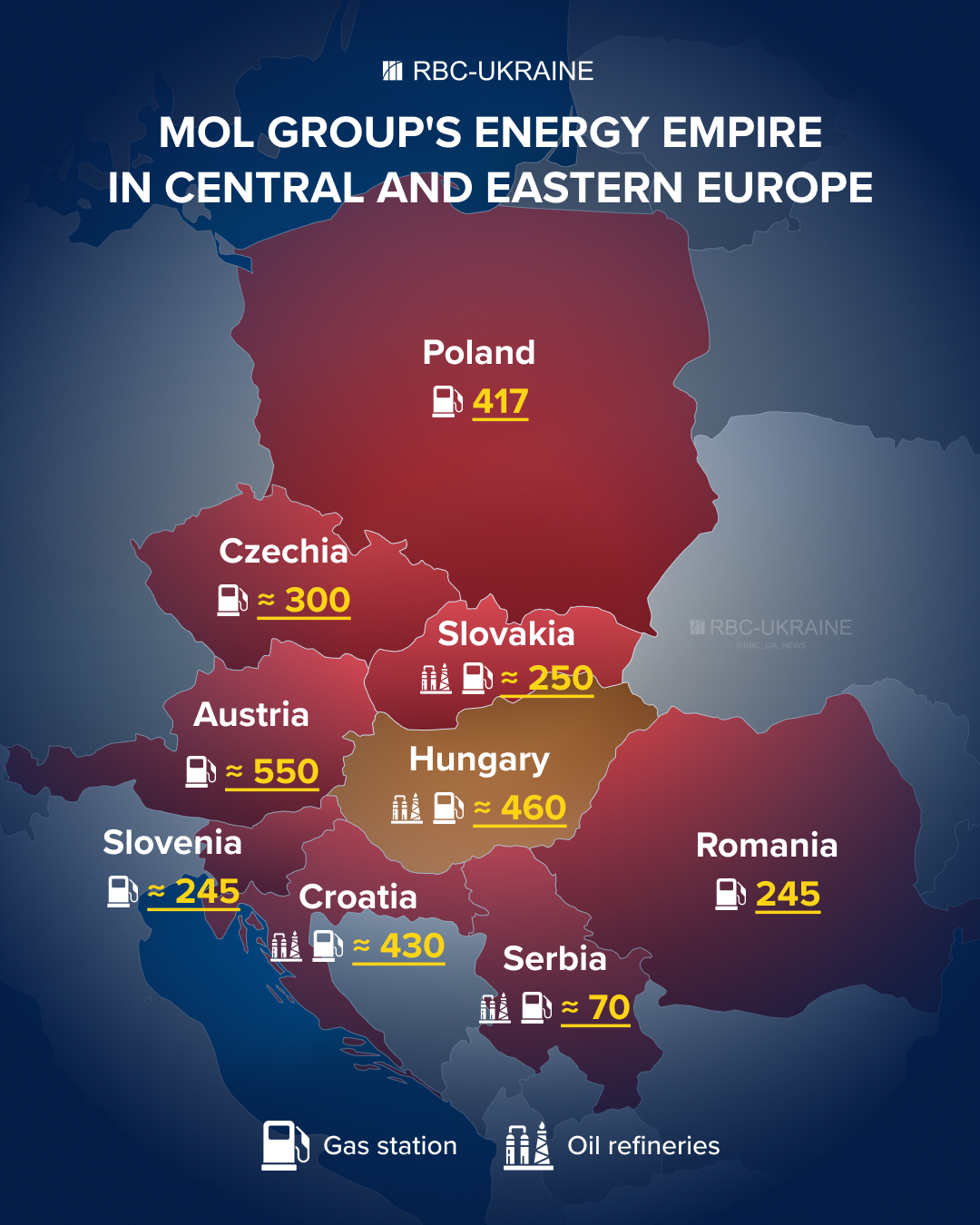 MOL owns many assets outside Hungary (infographic: RBC-Ukraine)
Among other things, MOL dominates in Slovakia, which is one of the reasons why Prime Minister Robert Fico is so actively working with Orbán on the Druzhba oil pipeline.
It was Viktor Orbán who made MOL part of his energy and political machine. In 2011, the government bought 21.2% of the company's shares from Russia's Surgutneftegaz. Three other funds linked to Orbán – Mathias Corvinus Collegium, Maecenas Universitatis Corvini, and MOL New Europe Foundation – control about 30% of MOL's shares.
The profits from cheap Russian oil, which the company resells at market prices, do not go towards lowering prices for Hungarians. On the contrary, fuel in Hungary was 18% more expensive than in Czechia in 2025. At the same time, MOL's operating income increased by 30% compared to pre-war levels.
Shadow money
According to estimates by the Center for the Study of Democracy, these excess profits indirectly finance Orbán's shadow networks of influence in Hungary.
In the 2000s, MOL established joint ventures with the Russian company Yukos and purchased extraction sites in Siberia. These assets were later sold or completely frozen after 2022.
In 2009, the Russian company Surgutneftegaz bought more than 20% of the Hungarian giant's shares. Subsequently, the Orbán government viewed this as an attempt to take control of a strategic company, and in 2011, the state bought back this stake.
The main bridge between MOL and Russian companies was the little-known trader Normeston Trading, according to an investigation by OCCRP/iStories.
On the Russian side, he was backed by people close to Kremlin oligarch Gennady Timchenko and former top managers of Lukoil. On the Hungarian side, he was backed by businessmen Istvan Garanci and György Nagy, who are close to Orbán, as well as former MOL consultant Imre Fazakas.
However, it would be wrong to say that Orbán completely controls MOL. Given the scale of the company, it is more of a symbiosis. Moreover, MOL played a significant role in transforming Orbán from the liberal politician he was during his first term in the late 1990s into the person he is today.
"The MOL factor is underestimated in our country. In Hungary, they were the behind-the-scenes force that also influenced Orbán, directing him towards what they considered to be pragmatic cooperation with Russia," says Mykhailo Honchar.
Today, MOL may become a buyer of the assets of Russian companies Lukoil and Rosneft in Europe. They are selling them after the US imposed sanctions on them last year.
On January 20, MOL signed a preliminary agreement with Gazprom Neft to purchase a controlling stake in the Serbian oil company NIS. This will allow Serbia's only oil refinery in Pančevo to escape US sanctions.
The company also announced its intention to buy Russian gas station chains in Bulgaria, Romania, North Macedonia, Montenegro, and Croatia. However, this has been hampered by many factors in each country, ranging from opposition from local authorities and the presence of other parties interested in acquiring Russian assets to the need to obtain permission from the US financial regulator to lift sanctions.
The second energy source on which Hungary is dependent is gas. Imports of blue fuel do not go through MOL, but primarily through the state-owned company MVM CEEnergy. It has a long-term contract with Russia's Gazprom, which provides about 90% of gas imports to Hungary.
Although this is the second source of income for Orbán's circle, the company cannot boast the same autonomy as MOL and is completely controlled by the government.
EU strikes blow to Russian oil
The EU's path to energy independence from the Kremlin, which began in 2022, has been slow and painful. Almost immediately, the EU abandoned Russian coal. Then, in December 2022, it abandoned crude oil transported by sea.
In February 2023, sanctions were extended to Russian petroleum products. During this time, Russia's share of oil imports to the EU plummeted from over 25% to less than 3%, and most countries, such as Germany and Poland, voluntarily abandoned even pipeline supplies.
While Hungary and Slovakia are holding on to exemptions from the sanctions, the EU is preparing the ground for a complete shutdown of the oil tap from Russia. The European Commission's strategic goal remains unchanged: to stop all imports of raw materials from Russia by the end of 2027.
The process is now moving into the legal realm: a document is being prepared to revoke the temporary permit for supplies via the southern branch of the Druzhba oil pipeline.
According to Reuters, the European Commission plans to enshrine a complete ban on Russian oil in legislation. This means that even in the event of a hypothetical end to the war in Ukraine or the lifting of some sanctions against Russia, the legal ban on imports will remain in place as an autonomous safeguard.
Read also: Ukraine vs. Orbán and bureaucracy: Who's blocking Kyiv's path to European Union
The most interesting thing is how Brussels plans to circumvent Hungary's inevitable veto. European diplomats explain in a comment to Politico that this time they will rely on the qualified majority mechanism.
Instead of trying to reach an agreement with Orbán within the framework of the next sanctions package, which requires unanimity, the restrictions could be implemented as part of the updated REPowerEU energy diversification regulation. This would allow the decision to be approved by the votes of 25 countries, effectively bypassing Hungary and Slovakia.
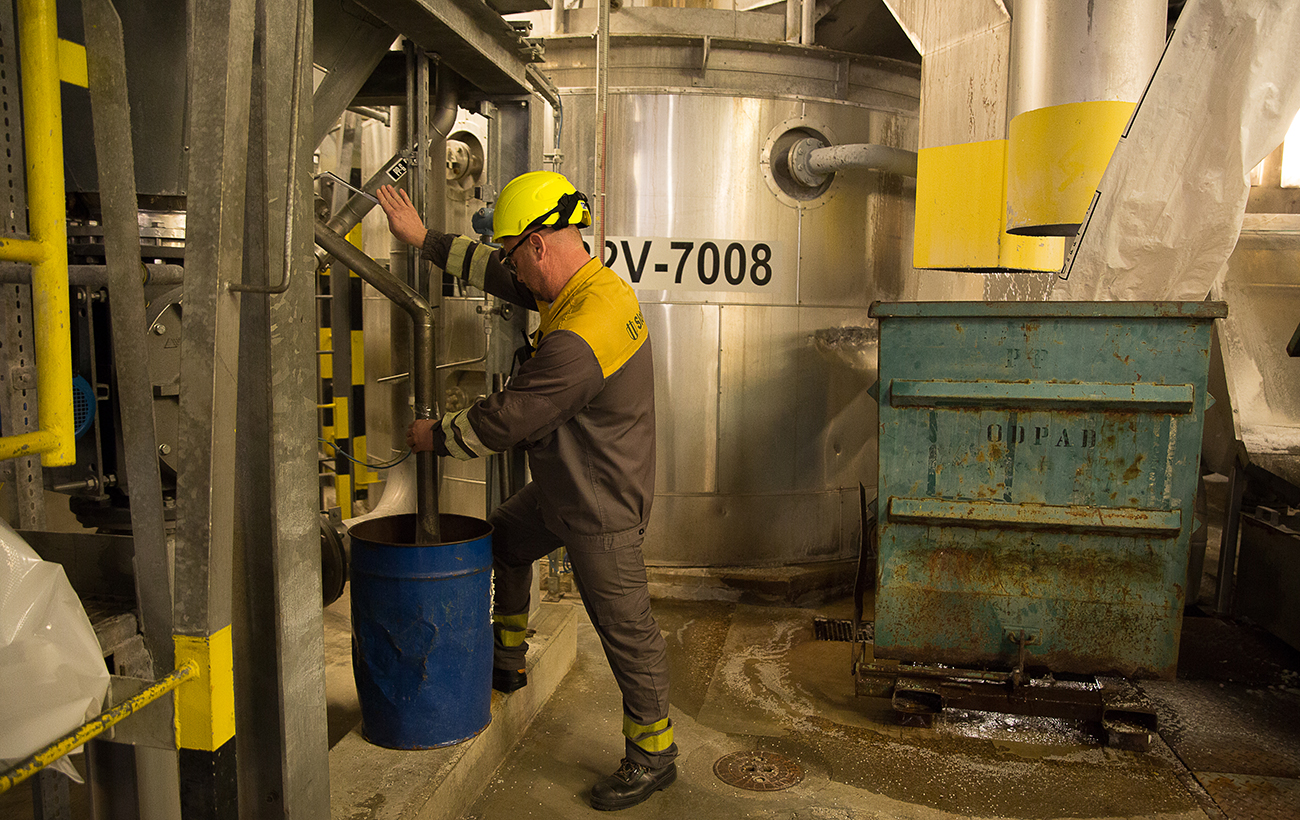 The Slovnaft oil refinery in Slovakia, owned by MOL (photo: Getty Images)
Budapest's reaction to this idea is predictable. Hungary has already threatened to appeal to the EU Court. However, Brussels is prepared for this.
European Commissioner for Energy Dan Jørgensen stressed that alternatives to Russian oil are available. For example, supplies from other countries are possible via the Adria pipeline through Croatia. This means that even if Hungary takes legal action, it will have little chance of success in court.
US friendly pressure
The US is also dealing a blow to Russian energy resources. However, oil is not the key issue for Washington.
The US has been replacing Russian gas in Europe with its own for a long time. Before Russia's full-scale invasion, Europe received only 4–5% of its gas from the US in 2021. These were mainly supplies of liquefied natural gas (LNG) through special terminals.
After 2022, the US share increased significantly as the European Union refused to buy Russian gas.
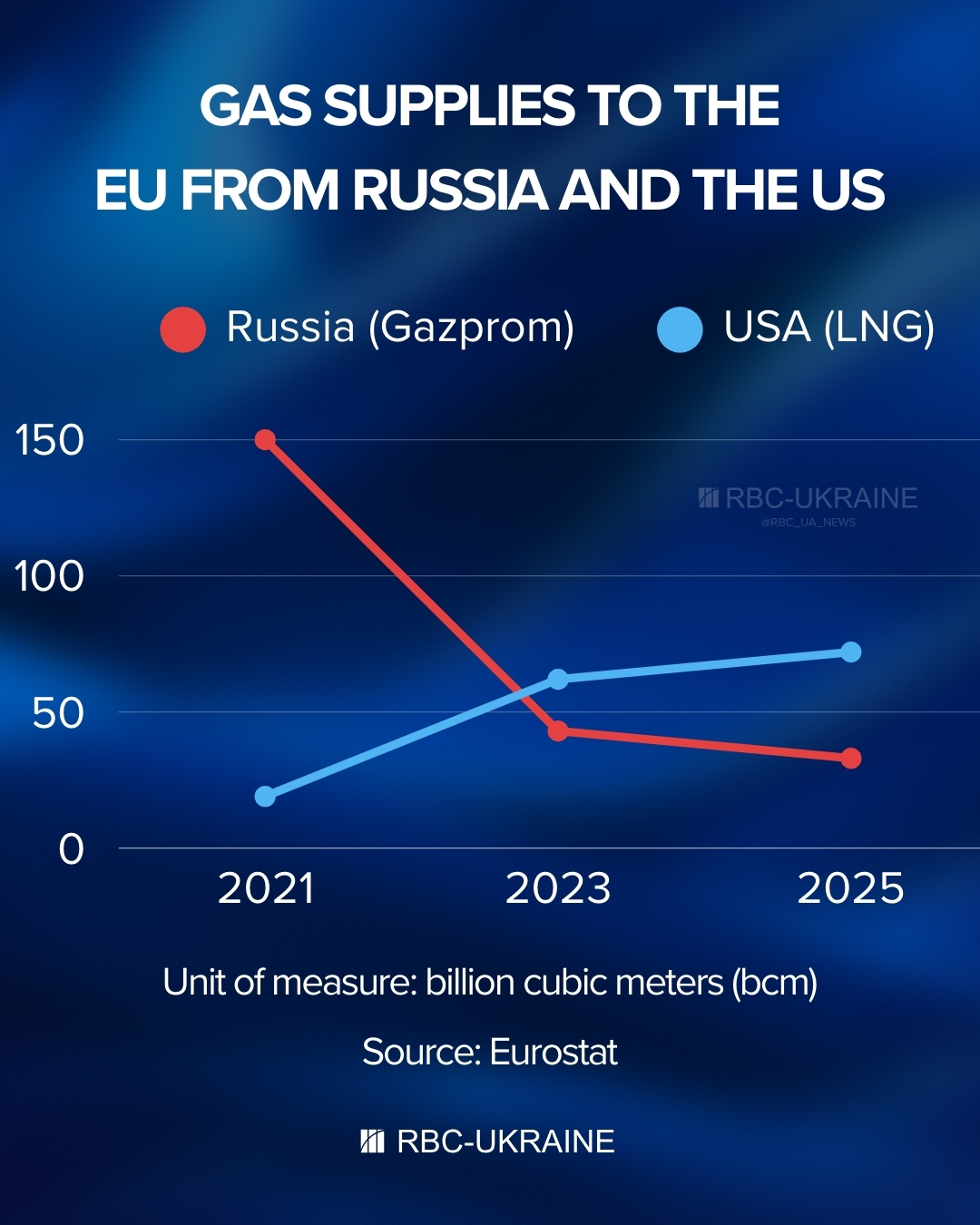 American companies are gradually taking the place of Russia in Europe (infographic: RBC-Ukraine)
The US has also filled the niche for petroleum products. Following the EU embargo on Russian diesel and gasoline, US diesel exports to Europe have reached record levels since 2023. For example, according to Kpler/Vortexa, in January this year, they amounted to 336-410 thousand barrels per day.
Hungary is still holding on to cheap pipeline gas from Russia, but under US pressure, it is gradually making compromises. Orbán's desire to maintain warm relations with US President Donald Trump plays a significant role here.
In November last year, during Orbán's visit to the US, Hungary committed to purchasing American LNG. In December, the Hungarian state-owned company MVM signed a specific 5-year contract with the American company Chevron. The agreement provides for the supply of 400 million cubic meters of LNG annually.
The gas will likely come through a terminal in Croatia on the island of Krk or other similar routes. However, this is still only 10% of Hungary's total consumption. For comparison, in 2025, the country imported about 7.5 billion cubic meters of Russian gas.
However, it seems that Washington is willing to turn a blind eye to Orbán's unwillingness to switch to American gas for now.
Read also: 'We must defeat them too': Hungary's PM Orbán accuses Ukraine of interfering in elections
Relations between Hungary and the US are developing in parallel. Ideologically, there is complete harmony between supporters of MAGA and Orbán.
"Radical Republican conservatives need the Hungarian Prime Minister as a Trojan horse in the EU, which will continue to weaken the Union and promote the ideas of sovereignists there. However, business is business, so support will be combined with pressure on these issues," Serhii Herasymchuk, deputy executive director of the Ukrainian Prism Foreign Policy Council, tells RBC-Ukraine.
Changes after election
After the April 12 election, US pressure on Hungary over gas will intensify, experts surveyed by RBC-Ukraine agree. If Orbán remains in power, Trump's tough business logic will await him.
"Orbán has already made certain concessions on nuclear energy issues, allowing Westinghouse into his market, although until now Rosatom's monopoly was considered unquestionable. The Americans will also push on oil and gas issues. However, this will happen after the elections. Washington does not want to harm Orbán on the eve of the elections," Herasymchuk notes.
The recent visit of US Secretary of State Marco Rubio to Hungary and Slovakia was significant in this regard. On the one hand, he clearly expressed his political support for Orbán and added political points before the elections. On the other hand, he stated outright on the eve of the visit that he would discuss the rejection of Russian energy sources.
At the same time, a possible change of power in Hungary could only accelerate this process. Orbán's rival Péter Magyar and his team openly declare their plans to abandon Russian energy sources.
"We must diversify our supplies to have alternatives. Currently, Hungary is 87% dependent on a single source – Russia – for its energy sector (oil and gas). Even setting aside the political aspect, this is not good," says Magyar's economic advisor, István Kapitány.
Incidentally, Kapitány previously worked for many years as a top manager at the American oil company Shell. Another advisor to Magyar, responsible for foreign policy, is Anita Orbán (no relation to the current prime minister), who previously worked in energy diplomacy and is also a strong supporter of abandoning supplies from Russia.
Read also: Elections 2026 in US, Hungary and Israel: Why each matters for Ukraine
However, although the opposition does not cause rejection in the US, it is still very far from the so-called bromance that exists between Orbán and Trump.
"Of course, if Péter Magyar wins, his team's existing business ties with the Americans will have added value. However, Trump's team will treat him with caution," believes Serhii Herasymchuk.
According to him, the meeting between Magyar and Polish Prime Minister Donald Tusk on the sidelines of the Munich Conference was a signal to the Americans that Tisa is ready to cooperate with the European elite and is therefore alien to MAGA representatives.
'The whole ocean in a single drop'
What is happening around Hungary is a vivid illustration of how Central and Eastern Europe is becoming a battleground between two different approaches to security.
On the one hand, there is Brussels, which is trying to build collective armor against Russian influence through legal norms and regulations such as REPowerEU.
On the other hand, there is Washington, which, under the Trump administration, is betting on direct, often personalized deals.
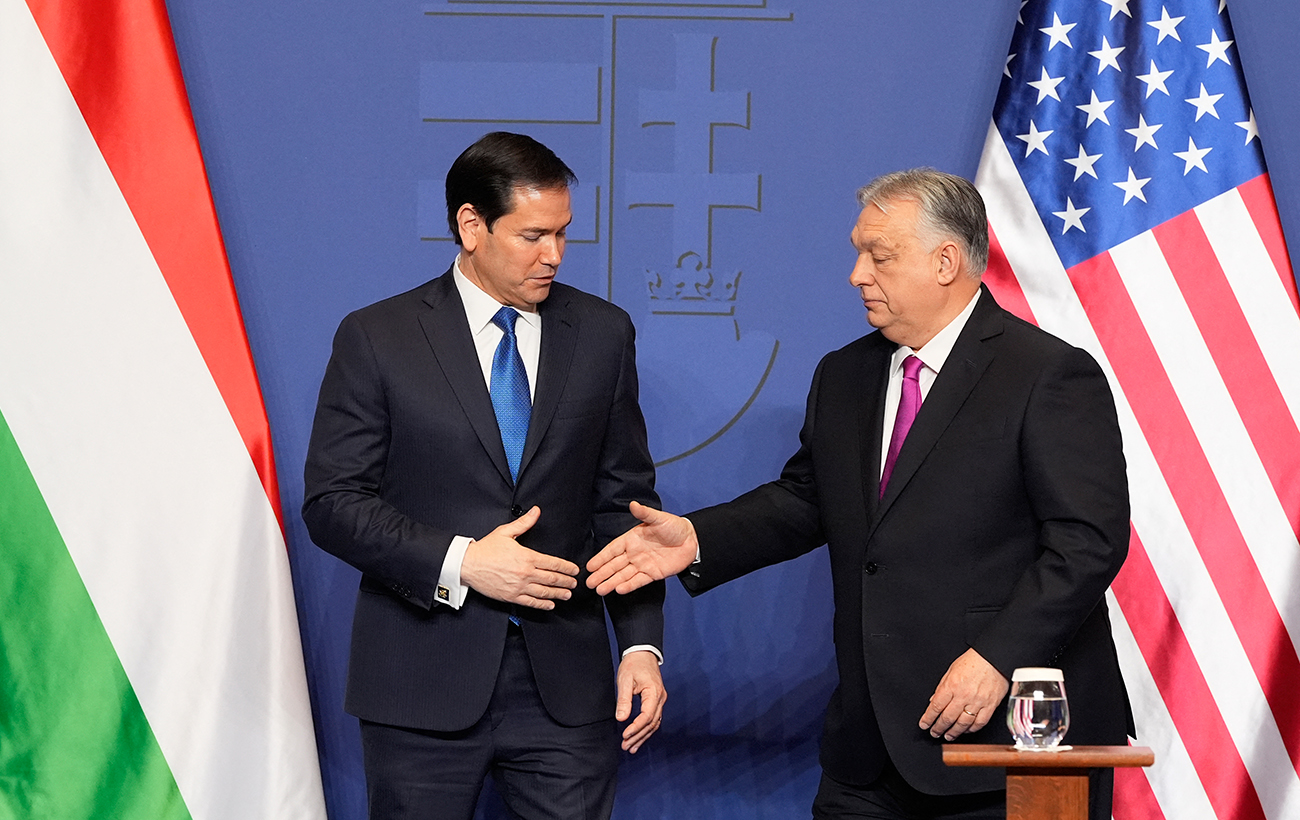 Marco Rubio and Viktor Orbán in Budapest (photo: Getty Images)
For Ukraine, this market redistribution is of strategic importance. The final closure of the southern branch of Druzhba and Hungary's transition to American LNG and nuclear fuel is not only a blow to the Kremlin's revenues, but also the dismantling of the last levers of energy blackmail that Russia has used in our region for decades.
However, the future configuration of forces will depend on whether Kyiv and European capitals can adapt to the new reality of US diplomacy in the style of 'you scratch my back, I'll scratch yours.'
"The region is too small and divided from Washington's point of view, so they will apply transactional politics and the carrot and stick approach here," Serhii Herasymchuk emphasizes.
The carrots will go to those who help Washington balance Brussels' influence, open the gates to American capital, and demonstrate personal loyalty to Donald Trump.
On the other hand, the stick will be used against those in Europe who are ready to resist the Trump team in their desire to dominate the energy market.
In the end, no matter who wins on April 12 in Hungary—Viktor Orbán or Péter Magyar—there's less and less room for special relations with Moscow. The combined legal will of the EU and the energy expansion of the US, although motivated by different reasons, are working toward the same result: transforming Russian energy resources from black gold into a toxic asset that Europe can finally get rid of.
Quick Q&A
— When will the EU completely ban Russian oil imports through Hungary?
— The European Commission plans to present a legal proposal for a complete ban on imports on April 15, 2026. Brussels' ultimate strategic goal is to completely stop supplies of raw materials from Russia by the end of 2027.
— How does the European Union plan to circumvent Viktor Orbán's veto on oil sanctions?
— Brussels plans to use the qualified majority mechanism within the REPowerEU regulation. This will allow decisions to be taken by the votes of 25 member states, without requiring the unanimous consent of Hungary and Slovakia.
— Will Hungary be able to survive without Russian energy?
— Yes, alternative routes already exist. Oil can be supplied via the Adria pipeline from Croatia, and the gas deficit is already partially covered by a 5-year contract with the American company Chevron.
— How will the results of the Hungarian elections affect the country's energy policy?
— Orbán's re-election will mean continued pressure from the US (Trump's carrot and stick approach), while Péter Magyar's victory will lead to rapid diversification. The opposition has already announced plans to urgently reduce the country's 87% dependence on Russia.
— Why is the US pressuring Hungary to abandon gas from Russia?
— The US is implementing a strategy to replace Russian gas with its own liquefied natural gas (LNG), which already accounts for more than 27% of the EU market. In addition to economic benefits, Washington seeks to eliminate the Kremlin's political leverage in Central Europe.