Ukraine's General Staff responds to Russian claims about strike on college in Starobilsk

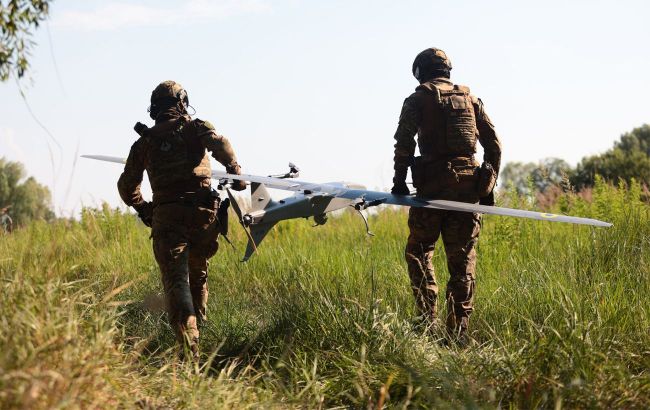 Photo: Ukrainian soldiers (facebook.com/techforce.in.ua)
Overnight on May 22, the Ukrainian Armed Forces carried out a series of strikes on enemy military infrastructure and facilities used for military purposes. At the same time, Russia’s claims about alleged attacks on civilian sites are manipulative, according to Ukraine’s General Staff.
"Russian media are actively spreading manipulative information about the alleged targeting of civilian infrastructure by the Ukrainian Armed Forces in temporarily occupied territories of Ukraine," the statement said.
The General Staff stressed that Ukrainian strikes are conducted in strict compliance with international humanitarian law and the laws and customs of war.
"During the night of May 22, 2026, several Russian military targets were hit, including an oil refinery, ammunition depots, air defense systems, command posts, and enemy personnel, including one of the headquarters of the Rubikon unit near the city of Starobilsk," the statement said.
According to the General Staff, Rubikon is a Russian military special unit known as the Center for Advanced Unmanned Technologies. Its members regularly attack civilians and civilian infrastructure in Ukraine.
What preceded it
Earlier today, Russian President Vladimir Putin accused Ukraine of attacking a college dormitory in Starobilsk in the Luhansk region. The Kremlin leader also ordered a retaliatory strike.
According to Putin, the alleged Ukrainian drone strike on the college could not have been caused by Russian air defense or electronic warfare systems. He claimed the attack was deliberate because three waves of drones struck the same location.
Earlier, Reuters reported that nearly all of the largest oil refineries in central Russia had either completely stopped operations or significantly reduced fuel production due to massive Ukrainian drone strikes.
RBC-Ukraine also reported that the security situation inside Russia has begun to seriously affect public sentiment. In particular, Russians are said to be far more concerned about strikes on regions inside Russia than developments directly on the battlefield.