Elections 2026 in US, Hungary and Israel: Why each matters for Ukraine


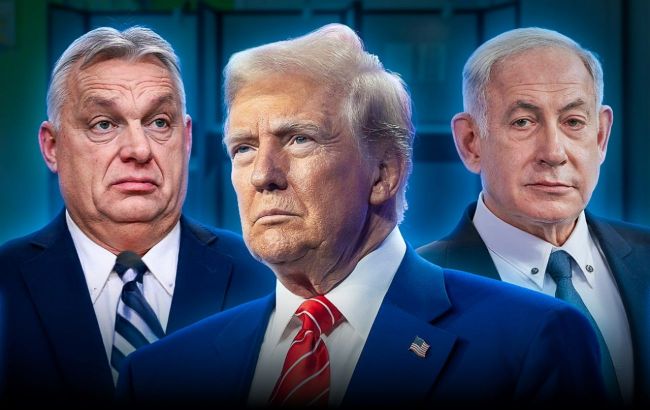 Viktor Orbán, Donald Trump, and Benjamin Netanyahu (collage by RBC-Ukraine)
In 2026, there will be many important elections around the world, including in the US, Hungary, and Israel. Read the RBC-Ukraine's article to find out what each of these votes means for Ukraine and how the pre-election campaign is unfolding.
Key questions:
- How can the US midterm elections help Ukraine?
- What are the chances of overthrowing Orbán in Hungary?
- Why might the opposition in Israel be more pro-Ukrainian than Netanyahu?
While in Ukraine, for obvious reasons, any elections have been put on hold, it makes sense for Ukrainians to follow certain important elections abroad, because depending on their results, Kyiv will either be able to get rid of serious external problems and gain new allies, or the opposite. Read on to find out what exactly to follow and who to root for.
Threat to Trump's power
Unlike most other countries, the renewal of the US Congress does not happen all at once, but gradually. Every two years, the US completely re-elects the lower house, the House of Representatives, as well as one-third of the upper house, the Senate. In fact, such midterm elections will take place in November this year.
Currently, the Republican Party, led by Donald Trump, has a formal majority in both the House of Representatives and the Senate. This gives the US President a lot of leeway in both domestic and foreign policy.
The Democrats are hoping to win a majority in at least the House of Representatives in the elections. This would allow them to block Trump's initiatives, at the very least, and in the best-case scenario, even initiate impeachment proceedings against the President. In addition, Congress has the authority to allocate financial aid to Ukraine.
Due to a series of controversial moves by Trump, his approval rating is gradually falling. According to the latest Emerson College Polling survey from December 2025, Trump's approval rating as President is 41%, while 50% of Americans disapprove of his performance. At the beginning of last year, the situation was reversed, with approval at 49% and disapproval at 41%. Democrats logically hope that this will hurt the entire Republican Party.
Voting sentiment in the US will be determined by the issues that voters consider most important to them.
The economy ranks first: 38% of respondents named it as the number one issue. This is followed by threats to democracy, healthcare, and immigration, each with 14%. These issues may be decisive for the results of the midterm elections.
"It is almost a foregone conclusion that the Democrats can indeed win this victory. The question is how big it will be and whether they will be able to take advantage of it," says Oleksandr Kraiev, an expert at the Ukrainian Prism Foreign Policy Council, in a comment to RBC-Ukraine.
Elections to the US Congress are held under a majority system. Therefore, national trends do not always directly translate into results in specific districts. In many of them, the personal ratings of candidates, local issues, the social composition of voters, and even internal party conflicts play a decisive role.
That is why the election results may differ significantly from general forecasts, and the main intrigue remains not only the victory of the Democrats, but also its scale and practical consequences. The key issue here is political leadership.
"The problem for the Republicans is that they have no alternative leadership, while the Democrats have no leadership at all," Kraiev notes.
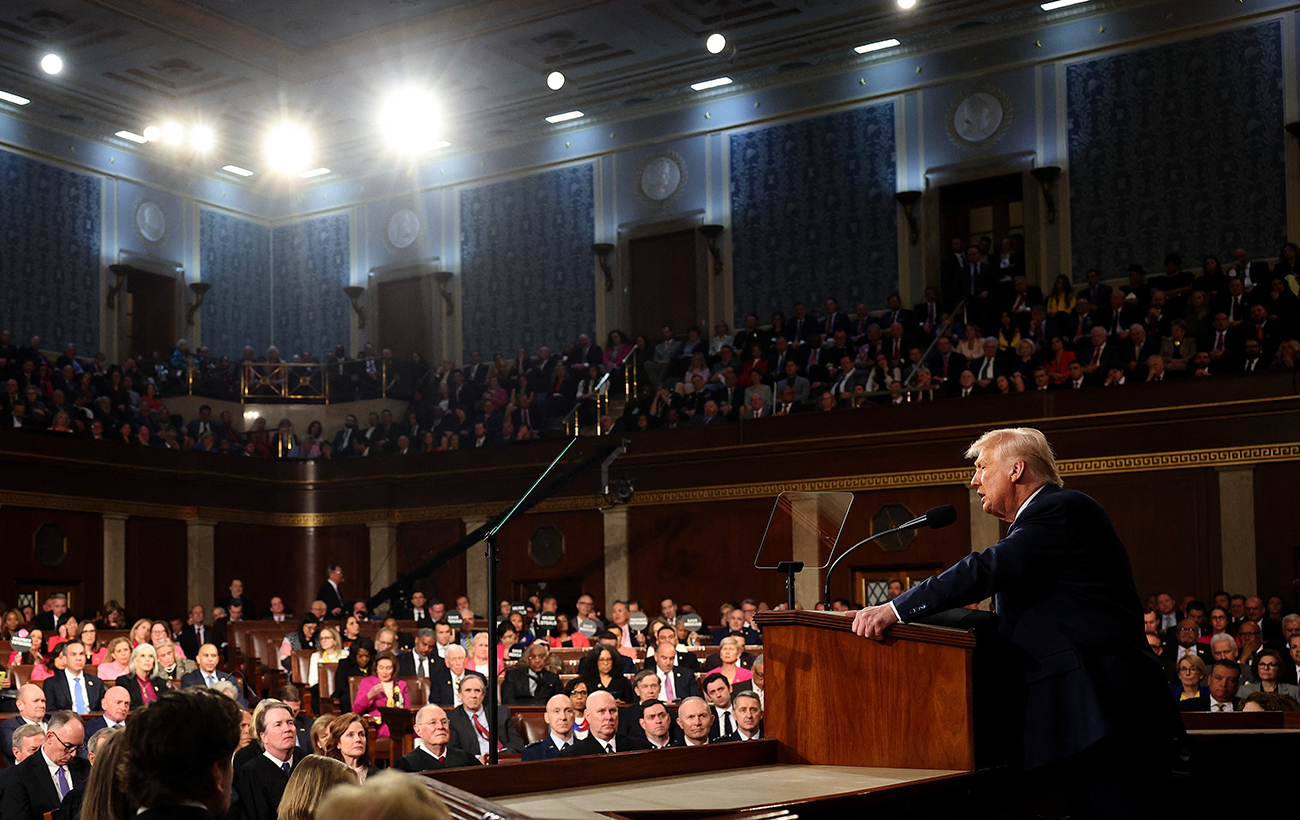 Donald Trump, during a speech in Congress (photo: Getty Images)
No one in the US ruling party can currently overshadow Trump. This is both an advantage and a risk. For his loyal supporters, Trump remains a powerful mobilizing factor, while he tends to repel moderate voters and those who are undecided.
The situation is the opposite for the Democrats: after Kamala Harris' defeat in the presidential election, the party has been unable to put forward a figure who could unquestionably consolidate the various wings of the Democrats and become a national political center of gravity.
"This has led to a strange situation where Congress will most likely be more or less balanced, and even if the Democrats win a majority in at least one of the two chambers, it will not be a full and working majority," Kraiev notes.
In practice, this means that each specific bill will have to be negotiated separately, and internal disagreements could paralyze Congress.
For Ukraine, it is not only the formal outcome of the election that is important, but also the behavior of American politicians during the election campaign, especially Trump himself.
It is important for the US President to demonstrate loud and quick foreign policy successes to voters, such as the story with Venezuela and Nicolás Maduro. In the context of ending the Russian-Ukrainian war, according to Kraiev, Trump is likely to attempt to accelerate the negotiation process.
"Trump's desire to quickly sort things out and bring Ukraine and Russia to the negotiating table – that's what will happen. And he will put pressure on us to achieve this. We hope he will put pressure on Russia, as he has done before, but I don't think there will be anything new here. He will use the same methods he has used before," Kraiev concludes.
Will Orbán remain in power?
Hungarian Prime Minister Viktor Orbán has long been Ukraine's main antagonist in Europe. Moreover, he systematically undermines the unity of the European Union and NATO when it comes to responding to various external threats: from Russian aggression against Ukraine to Western sanctions and security initiatives.
But in April, this chronic irritant may disappear. For the first time in many years, Orbán has a rival who has a real chance of removing him from power.
The leader of the Tisza opposition party, Péter Magyar, has been building his electoral muscle throughout the past year. For a long time now, his political force has been ahead of Orbán's Fidesz party in the polls. According to various surveys, the ruling party is trailing by 7-10%.
At the same time, it is too early for Magyar to celebrate victory. Approximately one in four voters in Hungary has not yet decided where their sympathies lie. As Péter Krekó from the Budapest-based think tank Political Capital points out, Tisza's lead is not irreversible.
Viktor Orbán's traditional advantages remain largely intact. These include broad control of the media, dominance in state institutions, the ability to change electoral district boundaries to his advantage, and strict regulation of campaign financing.
In addition, Hungary has a mechanism known as winner compensation. Simply put, the party that wins the election receives a bonus in the form of additional parliamentary seats.
In addition, there are legal and institutional levers that Orbán can use before the election to soften the blow of a defeat by Magyar.
For example, if a victory for Tisza looks likely, the authorities could cancel or modify the compensation mechanism for winners to minimize the scale of the defeat. Lowering the current 5% electoral threshold would allow smaller parties to enter parliament, which would lead to a dispersion of opposition votes and weaken Tisza," says Rasto Kužel, executive director of Memo 98 (Slovakia), an organization that monitors political processes in Europe.
According to him, if Orbán realizes that he is facing a more serious defeat, more radical steps cannot be ruled out, such as the abolition of single-member constituencies and the transition to a fully proportional electoral system.
"Ultimately, more extreme scenarios cannot be ruled out, including attempts to prevent party leader Péter Magyar from participating in the elections by initiating criminal proceedings or even canceling the elections themselves, similar to recent events in the presidential elections in Romania," Kužel emphasizes.
The key question remains whether the elections themselves will be able to take place freely and without administrative or political interference. In addition, both the Trump administration and Russia are indirectly interested in Fidesz's victory. All this makes the elections in Hungary the most unpredictable in the last decade.
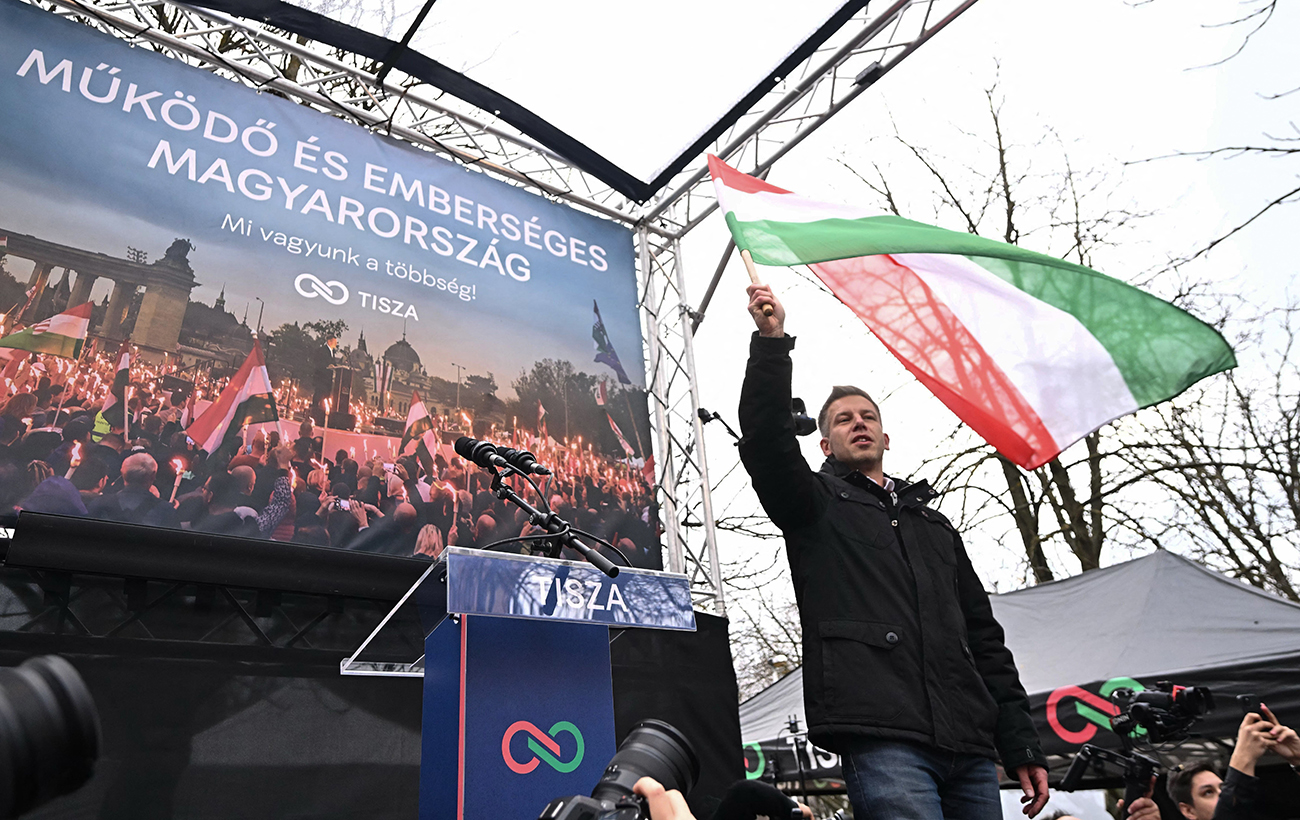
Péter Magyar with the Hungarian flag (photo: Getty Images)
To rally his voters, Orbán repeatedly uses the same tactic: uniting against an external enemy. In previous elections, this role was played by Soros, the European Union, and migrants. This time, it is Ukraine's turn.
"Yes, anti-Ukrainian rhetoric is still present in Viktor Orbán's public statements, but today it seems less effective than in the past. The main reason is the deterioration of the economic situation in Hungary, which is increasingly overshadowing foreign policy narratives," adds Rasto Kužel.
According to Eurostat, in 2023, the purchasing power of Hungarian households was only 70 percent of the European Union average. In 2025, the International Monetary Fund reported economic growth of only 0.7 percent, accompanied by inflation of around 4.5 percent. Hungary is mired in stagnation. This has noticeable consequences for areas such as education and healthcare.
"Although the war in Ukraine has played an important role in shaping Fidesz's political narrative, economic difficulties seem to limit the mobilization potential of the image of an external enemy," Kužel concludes.
Nevertheless, this rhetoric could easily intensify again if Orbán considers it beneficial during the election campaign.
If all these tactics fail to help Orbán and Magyar come to power in Hungary, it would be unwise to expect Hungarians to become Ukraine's best friends immediately. Anti-Ukrainian sentiments are quite strong in the country and are shared by some opposition voters. However, the most painful issues, such as the veto on Ukraine's accession to the EU, are guaranteed to be removed under Magyar. The main Hungarian opposition leader values good relations with Brussels too much, so after coming to power, he will stop creating unnecessary headaches for the European Union regarding Ukraine and other issues.
Israel: Challenges for Netanyahu and opposition
Over the past two years, Russia's war against Ukraine and around Israel have occasionally crowded each other out of the global news headlines. But while peace talks to end the Russian-Ukrainian war are still ongoing, Israel and Hamas militants have already reached a ceasefire agreement. How they are implemented is another matter. However, even on paper, the agreements have one important consequence. In Israel, public attention is shifting to the upcoming parliamentary elections.
Prime Minister Benjamin Netanyahu, leader of the center-right Likud party, already holds the record for the longest tenure as Israeli Prime Minister — more than 18 years, albeit with interruptions.
In the last elections, in 2022, the Likud-led bloc of parties won again after briefly losing power in 2021. The victory was made possible by the formation of a coalition with ultra-Orthodox and far-right forces, which from the outset made the government politically fragile and dependent on radical partners.
Several possible voting dates are currently being discussed in Israel. Formally, the elections are scheduled to take place in November.
However, the date is likely to be moved up slightly so that the vote does not take place after the anniversary of the events of October 7, when Hamas carried out its largest terrorist attack against Israel, killing over a thousand people and taking hundreds hostage.
For Netanyahu, such slightly early elections could be a way to seize the initiative and secure a political result before the accumulated problems begin to work against him.
"If there is some kind of super-significant breakthrough, and the Prime Minister can take credit for it for himself and his coalition, then he will probably wait. And the elections will take place at the appointed time – in the fall of this year," Israeli political scientist and Bar-Ilan University professor Ze'ev Khanin told RBC-Ukraine. "If nothing like that happens, he will have to hold elections in the next couple of months, putting aside all the controversial laws that his coalition partners are demanding."
This primarily concerns initiatives by far-right and religious parties to reform the judicial system, limit the powers of the Supreme Court, change the balance between the secular and religious components of the state, and strengthen the role of religious norms in public life. It was these bills that caused mass protests and a deep rift in Israeli society in 2023–2024.
However, the internal dynamics of Israeli politics are closely intertwined with external factors. First and foremost, this concerns relations with the US, which traditionally plays a key role in Israel's security and strategic decisions. In this regard, the agreements that Netanyahu reached with US President Donald Trump during his last visit to Washington also play an important role.
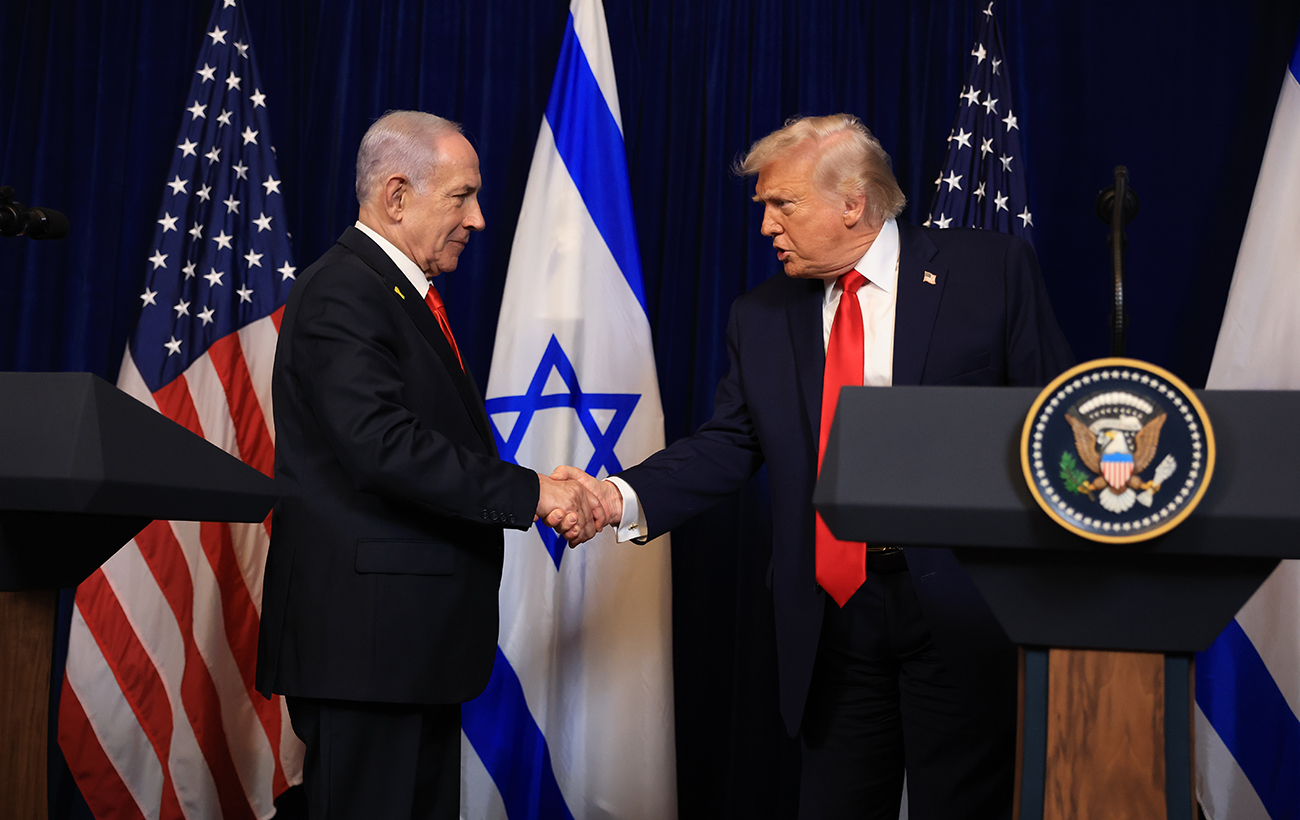
Benjamin Netanyahu and Donald Trump (photo: Getty Images)
Regardless of when the elections take place, there are already a number of issues that will be at the center of the campaign. The central one is the question of responsibility for the tragedy of October 7: who is to blame for the failure of the security system, and from what point should political responsibility be counted.
In addition, according to a poll by the Israel National Security Institute (INSS), 65% of Israelis are concerned about the social situation after the war, and 58% are more concerned about internal threats in the country than external ones. At the same time, only 29% of respondents feel a high level of personal security.
"Whether the government will be able to pull a convenient topic to the center of the agenda, or whether the opposition will insist that these issues, which are currently of concern to Israelis, become the agenda of the election campaign, will determine who wins," Khanin emphasizes.
According to a poll by Israel's Channel 12, as of January 1, the coalition parties can count on a total of 51 seats, while the opposition can count on 69 seats. However, the fragmentation of the opposition may complicate its unification in the future parliament.
Netanyahu also benefits from the fact that he has virtually no serious competitors within his own party. The situation in the opposition is the opposite: at least four politicians are considered potential candidates for the post of Prime Minister, which complicates the consolidation of the electorate.
Beyond the internal power struggle, there remains an important dimension for Ukraine: Israel's foreign policy after the elections, particularly concerning Russia's war against Ukraine.
"I think that such a government (without Netanyahu – ed.) will have a more pro-Ukrainian position than it does now. It will be closer to public sentiment in Israel, which is pro-Ukrainian. But there will most likely be no break with Russia. As for Netanyahu, he has simply put all his assets on Donald Trump and is doing what he is told in Washington," Khanin sums up in a conversation with the agency.
Other informed interlocutors at RBC-Ukraine in Israel also consider the current opposition more pro-Ukrainian than the current government. However, this pro-Ukrainian stance has clear limits: one should not expect that, in the event of a change of power, Israel will immediately begin, for example, to provide Ukraine with significant military assistance. Surrounded by open enemies and countries that are simply not very friendly, Israel will, in any case, build relations with Ukraine on a pragmatic basis, the sources explained: any pro-Ukrainian steps must a priori take into account Israel's own interests.
***
Each of these cases is different and important for Ukraine in its own way.
Trump's position in Congress and whether Orbán and Netanyahu remain in power will determine not only support for Ukraine, but also the reliability of the West's international alliances. Every vote and every political move in these countries can have repercussions far beyond their borders, from financial aid to diplomatic pressure and security guarantees.
At the same time, Ukraine has no real leverage over any of these elections. And not only because of a lack of resources. Kyiv's isolated attempts to play in American politics, for example, have brought nothing but new problems.