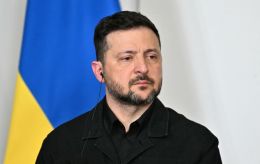
Orbán loses Hungary election despite Trump and Putin's help: RBC-Ukraine report from Budapest


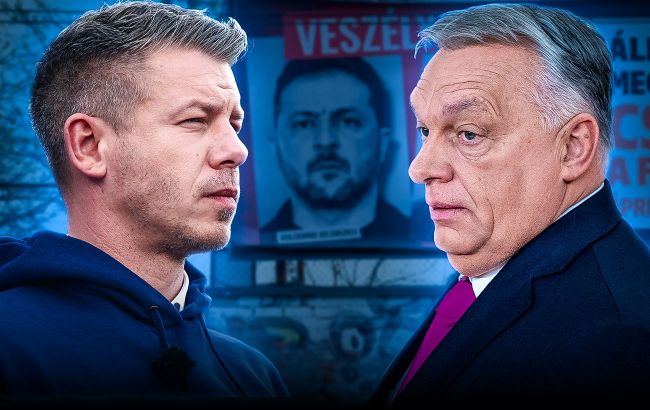 Péter Magyar and Viktor Orbán (photo: collage by RBC-Ukraine)
After 16 years of uninterrupted rule in Hungary, Viktor Orbán is stepping down. Read RBC-Ukraine’s on-the-ground report to find out how and why he lost, what this means for Ukraine and Europe, and how Magyar's victory was celebrated in the streets of Budapest.
Key takeaways:
- Collapse of Orbán's regime: Péter Magyar's opposition party, Tisza, secured a constitutional majority amid a record voter turnout of nearly 80%.
- Failure of manipulation: The complex electoral system built by Orbán and his aggressive anti-Ukrainian rhetoric did not work this time against the Hungarians’ overwhelming demand for change.
- Geopolitical shift: Orbán’s defeat was a blow to Europe’s right-wing populist forces, as well as to the efforts of Russia and the US (the Trump administration) to support the incumbent Prime Minister.
- Outlook for Ukraine: Hungary’s vetoes in the EU are expected to be lifted, paving the way for pragmatic good-neighborly relations, as Hungary needs to restore ties with Brussels quickly.
"The Tisza is overflowing," chant thousands of Hungarians on the Budapest waterfront. It has just been announced that Péter Magyar’s Tisza party has won a landslide victory over Viktor Orbán’s Fidesz.
It is nearing midnight, but the crowd on the embankment opposite the parliament is growing larger and larger. People are coming in entire families, with children in strollers and even dogs.
Insulting chants directed at the still-ruling party ring out constantly: "Dirty Fidesz!" and "Orbán is an ***hole!" And the purely soccer-inspired "Ria-ria-Hungaria!"
Magyar defeats Orbán in Hungary's election – RBC-Ukraine report from Budapest pic.twitter.com/ROUNNxItYZ
— RBC-Ukraine (@NewsUkraineRBC) April 13, 2026
The atmosphere in the city is truly like after a victorious soccer match: crowds of people with national flags, greeted by honking cars as they drive by. But this time, the victory is far more important: the Hungarians didn’t win a match, but their country.
And they did it so convincingly that a few hours after the polls closed, Orbán was forced to concede defeat. Although, as early as Sunday morning, there were various concerns about this.
As of now, Tisza holds 138 seats out of 199, which is a constitutional majority of two-thirds of the parliament. Orbán’s party has 55 seats, while the far-right Mi Hazánk managed to secure 6 more.
But for those who closely followed election day, this result was not such a huge surprise. It all comes down to voter turnout, which was a record high for any election in Hungary since the collapse of the socialist bloc, nearly 80%. In opposition-leaning Budapest, it was even higher, nearly 83%.
The final vote count will take several days; ballots cast by Hungarians living abroad will be counted, but first, they must be transported to the country from all over the world. But the outcome of the election is already entirely clear.
Orbán's system
On the eve of the vote, such a resounding success for Orbán seemed by no means guaranteed. It all comes down to the Hungarian electoral system, perhaps the strangest and most complex among all democratic countries. For this reason, the data from independent pre-election polls, which showed Magyar’s lead, should have been taken with a grain of salt. For the same reason, no exit polls were conducted in Hungary.
Of the 199 members of parliament, only 93 are elected from party lists. The remaining 106 are elected from single-member districts. In previous elections, this gave Orbán's Fidesz party significant advantages.
The votes of single-member district candidates who lost their districts are added to the votes their party received through party lists. If a candidate won a district, the margin of victory over the runner-up was also added to his party’s total vote count.
Simply put, a vote for a single-member district candidate counts roughly twice as much as a vote on the party list, which has always worked in Orbán’s favor.
Furthermore, during his time in power, he has significantly redrawn the district boundaries to favor rural areas, where he traditionally has strong support. Thus, a vote from a rural voter carried far more weight than a vote from a resident of opposition-leaning Budapest.
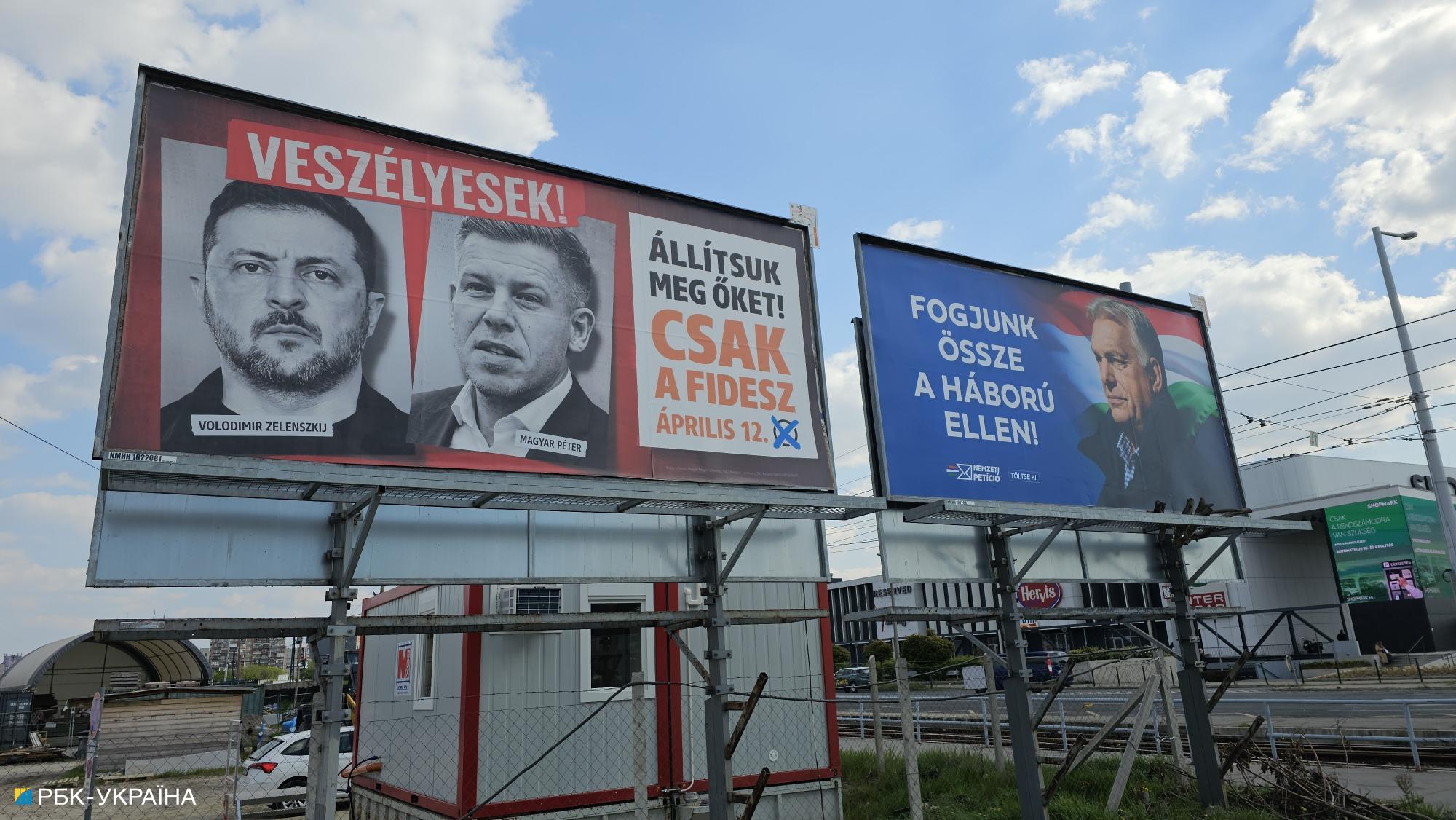 Orbán's campaign rally (photo: Milan Lelich / RBC-Ukraine)
Other factors have always worked in Orbán’s favor, for example, the votes of the large Hungarian diaspora in Slovakia, Romania, and Serbia, which he had been cultivating for years.
But ultimately, the complex system of vote redistribution has always worked in favor of the winning party. Previously, that party was Fidesz. Now, however, the system Orbán built has, in essence, turned against him.
But most importantly, Hungarian society’s demand for change proved stronger than any legislative tricks.
Emotions over logic
On election day, RBC-Ukraine visited numerous polling stations in Budapest. And all the voters we met, even older ones (who were thought to be more likely to support Orbán), who spoke even a little English, said they had voted for Tisza.
"We need change; we don’t need this hatred (which Orbán uses in his rhetoric)," says Heni, a young Hungarian woman, as she exits a polling station in central Budapest. Others voiced similar sentiments.
Orbán built his campaign almost entirely around Ukraine. And quite paradoxically, in his rhetoric, Ukraine was simultaneously a failed state and an incredibly powerful nation that dictates its will to the entire European Union, and even finds the resources to allegedly interfere in the Hungarian elections on the side of the opposition.
"Let’s unite against war," Orbán urged from billboards displayed across the country. Yet it remained completely unclear exactly which war Orbán had been using to intimidate the electorate for years, or who was supposed to fight whom in the event of an opposition victory.
"None of that matters; there’s no need to look for logic in his words. Orbán appeals to people’s basic emotions, their fears, their desire for security, bypassing logic," a young Hungarian woman named Monika tells RBC-Ukraine at a rally in a Budapest suburb.
There, we also meet an elderly Hungarian man, László, who says he didn’t vote in several previous elections but will now go to the polling station, of course, to support the Hungarians. Moreover, Orbán’s anti-Ukrainian rhetoric, says László, was the factor that finally turned him away from the ruling party.
When Orbán wasn’t talking about Ukraine, he told voters about his achievements in office. For example, about support for pensioners, who in Hungary receive a thirteenth pension. And on the eve of the election, the government even began paying out a fourteenth pension.
Of course, the money for this doesn’t come out of thin air, especially since Hungary’s GDP growth over the past few years has been less than one percent.
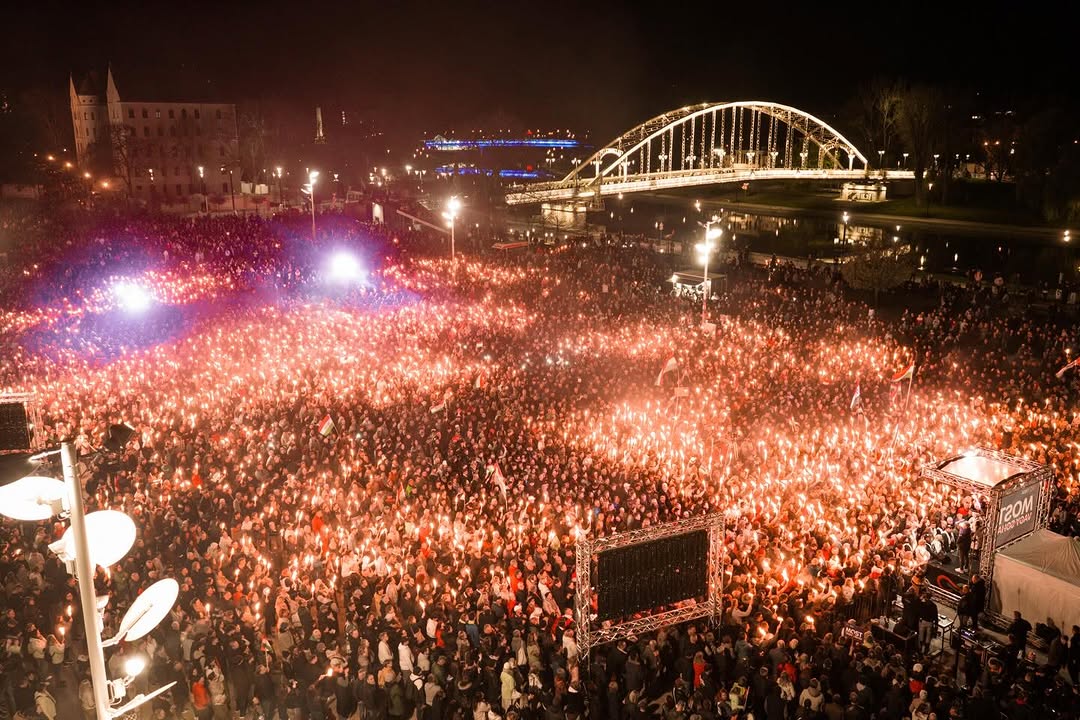 Peter Magyar's campaign event in Győr (photo: instagram.com/magyar_peter_official_the_man/)
As one Hungarian journalist explained to RBC-Ukraine, Orbán tried to frame the situation in such a way that citizens would not feel they were giving money directly to the state in the form of taxes. Instead, he shifted the tax burden onto businesses, which, naturally, were then forced to raise prices on goods. But public discontent was thus channeled toward these very businesses, not the government.
Especially since Orbán, nominally a right-winger, actively used left-wing populist rhetoric with a Soviet flavor, about corporations that profit off ordinary people.
But no amount of rhetoric can patch the holes in the state budget. Orbán, in essence, has planted a time bomb under Magyar's future premiership, as he will now have to deal with troubled public finances.
Of course, no one expects Mádor to be able to solve these problems instantly, even with the help of the European Union. But after some time, if things don’t improve, many Hungarians may start questioning the country’s new leader.
Blow to the right
The elections in Hungary have significance far beyond the borders of this small country. Uniquely, both the US and Russia were interested in Orbán's success, and behind the scenes, even China was.
The Russian political strategists brought in by Orbán did what they always do everywhere. They tried to escalate tensions, divide society, and replace real problems with fabricated threats (this time from Ukraine).
And, as usual, the Russians missed the mark. As the election results showed, voters, even in rural areas, did not believe that the all-powerful Zelenskyy, together with the European bureaucracy, had decided to install their puppet Magyar at the helm of Hungary.
Open support from the White House, which sent Vice President JD Vance to Budapest just days before the election, didn’t help either. As polls indicated, this visit could have even backfired on the ruling party.
But aside from Moscow and Washington, various European far-right groups were also closely monitoring the elections in Hungary. In recent years, Orbán has become the leader of their movement, demonstrating in practice how liberal democracy can be dismantled through entirely legal means.
His defeat is a serious blow to the pan-European right-wing populist trend, from Alternative for Germany to Slovakian Robert Fico's SMER-SD. Fico's position in his home country is already quite weak, and now, having lost a reliable ally, he will be even less inclined to engage in confrontation with the European Union, particularly regarding Ukrainian affairs.
What to expect from Magyar
In any case, Orbán's defeat and Magyar's victory are now a fact. Therefore, the main question is what exactly Hungary's future prime minister will do in office.
In his speech to supporters on Sunday night, Magyar, just as he did during the campaign, focused primarily on domestic Hungarian affairs. In particular, he called for the resignation of the prosecutor general, the president of the Constitutional Court, the President (who plays a largely ceremonial role in Hungary), and others.
Read also: Hungarian opposition leader Magyar calls for president resignation, vows stronger NATO role
The fact is that dismissing these top officials requires a two-thirds majority in parliament, which was also one of the ways Orbán cemented his power.
So when it became clear that Tisza would secure a majority in any case, everyone was watching to see if Magyar's party could also reach the two-thirds threshold.
In the end, here’s what happened: a constitutional majority requires 133 MPs, and Tisza currently has 138, although on the eve of the vote, this was considered a highly unlikely scenario.
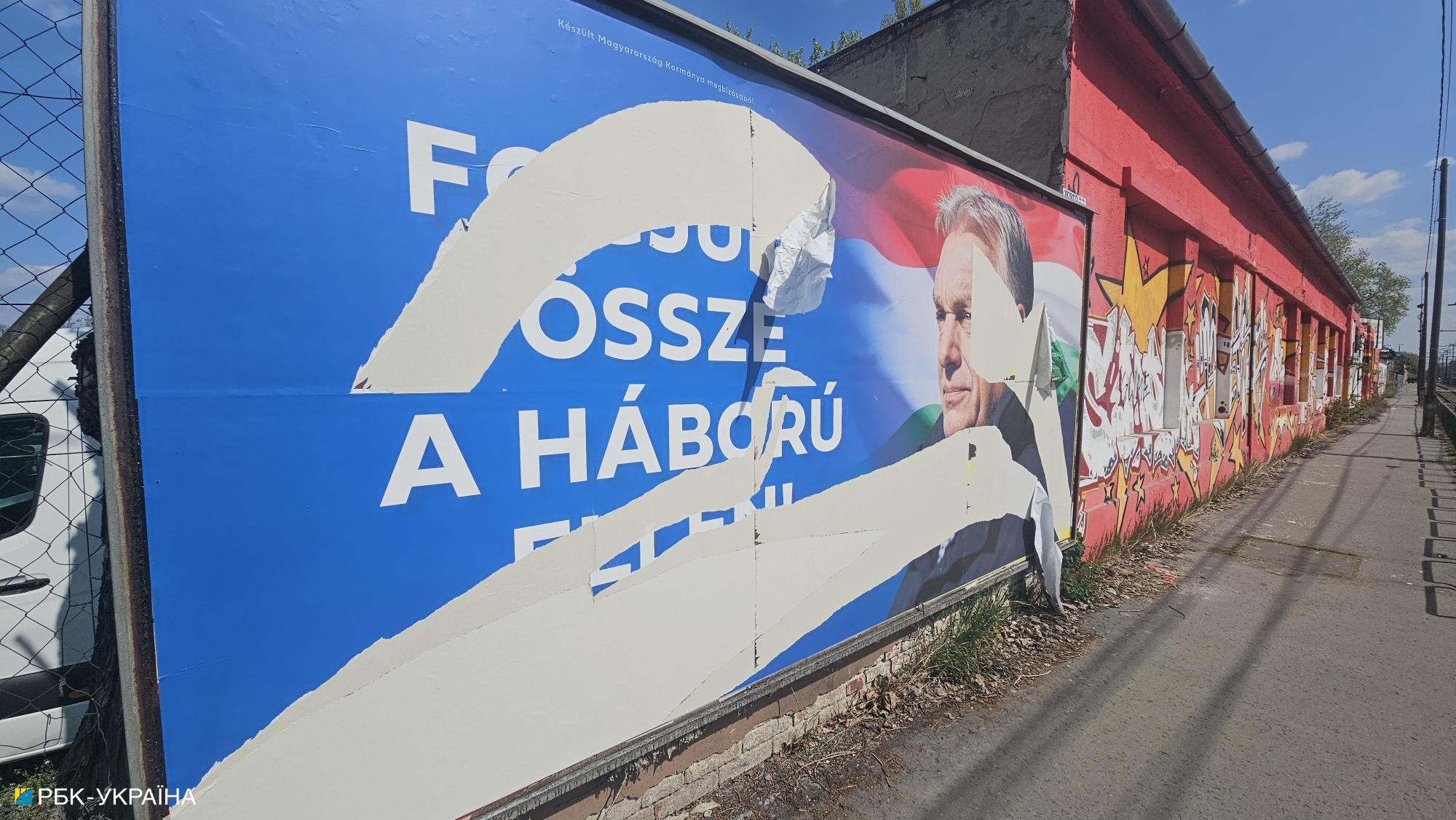 Orbán's botched campaign (photo: Milan Lelich / RBC-Ukraine)
However, from Ukraine's perspective, this is not so important. For Hungary to stop vetoing EU decisions regarding Ukraine, a simple majority that elected him as prime minister would have been sufficient for Magyar.
There is almost no doubt that the veto will be lifted once he takes office. Magyar has publicly promised that the country will return to a pro-European course.
That said, Hungary under the new government will certainly not become Ukraine's best friend in Europe. Nor does it seem that Magyar himself harbors any genuine affection for Ukraine.
But that's not necessary. Regarding Ukraine, he will do (or not do) what Brussels expects of him, as relations with the EU must be restored urgently. And that’s quite enough for Ukrainians. In fact, Kyiv has never demanded anything more from its neighbor.
The Hungarians themselves, of course, have much deeper concerns. "It’s important that Magyar doesn’t turn into some kind of little Orbán later on. We’ll have to keep an eye on that," says Monika, a Hungarian woman, to RBC-Ukraine.
But replacing Orbán's appointees in power, fixing Hungary’s finances, and restoring relations with Europe and Ukraine, all that will come later. For now, Budapest is celebrating. "The Tisza is overflowing."
Quick Q&A
— Why did Orbán lose, despite his control over the media and administrative resources?
— The decisive factor was the record-high turnout (80%), which offset electoral manipulation. Hungarians have grown tired of the aggressive enemy-hunting rhetoric and the real decline in living standards, opting instead for the pragmatism and change offered by Péter Magyar.
— Will Tisza's constitutional majority allow for rapid change in the country?
— Yes, with 138 seats, Magyar gains the legal right to remove Orbán’s appointees from key posts, from the Prosecutor General to the President of the Constitutional Court. This will make it possible to dismantle the system that Fidesz has been building for 16 years in a short period of time.
— How will Orbán’s defeat affect the European far right and Russia’s allies?
— This is a powerful blow to right-wing populism in the EU. Having lost Budapest’s support, leaders such as Robert Fico are losing their main ally in blackmailing Brussels. This significantly weakens the Kremlin’s position.
— What can Ukraine expect after Magyar takes office?
— It is unlikely that Ukraine should expect close friendship between the two countries, but Hungary will stop blocking EU aid to Ukraine. For Magyar, restoring relations with Brussels is a strategic priority, which automatically makes his position advantageous for Kyiv.