Trap for Trump? How Russia exploited energy truce during Abu Dhabi talks


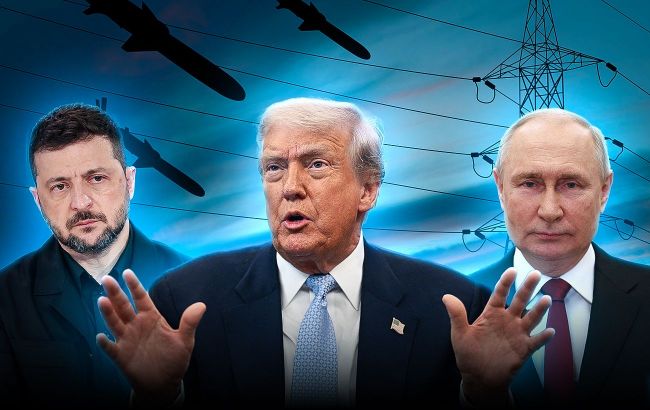 Volodymyr Zelenskyy, Donald Trump, Vladimir Putin (photo: collage by RBC-Ukraine)
Despite a promise to refrain from striking Ukraine’s energy infrastructure for a week, Russia carried out its most powerful attack of the year.
RBC-Ukraine explains how and why the so-called energy truce collapsed on the eve of a new round of talks in Abu Dhabi.
Read also: Energy strike during extreme cold: Zelenskyy signals changes in talks with Russia
Key points:
-
The exact start and end dates of the energy truce were never clearly defined.
-
Russia may have used the pause to prepare for an especially massive strike.
-
It remains unclear how Russia’s violation of a promise made to Donald Trump not to attack Ukraine’s energy sector will affect negotiations in Abu Dhabi.
"If the Russians could not resist the temptation to exploit the cold weather, that says everything," a source close to the Ukrainian President told RBC-Ukraine, commenting on Russia’s most powerful strike on Ukraine’s energy infrastructure in 2026.
"This shows Russia’s attitude toward the Americans and whether Moscow is genuinely interested in a lasting peace," the source added.
Earlier, RBC-Ukraine sources suggested that at least until the next round of talks in Abu Dhabi on February 4–5, Russia might refrain from new attacks to avoid undermining the atmosphere of negotiations. However, other factors clearly prevailed, including weather conditions. Forecasts indicate that from February 4, freezing temperatures in Ukraine are expected to weaken
How the energy truce emerged
The brief and unusual energy truce ended just as unexpectedly as it began.
Moreover, it remains unclear when it actually started, how long it was supposed to last, or whether there was any formal agreement at all.
The initial reports came from Russian pro-war bloggers, who on the morning of January 29 began claiming that attacks on Ukraine’s energy infrastructure had been banned.
Later, Donald Trump told reporters that he had asked Vladimir Putin to refrain from striking Kyiv and other cities for a week, and that the Russian leader had supposedly agreed.
Subsequently, Kremlin spokesperson Dmitry Peskov confirmed that Russia had agreed to refrain from attacking Ukraine’s energy sector at Trump’s request, but only until February 1.
According to President Volodymyr Zelenskyy, however, the truce only began on the night of January 30. He said that if Russia refrained from further attacks, Ukraine would also avoid retaliatory strikes. Indeed, for several days, there were no reports of new attacks on energy facilities inside Russia.
Despite a new wave of cold weather starting in late January, Russia held back from striking Ukraine’s energy infrastructure for several days. As recently as Monday, February 2, Zelenskyy acknowledged that no targeted attacks on energy facilities had occurred. At the same time, Ukraine’s Energy Ministry said that Russia had carried out attacks on energy facilities in several regions, though not on the scale seen overnight on February 3.
Russia was only stockpiling missiles and drones
"Waging war and humiliating Ukrainians matters more to them than de-escalation and diplomacy. And of course, if this is how they behave, there are serious questions about the credibility of their words. This also poses more challenges for our partners, because we clearly need more air defense," a well-informed government source told RBC-Ukraine.
Indeed, as President Volodymyr Zelenskyy said at a press conference with NATO Secretary General Mark Rutte, Russia set a grim record by using more than 70 cruise and ballistic missiles in a single attack.
"That is, either Russia now believes that there are not a full seven days in a week but only four, or they are truly betting on war alone," Zelenskyy said, referring to the supposed agreement on a one-week truce.
It now appears that RBC-Ukraine was largely correct in its assessment that Russia just needed time to prepare a new large-scale strike, disguising it as yet another so-called gesture of goodwill.
"What did they do? They postponed the strike, increased the number of missiles and drones, and struck on the coldest days," Zelenskyy said.
Notably, the attack took place at the exact time NATO Secretary General Mark Rutte was already on Ukrainian territory, traveling to Kyiv. He was unable to serve as a "temporary air defense."
This illustrates Russia’s real attitude toward Western countries. During visits to Kyiv by former US Special Envoy for Ukraine Keith Kellogg, Russia refrained from attacks.
By contrast, the presence of the NATO Secretary General on Ukrainian soil did not serve as a deterrent, even though Rutte formally holds a much higher position than Kellogg did.
How the strike may affect talks in Abu Dhabi
Experience shows that it is virtually impossible to rationally predict when Russia will launch another strike on Ukraine’s energy infrastructure. Even ongoing peace talks and the need to simulate readiness to end the war do not act as a deterrent.
One of the previous major strikes was carried out during the previous talks in Abu Dhabi on January 23–24. Russia may even view such actions as a way to strengthen negotiating positions, according to the old Soviet school of diplomacy.
"Each such Russian strike confirms that the attitude in Moscow has not changed: they still count on war and the destruction of Ukraine and do not take diplomacy seriously. The work of our negotiating team will be adjusted accordingly," Zelenskyy said after the attack.
The presidential team did not publicly explain what this adjustment would entail. "We’ll see how this affects tomorrow’s talks. It’s hard to say what the Americans’ stance will be," a government source told RBC-Ukraine.
The source also dismissed as fake a report by The New York Times claiming that Russia had previously issued private apologies for the strike on Odesa’s infrastructure and a passenger train.
Overall, the behavior of the US side in the upcoming talks is difficult to predict despite the fact that Ukraine has been demonstrating and backing up with concrete steps its desire for peace. Russia continues to openly disregard any agreements. However, for Donald Trump and the members of his team, this is not seen as an argument in determining who truly does not want to end the war.
More details on the consequences of Russia’s overnight attack on February 3 can be found here.
We also reported on why a state of emergency was declared in Kharkiv after the nighttime strike.