Tanker war. How the West plans to choke off Russia's oil trade at sea


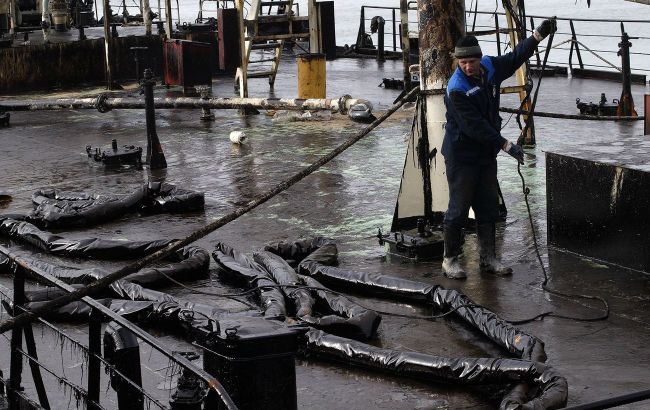 Photo: Russian oil spill in the Black Sea (Getty Images)
Western countries are developing new sanctions against Russian oil. The proposal is to restrict access to insurance and repair services for tankers carrying Russian oil, regardless of the oil's price. Which countries are helping to build Russia's shadow fleet, and will the new sanctions stop Russia's seaborne oil trade — read in an analysis by RBC-Ukraine.
Key questions:
- What new sanctions are the G7 and the EU proposing against Russian tankers?
- Does Russia need maritime services in European ports?
- What role does the shadow fleet play?
- Who supplies the aggressor with tankers to bypass sanctions?
- Will the new restrictions halt Russia’s seaborne oil exports?
The Group of Seven (comprising the United States, Japan, Germany, the United Kingdom, France, Italy, and Canada), along with the European Union, initiated discussions on a new sanctions measure targeting Russia's oil exports. They are considering depriving tankers that legally transport Russian oil of access to insurance and other maritime services.
According to Reuters on December 5, about 38% of Russia's crude oil exports are carried by tankers operating within the Western legal framework and therefore required to comply with sanctions. This means these vessels transport Russian oil at a price below the price cap (currently under $50 per barrel in European countries).
Such ships can enter European ports, receive technical maintenance, obtain insurance, and refuel. The new proposal would eliminate the price cap for tankers carrying Russian oil and fully deny them access to maritime services in G7 and EU countries.
Reuters reports that this new restrictive measure is planned to be included in the next — the 20th — sanctions package, which could be adopted in early 2026.
Importance of maritime services
Banning maritime services for tankers carrying Russian oil, regardless of its price, is a logical continuation of the price-cap policy. First, oil priced above the cap and services for it were banned; now the goal is to stop providing services regardless of price.
"There is no sense in treating part of Russian oil as legal because it is cheaper than the price cap, and another part as illegal," says Vladyslav Vlasiuk, the Commissioner of the President of Ukraine for Sanctions Policy.
He added that the new sanctions complement US policy, which has imposed tough restrictions on the foreign assets of Russian oil companies Rosneft and Lukoil.
Tankers that legally transport Russian oil through the Baltic and Black seas require insurance for both the cargo and the vessel itself. The maritime industry simply does not function without insurance.
"When a tanker leaves Novorossiysk (a Russian port on the Black Sea — ed.) and enters a civilized port, the first thing they'll ask is: 'Where is your insurance? If you come in and spill oil, who is going to pay?" explains Oleksandr Sirenko, an analyst at the consulting company NaftoRynok. He adds that a vessel without insurance would be immediately turned away and denied entry.
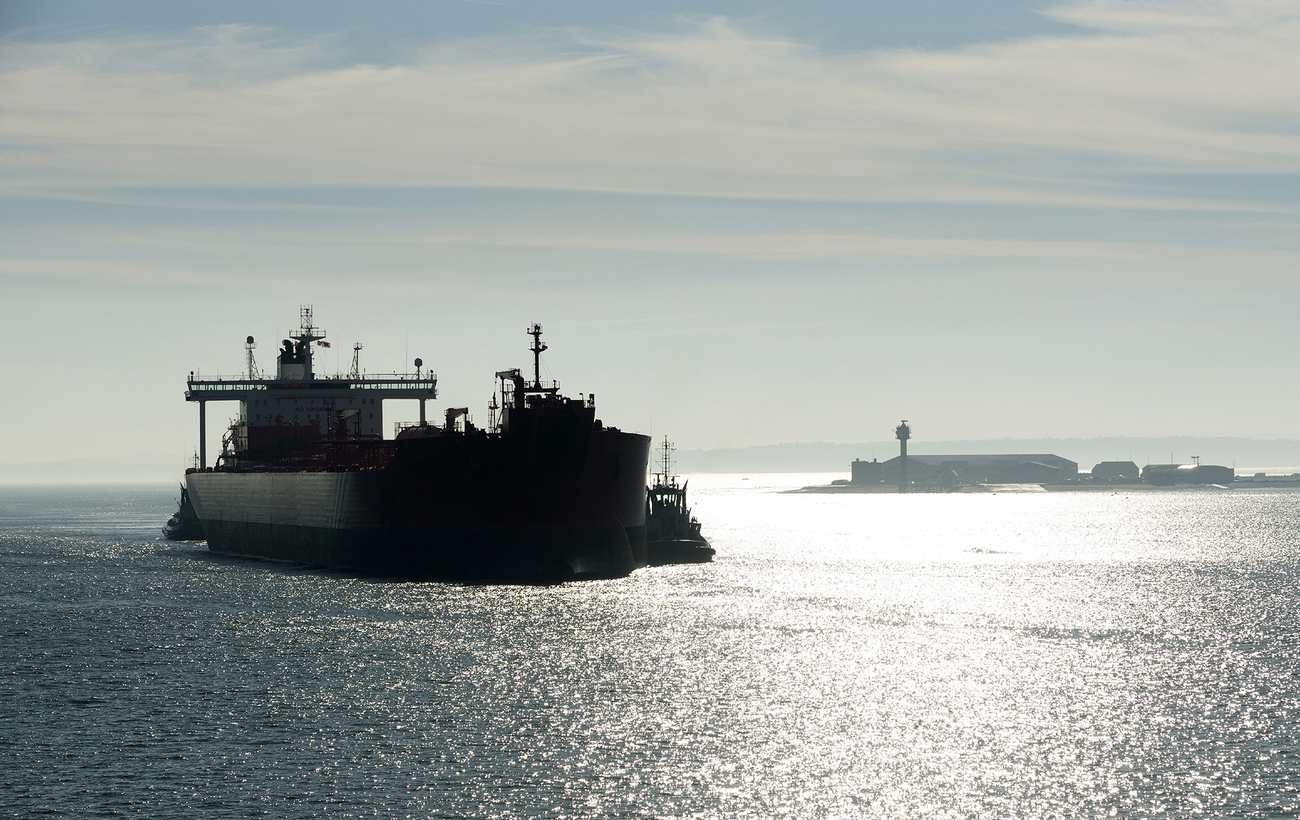 Photo: A tanker cannot enter a port without insurance for the cargo and the vessel (Getty Images)
Today, about 90% of the European insurance market is controlled by the UK-based Lloyd's group and Dutch companies. They provide insurance for tankers transporting oil and petroleum products, says energy expert Hennadii Riabtsev.
For tankers operating within the legal framework, contracts with these companies are critical. In addition, tankers can enter European ports for refueling and certain repairs. As a result, the new sanctions would deal a heavy blow to the transportation of Russian oil by the white fleet.
However, these measures do not frighten companies that transport Russian oil outside the Western legal framework. The shadow fleet helps Russia export most of its oil by sea. In early September, analytics firm S&P Global reported that the global shadow fleet consists of 978 tankers, or 18.5% of the world's tanker fleet.
The main users of these vessels are sanctioned countries — Russia, Iran, and Venezuela. S&P Global analysts estimate that about half of the deadweight tonnage of the global shadow fleet is used by Russia alone (561 vessels), though its share may be even higher, since about a third of these tankers may serve multiple countries.
In November, 75% of Russia's seaborne crude exports and 25% of its petroleum product exports were handled by the shadow fleet, according to data from the Kyiv School of Economics Institute, which studies sanctions policy. Previous EU sanctions packages have regularly added dozens of such tankers, and Ukraine recently imposed sanctions on nearly 700 of them. Russian oil shipped via the Baltic and Black seas is primarily delivered to India and Türkiye, says Yuliia Pavytska, head of the Sanctions Team at the KSE Institute.
This fleet does not rely on services from recognized insurance companies; instead, it works with little-known players in the insurance market. "Essentially, these are some offshore entities or obscure Swiss insurers nobody has ever heard of," Riabtsev explains.
The shadow fleet has limited access to repairs, food supplies, and other services. "These 'pirates’ don’t care. They don't need those services (from recognized insurers and service companies - ed.)," Sirenko adds. "They either don't enter European ports at all, or they do and pay in cash. It's hard to say exactly how it works."
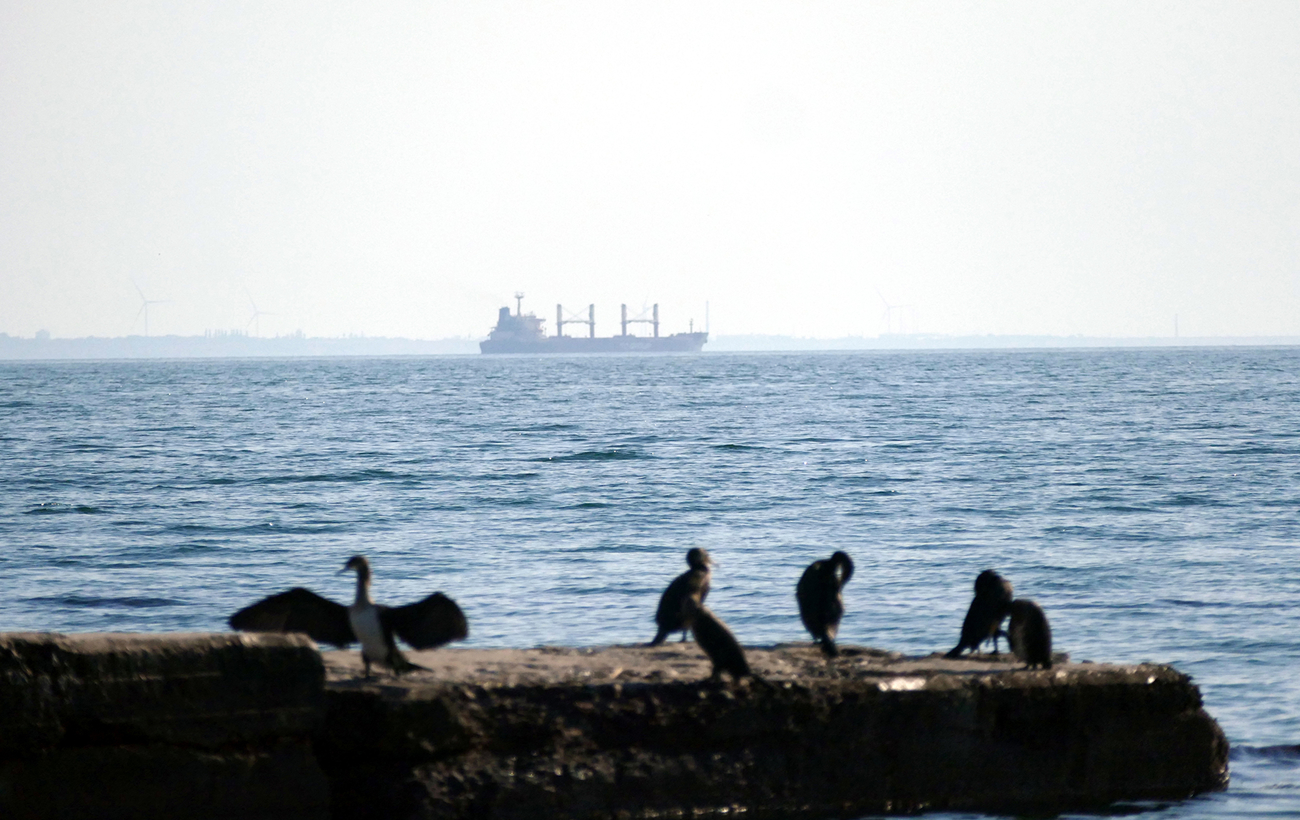 Photo: Vessels carrying Russian oil need port infrastructure and other maritime services (Getty Images)
An important aspect is the export of petroleum products, which is oddly missing from discussions about the new sanctions. Tankers carrying Russian diesel, fuel oil, and other refined products should be denied access to the civilized service market just as much as vessels transporting crude oil.
Opponents of new restrictions
The new sanctions are backed by the Nordic countries that have access to the Baltic Sea, through which most of Russia's shadow fleet carrying oil transits.
The initiative is supported by the Nordic-Baltic Eight group — Denmark, Iceland, Latvia, Lithuania, Norway, Finland, Sweden, and Estonia, says Vladyslav Vlasiuk. The United Kingdom, Germany, France, and the Netherlands have also spoken in favor.
He adds that the Baltic states have long sought to restrict Russia's maritime exports. France has previously stopped a Russian tanker on suspicion that drones were launched from the vessel, and the country will also chair the G7 in 2026.
Ireland, together with the UK, has also conducted surveillance of Russian shadow tankers. During a visit to Dublin in early December, Volodymyr Zelenskyy emphasized that in July alone, more than 450 tankers from Russia's shadow fleet passed through Ireland's economic zone. "The US position on this issue is still unknown," Vlasiuk said in a comment to RBC-Ukraine.
While Northern and Western European maritime nations support the new sanctions, some southern maritime states are beneficiaries of Russia's hydrocarbon exports. In its reporting, Reuters explicitly named Greece, Malta, and Cyprus.
"Greece is mentioned most often, since Greek companies are the largest tanker owners," adds Oleksandr Sirenko.
In June, Ukraine's Defense Intelligence reported that illegal ship-to-ship transfers of Russian oil were taking place off the coasts of Greece and Cyprus. This allows large-tonnage tankers to avoid entering ports: they stop at sea and transfer oil to smaller vessels, which then deliver the cargo to terminals.
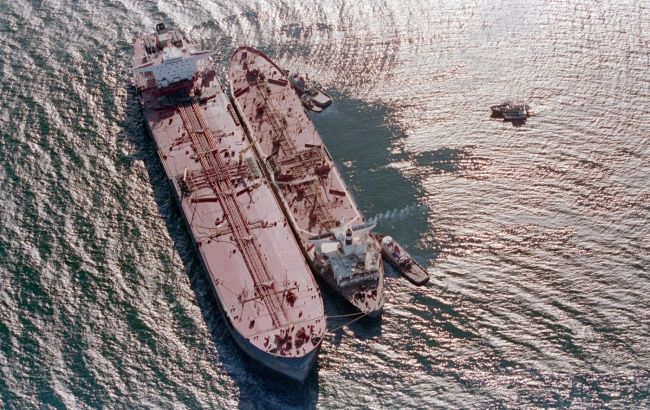
Photo: Oil transfers from larger tankers to smaller ones were recorded off the coast of Greece to evade sanctions (Getty Images)
Greece and other countries provide not only tankers but also their flags, which is a valuable service in maritime shipping. When a vessel sails under a country's flag, it falls under that country's jurisdiction, which may offer, for example, lower taxes and fees.
"This attracts counterparties interested in minimizing freight costs. Greece, Malta, and Cyprus provide both their tankers and their flags," comments Hennadii Riabtsev.
Lobbyists from Greece and other countries that benefit from Russia's seaborne oil exports will argue that new restrictions would negatively affect their economies, where the maritime sector accounts for a significant share.
Possible outcomes of sanctions
To assess the impact of new sanctions, it is worth looking at the effects of the existing ones. Since early 2022, Russia's exports of oil and petroleum products have remained more or less stable at 7–8 million barrels per day, according to data from the Kyiv School of Economics.
However, Russia's revenues from oil and petroleum product exports have fallen by 27% since 2022, to nearly $160 billion (a projected figure for all of 2025). In other words, sanctions are reducing Russia's oil revenues but have had a limited impact on export volumes.
Compliance with the existing price cap is extremely difficult, Riabtsev explains, because the EU lacks an adequate legal framework to stop, inspect, or especially seize a tanker. Despite isolated cases, stopping a tanker in international waters poses legal problems for Europeans. "There is no legal basis to enforce these sanctions," Riabtsev says.
If it is difficult to stop and inspect a tanker for compliance with the price cap, it is just as difficult to determine which insurers the shipowner uses. Still, the expert predicts that new sanctions will hit Russia's oil export revenues, since any complication of logistics and related services leads to higher costs, and services provided by shadow insurers are more expensive than those on the white market.
Discounts on Russian oil may also increase to keep buyers interested. These discounts have already widened following US sanctions against Rosneft and Lukoil.
 Photo: Only real inspections of tankers and their seizure can stop the trade in Russian oil (Getty Images)
A ban on maritime services will not drive up global oil prices due to a significant supply surplus. Yuliia Pavytska says that global oil overproduction will reach 4 million barrels per day next year (with consumption at around 100 million barrels per day).
"This means the market has enough resilience to absorb a partial loss of Russian volumes," she said, adding that Saudi Arabia is ready to quickly fill any freed-up niche.
Experts interviewed by RBC-Ukraine agree that the main risk after the introduction of new sanctions will be the expansion of the shadow fleet, as Russia may fully shift to vessels operating outside the Western legal framework.
"Even a complete ban on maritime services is not a panacea… It does not solve the problem of the shadow fleet — on the contrary, it may stimulate its further expansion," Pavytska comments.
To avoid this risk, G7 countries and the European Union should make maximum efforts to enforce existing sanctions — ensuring the ability to inspect tankers, seize them, bring crews ashore, and even detain responsible managers. Only real enforcement tools will make it possible not just to complicate Russian business operations, but to genuinely limit the volumes of its hydrocarbon exports.