Russia's fuel crisis deepens: Can imports save Moscow from growing shortages?


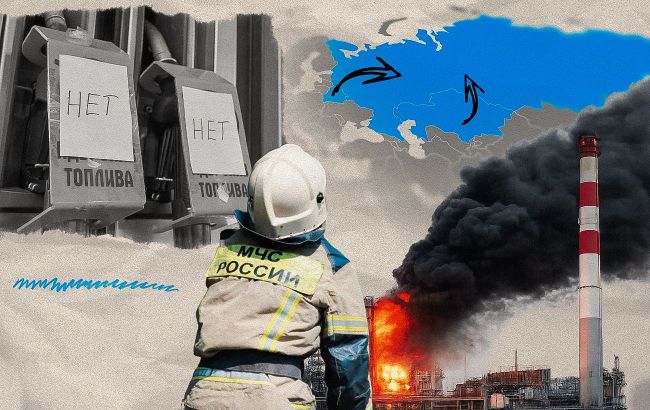 Damaged oil refineries and empty gas stations are forcing the Kremlin to look abroad for fuel (photo: RBC-Ukraine collage)
This summer, Russia's fuel crisis reached its largest scale, forcing the Kremlin to begin importing petroleum products.
How Ukrainian strikes brought Russian oil refineries to their knees, where Moscow has begun sending its oil for refining, and whether imports can save Russia from fuel shortages — in the RBC-Ukraine article.
Key points:
-
Strikes on Russian oil refineries have reduced oil refining volumes. Russia has been forced to shift toward exporting crude oil instead of petroleum products;
-
This summer, Russian regions are experiencing their largest fuel crisis. The shortage has even affected aviation fuel used for air connections with remote communities;
-
Russia has restricted exports and begun importing petroleum products. The main supplies are coming from Belarus, India, and Kazakhstan, while a tanker from Türkiye is expected;
-
Imports will not solve Russia's fuel shortage. Foreign refineries have fairly limited capacity;
-
Fuel shortages at Russian gas stations will worsen in September. Refineries are unable to recover quickly enough during the high-demand season.
Fuel crisis
This year, Ukraine continued a series of systematic strikes on Russian oil transportation and refining infrastructure. In particular, from January to May, the Defense Forces struck 15 Russian oil refineries, as a result of which nearly 40% of primary oil refining capacity had been taken offline by May, Volodymyr Zelenskyy said.
Although some strikes were redirected toward the Wildberries network (a major Russian online retailer) in July and August, Ukrainian drones continued to effectively strike key facilities at major oil refineries in Russia.
Long-range sanctions are reaching even Russian plants located beyond the Ural Mountains. The most distant target was the Omsk oil refinery, located 2,500 kilometers from the Ukrainian border and the largest oil refinery in Russia.
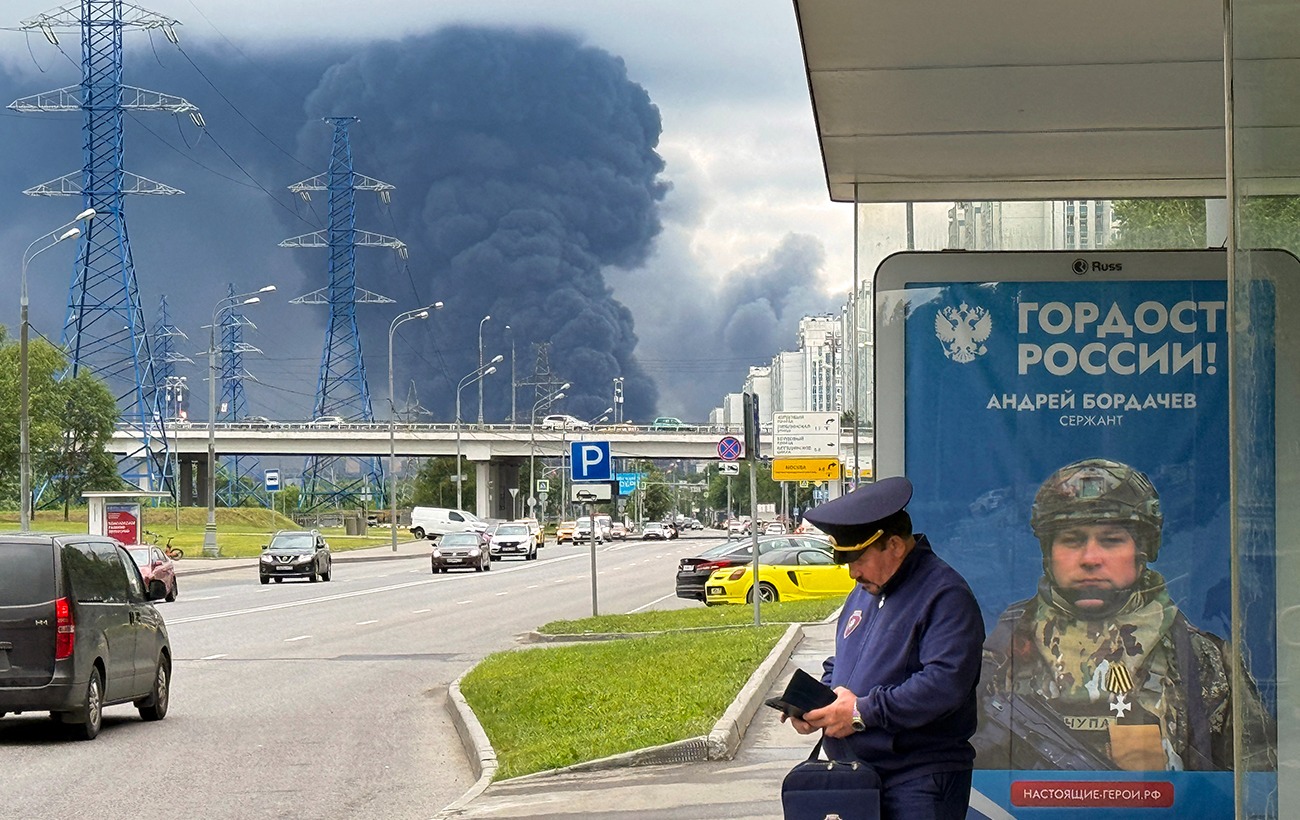 The high intensity of strikes on oil refineries has led to a fuel crisis in Russia (photo: Getty Images)
As of mid-August, Russian oil refining had fallen to its lowest level in 21 years — 3.9 million barrels per day, Bloomberg reported. Even official statistics from the Organization of the Petroleum Exporting Countries (OPEC), based on data from Russia's Energy Ministry, acknowledge the decline.
According to official data, oil refining volumes fell by 21% in the second quarter of this year compared with the same period in 2021, to 4.5 million barrels per day.
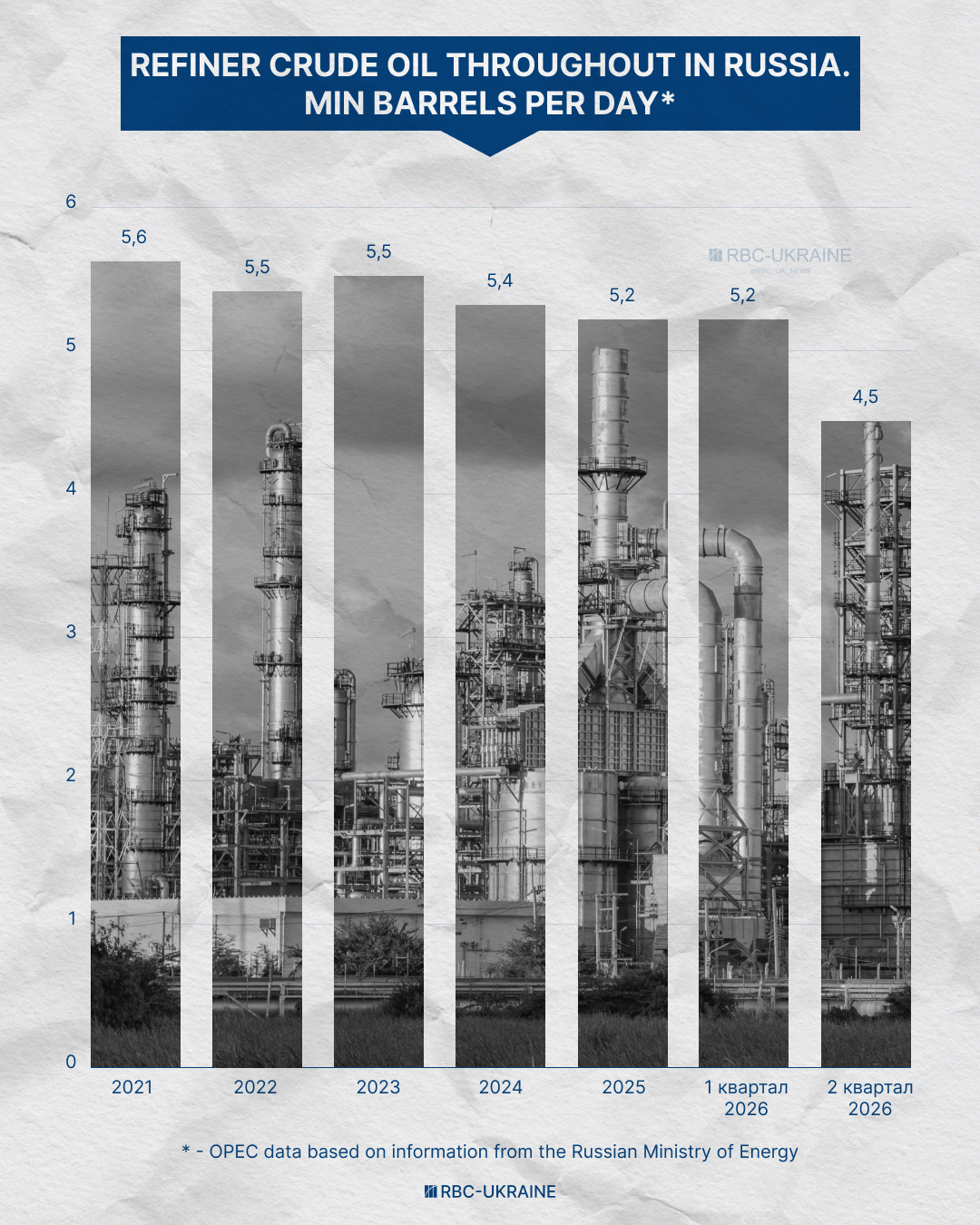 Russia reported to OPEC its largest decline in oil refining volumes since the start of the full-scale invasion of Ukraine (photo: RBC-Ukraine infographic)
Reduced oil refining capacity has forced Russian companies to cut crude oil production. Russia's oil production is now at its lowest level in 15 years, says Borys Dodonov, head of the Center for Energy and Climate Studies at KSE Institute (a research institute of the Kyiv School of Economics), citing data from the International Energy Agency.
Previously, Russia had always violated its commitments to OPEC+ (a group comprising OPEC members and other major oil-producing countries), meaning that it produced more oil than allowed under the quota agreed with the group.
"Now they are producing less than the quota," the analyst adds.
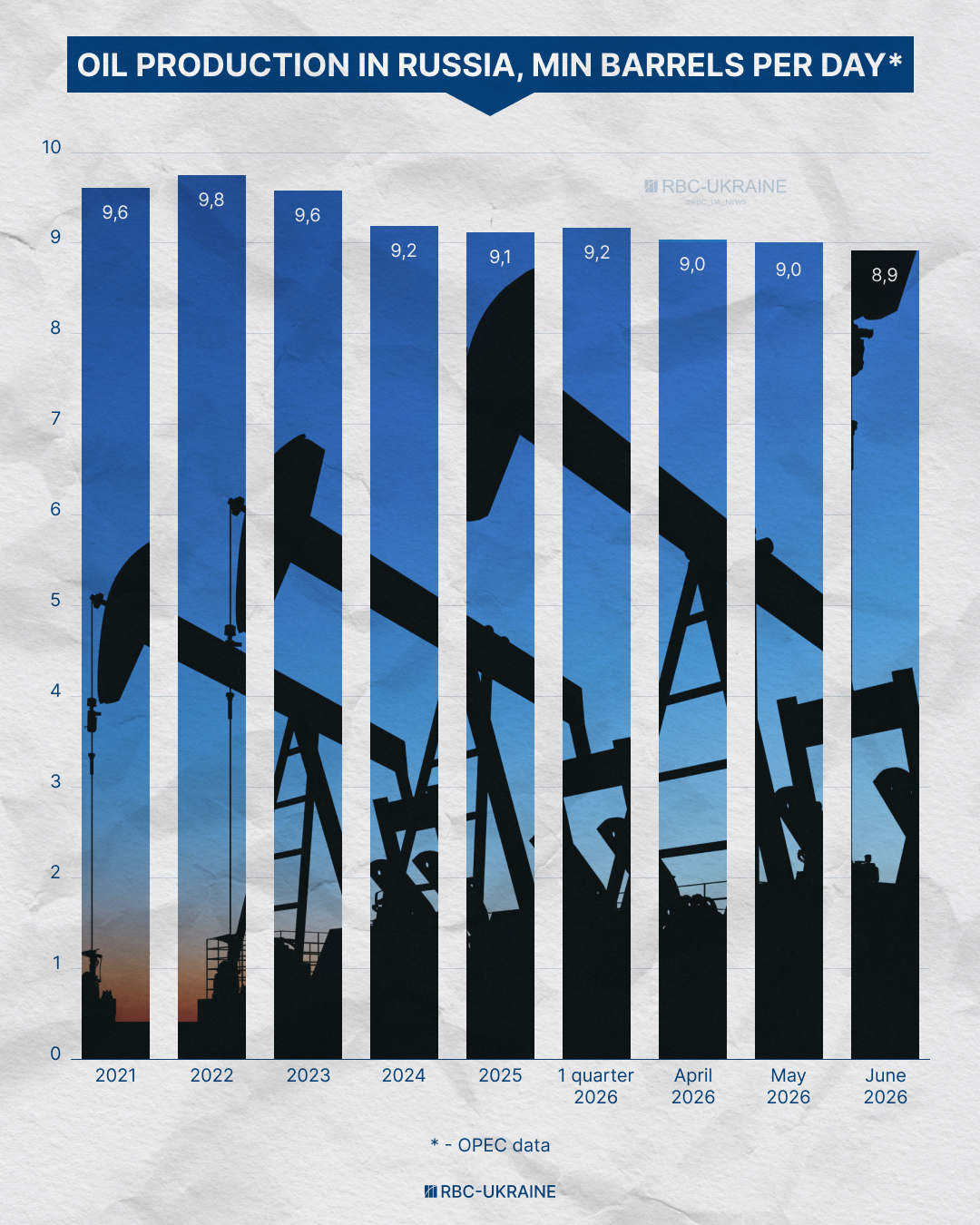 Russia has gradually reduced oil production since 2022 (photo: RBC-Ukraine infographic)
Facing refining problems, Russia is increasingly sending its oil to the global market. This trend became particularly noticeable from February to June this year, when Ukrainian drone strikes intensified.
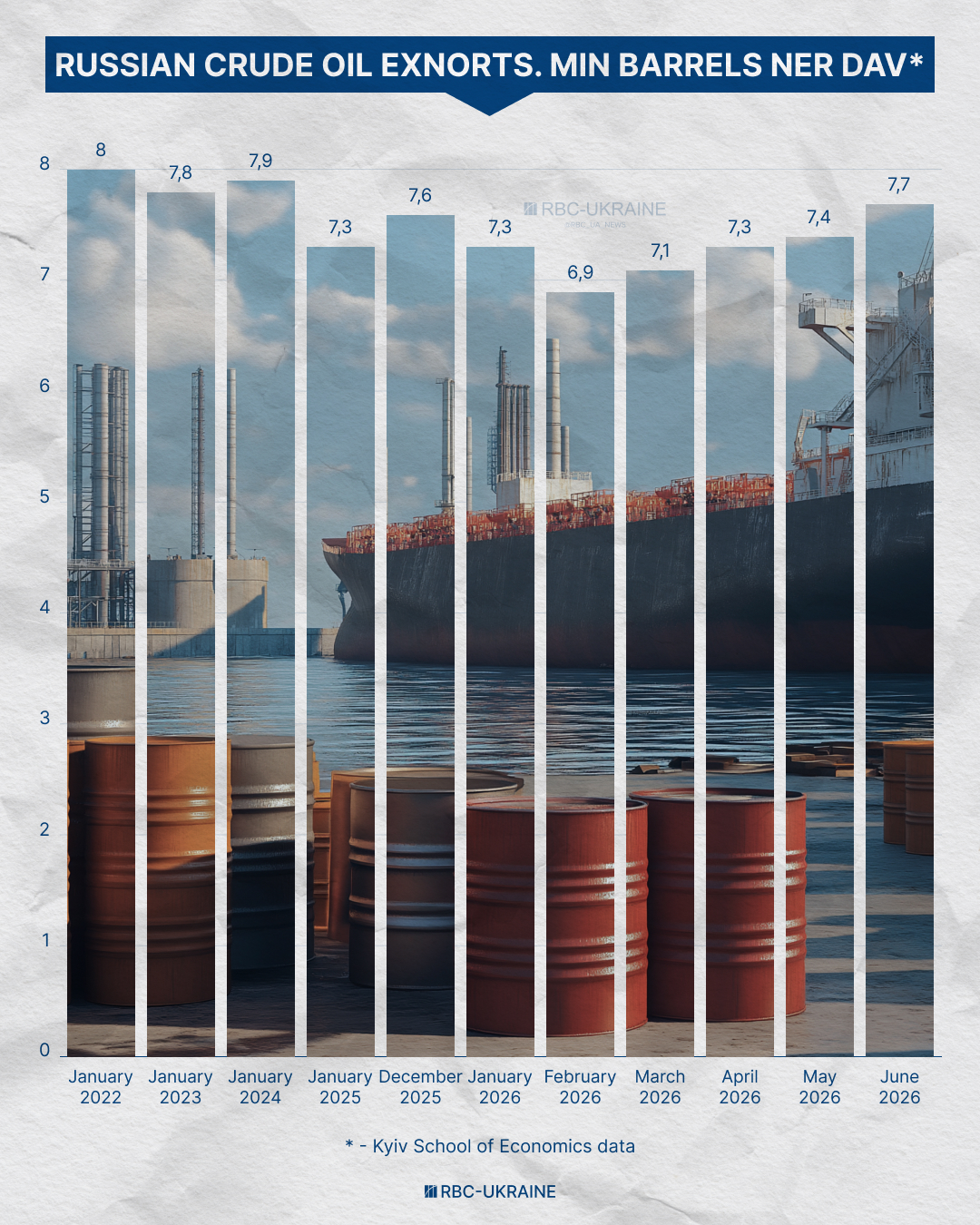 Russia exports oil that it cannot refine domestically (photo: RBC-Ukraine infographic)
Throughout the full-scale war, China, India, and Türkiye have remained the main buyers of Russian oil, according to data from the Kyiv School of Economics.
Last year, Indian Prime Minister Narendra Modi promised the US that India would stop buying Russian crude oil but did not do so, prompting anger from Donald Trump and a new package of tariffs against New Delhi. Despite this, Indian oil companies continue to sign contracts for Russian crude.
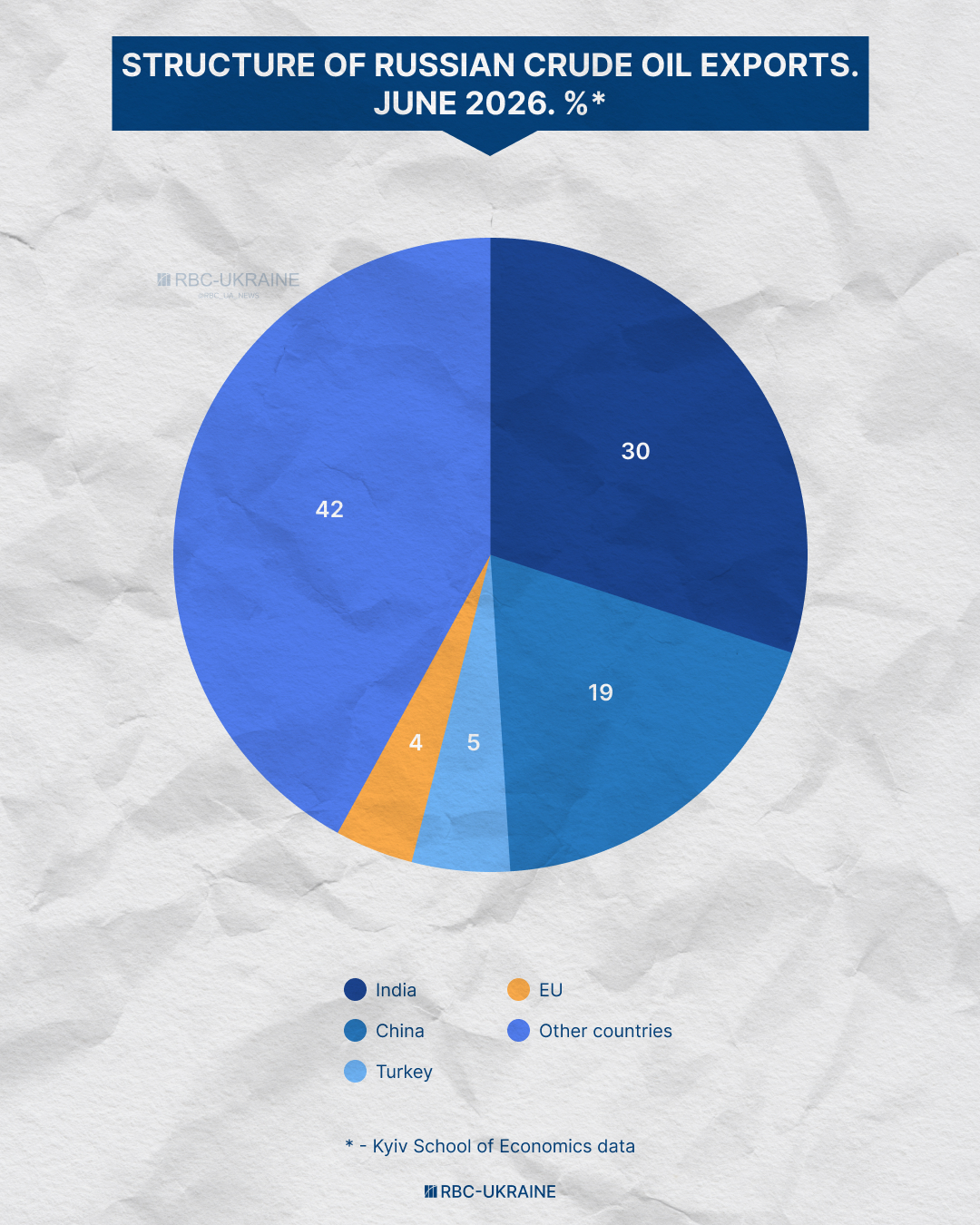 China, India, and Türkiye remain the main buyers of Russian oil (photo: RBC-Ukraine infographic)
The decline in fuel production has led to Russia's most severe fuel crisis since the start of the full-scale invasion. There were fuel supply problems in 2024 and in the summer of last year, but the shortage has been most pronounced this year.
"The fuel shortage in Russia peaked in June, when refining fell to 3.8 million barrels per day, with total refinery capacity of 6.3 million barrels per day," Borys Dodonov says.
Dozens of Russian regions were forced to introduce restrictions on gasoline sales at gas stations. Even the Moscow region experienced fuel supply problems. Local authorities in several regions urged residents to reduce the number of trips they make and use public transportation. Rising fuel prices have led to higher transportation costs.
"The current fuel crisis has affected every region of Russia. They are reaping the consequences of the deepest shortage due to the increasing intensity and number of strikes (by Ukraine — ed.)," Oleksandr Sirenko, an analyst at NaftoRynok (a Ukrainian oil and fuel market consulting company), told RBC-Ukraine.
Steps taken by the Russian government
To address the consequences of the fuel crisis, Russia restricted diesel fuel exports in early July. This measure supplemented restrictions on gasoline exports introduced in April this year.
The sharp decline in Russia's diesel fuel supplies is an unusual development, as the country has always been a major supplier of this petroleum product to the global market. Russian refineries typically produced around 2 million barrels of diesel per day, of which 1 million barrels were exported.
Restrictions on diesel exports represent significant economic losses for Russia, as the global diesel refining margin has now reached a record level of $80 per barrel above the price of benchmark Brent crude oil. Such high margins have emerged due to the blockade of the Strait of Hormuz, Borys Dodonov says.
Apparently, the export restrictions are not absolute. Fuel tankers continue to sail from Russian ports.
"We are looking at navigation data, and tankers are sailing back and forth. I think their exports are continuing," Sirenko says.
Russia is also fulfilling its commitments to supply fuel to Central Asian countries — Tajikistan, Kyrgyzstan, and Afghanistan. Commercial supplies to these countries have been halted, with only volumes stipulated under intergovernmental agreements being delivered.
"Russia continues to supply fuel there, but these are negligible volumes," Mykhailo Honchar, an oil and gas expert and president of the Strategy XXI Centre for Global Studies (a Ukrainian think tank), told RBC-Ukraine.
Alongside export restrictions, Moscow decided to lower fuel quality and revive standards from the 1990s — Euro 2, Euro 3, and Euro 4. This means that after primary oil refining at refineries, gasoline fractions will be produced and additives will be added to increase the octane rating. Such gasoline is of lower quality than fuel produced through secondary refining, the source says.
Russian social media are already filled with complaints from drivers about fuel quality and engine failures in modern cars.
"Formally, it's 95-octane gasoline, but in reality, it isn't. Essentially, the Russian authorities are telling their drivers: 'Take it and drive, and nobody cares how far you'll get,'" Honchar comments.
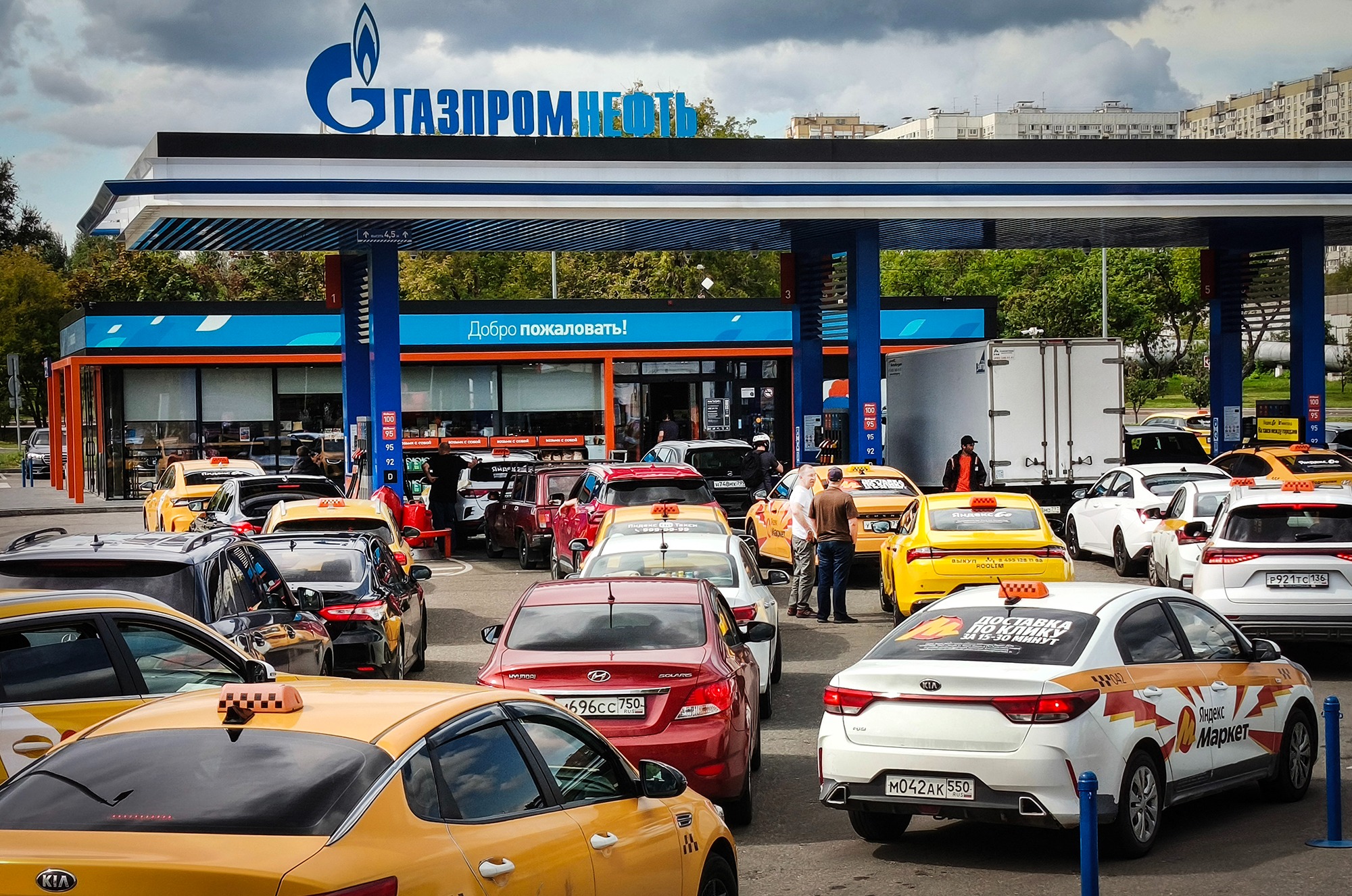 A clear sign of Russia's fuel crisis is the lines at gas stations (photo: Getty Images)
Russia has also decided to allow the construction of mini-refineries — small plants with a low depth of oil refining that produce low-quality fuel but can be assembled relatively quickly and rapidly supply the market.
The Russian government has decided to take every possible measure and disregard quality to reduce the fuel shortage on the domestic market, the expert believes.
Sources of imports
Since late July, Russia has begun importing gasoline from India. It is also known to have received shipments of gasoline from Kazakhstan and even Morocco, while Belarus remains its regular partner in this area.
"For the first time, the gas-station country needs significant imports of gasoline and diesel," Borys Dodonov says.
Kazakhstan recently agreed to supply Russia with a shipment of 50,000 tonnes of gasoline and also redirected an entire plant to work with Russia — the Kondensat oil refinery, located near the Russian border. According to Kazakh media reports, the plant will receive Russian oil and ship 70% of the petroleum products it produces to Russia.
However, the plant's capacity is small. It can process around 850,000 tonnes of oil per year, compared with the 21 million tonnes per year capacity of Russia's largest Omsk oil refinery.
Overall, Kazakhstan has limited capacity to sell fuel on foreign markets. The country has three oil refineries, but during periods of peak consumption, it has itself purchased Russian fuel.
"Kazakhstan does not have much surplus for export. Tokayev's symbolic gesture (the supply of 50,000 tonnes of gasoline — ed.) is negligible," Mykhailo Honchar explains.
Supplies from India could play a larger role, as state-owned Rosneft (Russia's largest state-controlled oil company) is a shareholder in Indian supplier Nayara Energy. The company can receive oil from Russia, refine it at its facilities, and then send the finished fuel back to Russia.
This type of supply is common in the oil market and is known as toll refining, in which a refinery receives crude oil and pays the supplier with a portion of the petroleum products produced. Rosneft can effectively supply oil to its own Indian asset and take back the petroleum products, Honchar believes.
Russia recently received a shipment of Indian-produced aviation fuel. This is an indicator of significant logistical problems involving remote regions, which rely on air transport for connections.
Russian businesses hold a significant ownership stake in the Mozyr oil refinery in Belarus. The country's oil refining industry has used tolling arrangements for years and has been dependent on Russian oil.
"In peacetime, the Mozyr refinery had around five crude oil suppliers operating under tolling arrangements who took the fuel produced. We don't know how many there are now, but they are definitely relying on Russian oil because they have very little crude of their own," Sirenko comments.
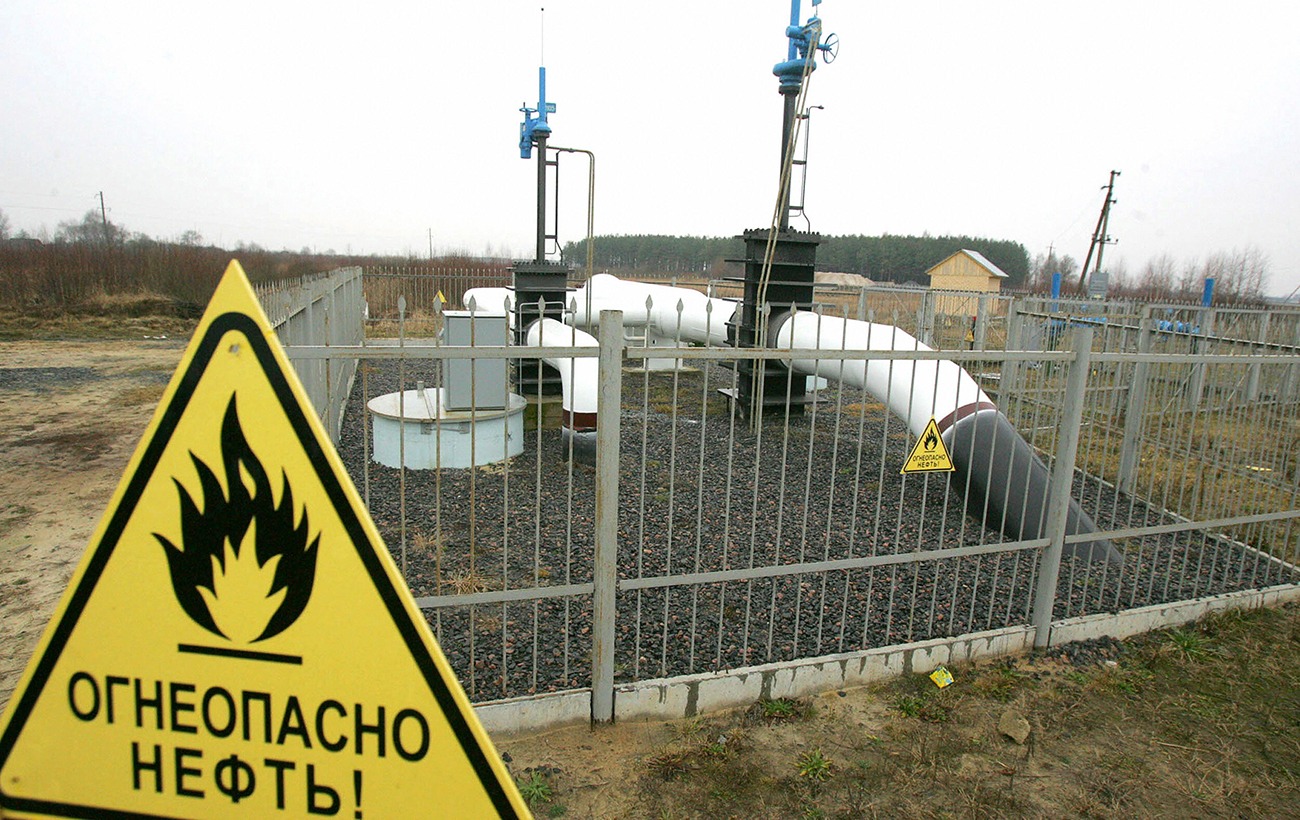 Russian oil is supplied to Belarusian refineries via the Druzhba oil pipeline (photo: Getty Images)
Belarus is making good money from this arrangement: it can buy Russian oil at a discount and sell petroleum products back at high global prices. In this way, Minsk is helping finance the war against Ukraine, Borys Dodonov says.
Potential of foreign supplies
Refineries in Belarus, like those in Kazakhstan, have limited capacity. Belarusian refineries are fairly large and modern, but their capacity cannot come close to replacing what has been damaged in Russia, Dodonov says.
Current supplies from India cannot be considered significant either. "Two tankers a week will not solve their shortage problem. They need one or two vessels arriving every day," Dodonov adds.
One tanker carrying gasoline is heading from the Turkish port of Mersin to Russia's Baltic ports, according to international pricing agency S&P Global.
China could be a potential source of imports, but Russia should not rely on it. Amid rising oil prices, Beijing has taken a radical step — tapping its strategic crude oil reserves and restricting exports of petroleum products.
"So the Russians do not have many resources they can obtain on the global market," says the Kyiv School of Economics expert.
Fuel supplies from abroad are significantly more expensive for Russian consumers and the budget compared with domestic production. First, fuel prices on the global market are currently high due to developments surrounding Iran. Second, the price of imported fuel has to cover lengthy logistics, for example, from the port of Murmansk, where tankers from India have arrived, to other regions of Russia.
August and September typically see increased consumption of petroleum products due to the vacation season and the harvest. Damaged refineries will not be easy to restore, as equipment for the plants has to be manufactured, delivered, and installed. Restoring production will take time, so if the intensity of the strikes continues, Russia's fuel market could decline further in September, Mykhailo Honchar says.
To counter foreign fuel supplies to Russia, the adopted sanctions regime must be properly enforced, and the operations of the shadow fleet (a network of vessels used to circumvent sanctions), as well as related insurance and financial companies, must be blocked, experts believe. It is also very important to conduct diplomatic work with countries that sell fuel to Russia, Sirenko adds.
Russia is taking every possible step to address its fuel shortage. However, due to Ukrainian strikes and growing demand, the crisis could worsen in the near future. Lines at gas stations are expected to undermine regional economies, lower the authorities' ratings ahead of parliamentary elections, and push the Kremlin toward peace.
Quick Q&A
– How much has Russia reduced its oil refining amid Ukrainian strikes?
– Refining volumes fell to their lowest level in 21 years — 3.9 million barrels per day, while the total capacity of Russian refineries before Ukrainian drone strikes stood at 6.3 million barrels per day. Russia's Energy Ministry provided OPEC with data showing that refining volumes had fallen to 4.5 million barrels per day.
– How have Russian oil production and exports changed since the start of Russia's full-scale invasion of Ukraine?
– Compared with 2021, Russia reduced crude oil production by 7% — from 9.6 million to 8.9 million barrels per day, according to OPEC data.
Due to the decline in the number of operating refineries, Moscow is exporting increasing volumes of crude oil. From February through June this year, crude oil exports increased by 12% — from 6.9 million to 7.7 million barrels per day.
– Which countries buy Russian oil?
– Since the start of the full-scale war against Ukraine, China, India, and Türkiye have remained the main buyers of Russian oil. Many shipments involve transferring oil between tankers at sea to circumvent sanctions.
– How severe is the current fuel crisis in Russia?
– It is the deepest crisis. This summer, fuel shortages affected every region of Russia, including the Moscow region. Restrictions on fuel sales were introduced at gas stations. Shortages of aviation fuel have also emerged alongside problems with gasoline and diesel.
– What steps is the Russian government taking to address the fuel shortage?
– First, restrictions were introduced on gasoline exports and later on diesel fuel exports, although some exports are still continuing. Second, Russia has begun importing petroleum products. Russian authorities have also permitted the use of lower-quality fuel meeting standards from the 1990s and the construction of mini-refineries.
– Which countries does Russia import fuel from?
– Supplies come from Belarus, India, Kazakhstan, and Türkiye. In the case of the first three countries, toll refining is used — Russia supplies its oil to refineries in these countries and receives some of the petroleum products produced in return. In other words, Russia uses refineries in other countries to process its oil.
There have also been reports of fuel tankers traveling from Morocco to Russian ports.
– Can imports save Russia from fuel shortages?
– Supplies from other countries can ease the problem but cannot fully meet the needs of Russia's domestic market. Refineries in Belarus and Kazakhstan have limited capacity to increase exports, while tanker shipments from India are also relatively infrequent.
– How could Russia's fuel crisis develop in the near future?
– Fuel shortages could worsen in September, as demand on Russia's domestic market has increased due to the vacation season and the harvest. At the same time, some refineries will undergo maintenance, while restoring damaged refineries requires time and complex equipment.