Kremlin ambitions: What Putin wants from war against Ukraine in 2026


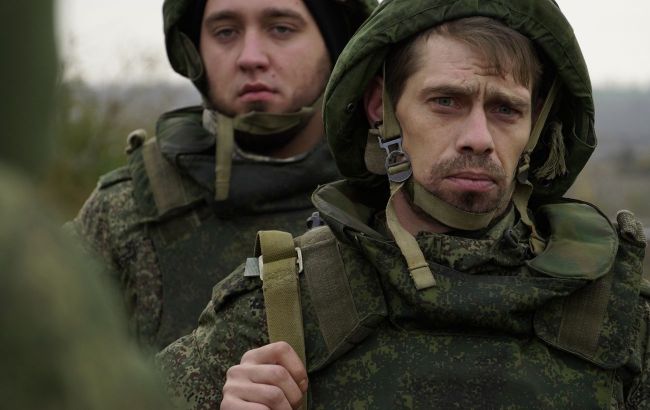 Russian mobilized troops during training in Rostov (photo: Getty Images)
Russia clearly does not intend to end its war of aggression in 2026. What Putin's plans are for the year, what the Kremlin aims to achieve on the battlefield, and how these expectations align with reality — in an RBC-Ukraine report below.
The full-scale war in Ukraine has been going on for almost four years. During this time, Russia has failed to implement the ambitious plans it had at the outset but has adjusted fairly quickly to the realities on the ground.
Today, the creeping advance of Russian forces, unfortunately, is bringing results. At the cost of enormous losses, they are capturing kilometer after kilometer.
Against the backdrop of the offensive, the Kremlin is trying to create the impression that it is ready for peace talks. Moscow is hosting members of the Russian delegation, and Vladimir Putin regularly holds calls with Donald Trump. At the same time, Putin makes it clear he has no intention of stopping in 2026.
Expectations — Donbas and Novorossiya
"We believe in you and in our victory… You have taken responsibility to fight for your native land, for truth and justice."
With these words, Vladimir Putin congratulated Russians on the arrival of 2026. After nearly four years of war against a neighboring state, the Kremlin has still not explained to its domestic audience why it needs this war, yet it stubbornly continues to call Ukrainian territories its native land.
This is far from the only statement by Putin that could nullify Ukraine's Western allies' peacekeeping efforts. At the height of the negotiation process, for example, the Russian President declared that the Russian army would in any case conquer Donbas and Novorossiya by military or any other means. How this aligns with the warm receptions of the American delegation in Moscow remains an open question.
Another episode proving Russia's unwillingness to stop is the fabricated attack on Putin's residence. At the end of the year, Russian Foreign Minister Sergey Lavrov stated that Ukrainian drones had struck the Russian president's residence in Valdai. In this connection, according to the minister, the Kremlin's negotiating position "would be revised."
The situation was actively amplified, primarily targeting a Western audience. Putin even personally called Trump to complain about the attack, after which the American president said at a press conference, "It's not good." According to experts, the fake attack on the residence was invented with one sole purpose — to end negotiations and continue the war.
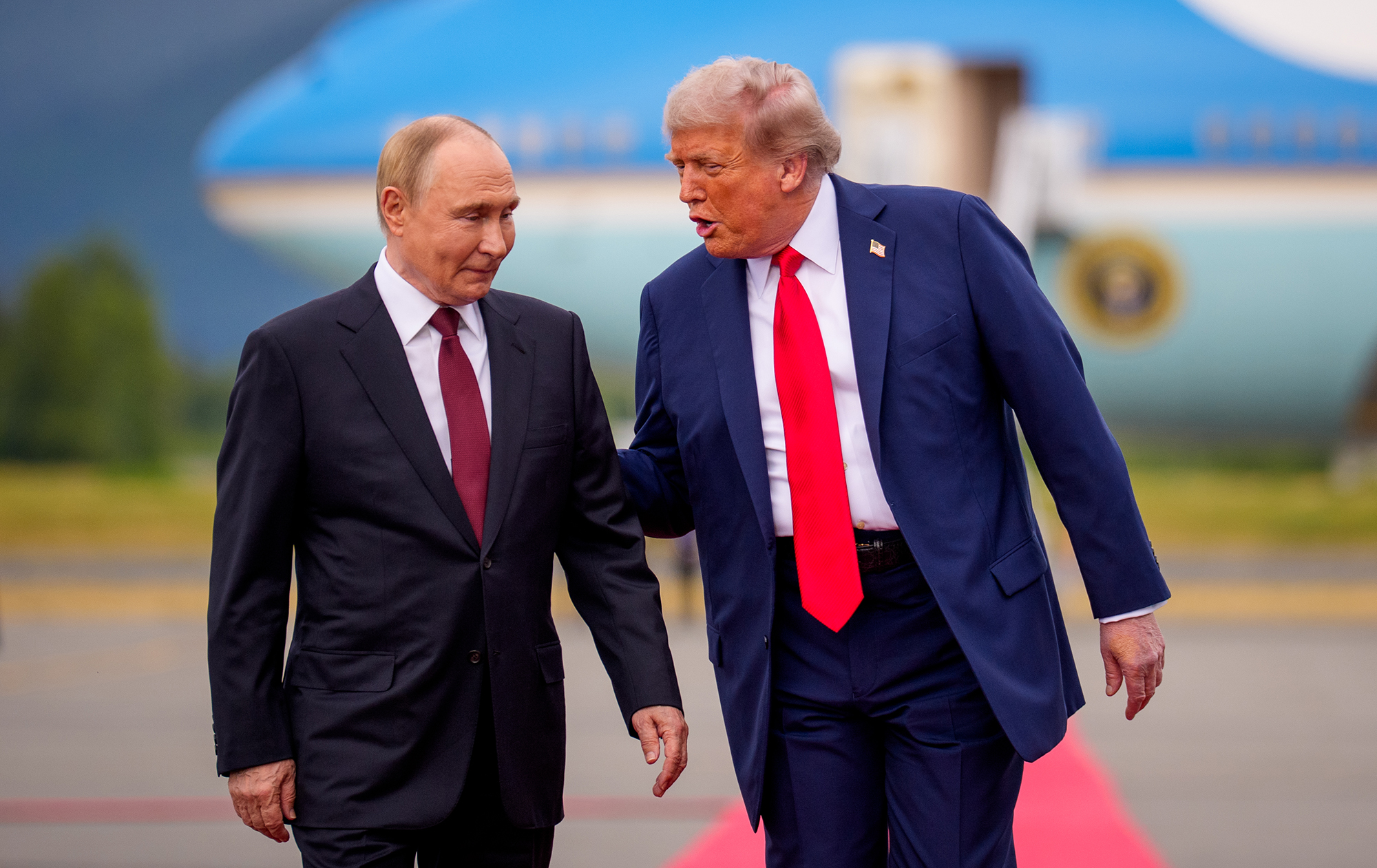 Vladimir Putin and Donald Trump during a meeting in Anchorage (photo: Getty Images)
"They got the feeling that they could actually be drawn into full-fledged negotiations. That the efforts made by Ukraine and its European allies, that the work on the Dmitriev–Witkoff document — which was called an ultimatum — led to this negotiation plan becoming something workable. Apparently, they decided to use this moment to put the negotiations on pause," political scientist Ivan Preobrazhensky told RBC-Ukraine.
Based on the current mood in the Kremlin, it is absolutely clear that they have no intention of ending the war. The Russian leadership has a firm belief that it will be able to continue advancing across Ukrainian territory and secure even more advantageous positions. Having entrenched itself there, it would then put forward different demands.
"Putin is clearly receiving an exaggeratedly successful picture of the Russian offensive, and perhaps he personally expects that by the end of winter the Russian army will take Zaporizhzhia, or block the Dnipro, or block Kharkiv. Then it would be possible to speak with Ukraine from different positions and put forward tougher demands," Preobrazhensky adds.
It is difficult to say precisely what plans the Russian military command has on the front line. For now, the Russian army, albeit slowly and with heavy losses, continues to advance in the Donetsk region. The Russians also have specific successes in the Zaporizhzhia direction.
It can be assumed that in 2026 the enemy plans to reach the borders of the Donetsk region and, as Putin calls it, liberate Donbas. Also, judging by the directions of the offensive, the Russians may move toward the Dnipropetrovsk region — at least try to seize part of it to later speak of another "liberated" region.
"I think this would be a full-scale invasion of the Dnipropetrovsk region. It is not a fact that they will be able to take the Donbas fortified area in 2026, but they may try to bypass it. And judging by the victorious, upbeat reports they are now reading out to Putin, it feels like that is exactly the plan — to take it in pincers and create a large cauldron, from which Ukrainian forces would have to either break out, surrender it, or negotiate capitulation on the condition that Ukrainian troops are allowed to withdraw," Preobrazhensky notes.
Russia's actions regarding mobilization also indicate that it does not intend to halt military operations. No one in Russia plans to launch a full-scale mobilization process — at least not publicly. However, internal mobilization continues.
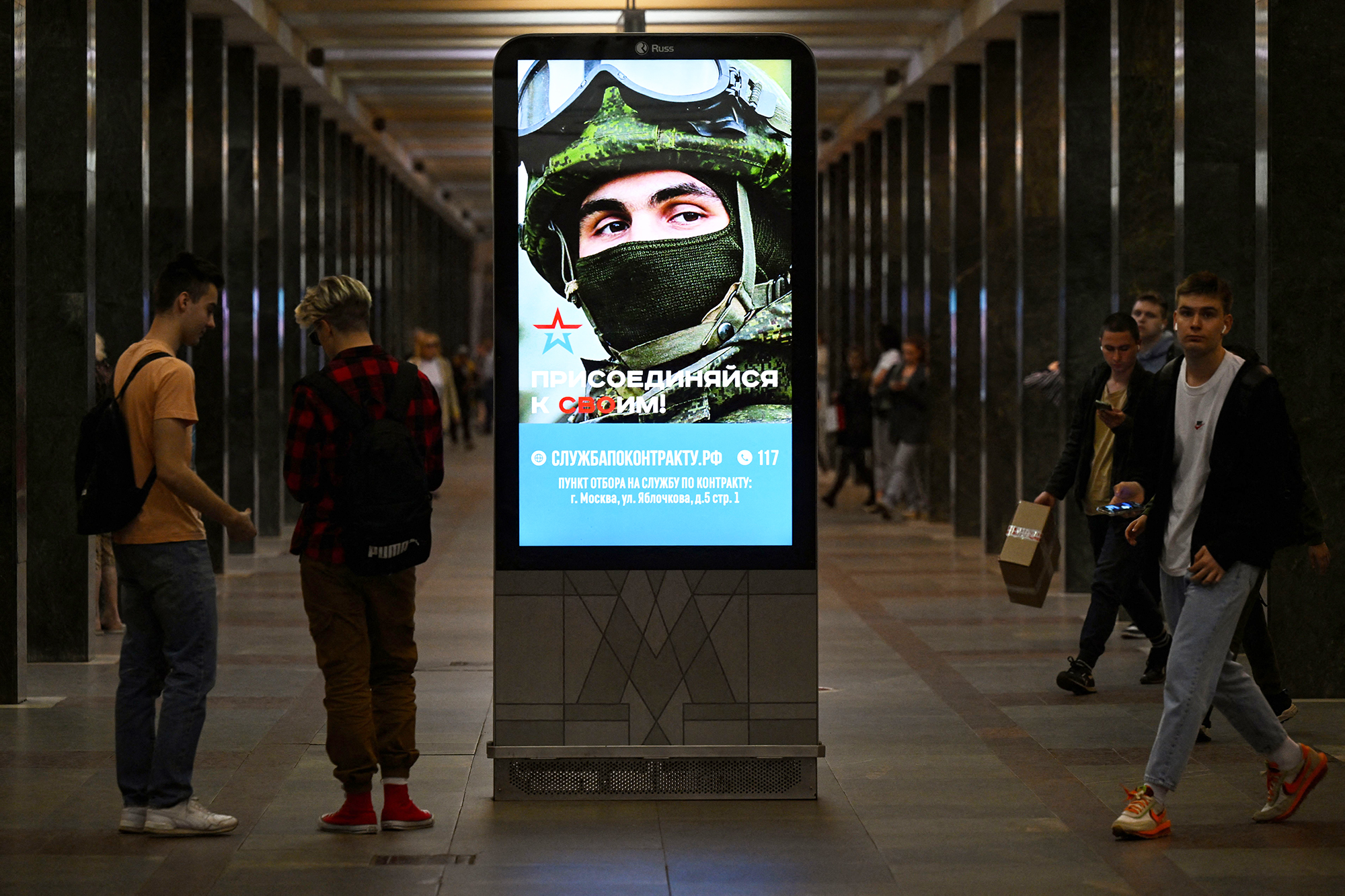 Army recruitment advertising in Moscow (photo: Getty Images)
The constant recruitment into the Russian army is primarily due to difficult economic conditions. In some regions, enterprises that are effectively city-forming are shutting down. People who lose their jobs there have no other option but to enlist in the army for money.
In addition, the Kremlin continues recruiting reservists. Putin signed the decree on their conscription back in 2025, and their training will take place in 2026. Moreover, according to Ukraine's Defense Intelligence Directorate, Moscow has fulfilled its recruitment plan for 2025 and set a new target: approximately 400,000 recruits in 2026. Financial incentives will continue to be used.
In other words, there are clearly no plans in Russia today to end the military conflict. Accordingly, on the negotiation track, Moscow is so far only playing at diplomacy rather than engaging in it for real. However, everything could change, and the main factor influencing this is the economy.
Reality — Crisis in Russia
"One must understand that the automotive industry is an indicator sector. It is the most technically complex consumer product in the economy. In other words, the technical capacity of a consumer economy is reflected in a country's ability to produce cars. And in Russia today they produce junk — such junk that people have become afraid to buy cars," Russian economist Igor Lipsits said in a comment to RBC-Ukraine.
Since the beginning of the war, Russia has claimed that the invasion has not affected its economy in any way. Even when Europe announced the first "sanctions blow" and later began targeting key sectors of the Russian economy more precisely, Moscow demonstratively laughed it off and claimed that sanctions only strengthened the country's economy.
In reality, this is not the case, although sanctions certainly do not work as quickly as one might hope. After restrictions were imposed on oil sales — which largely filled the Russian budget — the Kremlin was forced to come up with various alternatives.
The shadow fleet, reorientation of markets from West to East, and new logistics routes all generate high costs. As a result, oil no longer brings in the same billions it once did. And money has to come from somewhere, because war is expensive.
"Therefore, loss-making enterprises, loss-making wells, and loss-making fields have already begun to emerge in the oil industry. And these are no longer hypotheses — this is reality, because the state has started subsidizing the oil industry from the budget. It was impossible to imagine that it would not be the oil sector feeding the budget, but the budget supporting the oil industry," Lipsits notes.
For some time, Russia was "living off" the National Wealth Fund. As of today, about 4 trillion rubles remain in it, in the form of gold and yuan, according to the economist. At the same time, Russia's budget deficit in 2025 amounted to 5.7 trillion rubles. Given these figures, it was decided for now not to spend NWF funds. To cover the budget deficit, Russia is essentially increasing its public debt.
"After money is injected into circulation through various loans via commercial banks, the money supply expands. This accelerates inflation. Accelerating inflation means the inability to lower the key interest rate. Expensive loans, decline in the civilian economy. The circle closes, and in general, there is no way out of this circle," Lipsits adds.
It will also not be possible to take much money for the war from the social sector, although the Russian leadership is indeed trying to "tighten its belt." One such tightening has occurred in the area of subsidized mortgages. Previously, the Russian budget co-financed housing construction, but now it can no longer afford to do so. And the sector itself had barely recovered from the coronavirus pandemic.
The same is happening in other sectors that were previously supported by the budget. Today, according to the expert, the Russian economy is in fact beginning to accumulate crisis-hit industries.
"The entire coal industry is in a major crisis and is asking for subsidies — there is no money. Ferrous metallurgy is in crisis and asking for money — there is none. The forestry industry is in crisis and asking for money — there is none. The automotive industry is in crisis and asking for money — there is none. In this sense, we are observing a situation where many industries will halt production, reduce output, or lay off workers," Lipsits adds.
Despite a fairly positive forecast for Ukrainians regarding the Russian economy, it should be understood that Russia had been building up what it is now spending for years. Therefore, four years of turmoil are not enough for a massive structure like the Russian economy to collapse. But cracks are forming, and with each new blow, they are becoming increasingly visible.
***
Throughout all the years of the full-scale war, Russia has never been able to clearly outline its plans regarding Ukraine. In a single speech, Putin could literally express hopes for peace and immediately declare the seizure of "native lands." However, today it can be stated clearly that Russian troops will continue moving across Ukrainian territory as long as they have the opportunity to do so.
The implementation of these plans depends directly on the kind of assistance Ukraine receives from its allies and the volume. How they will perform in 2026, and whether they will form something more substantial than coalitions, remains an open question.