Africa trade under siege: How port blackmail and piracy hurt Ukraine's exports


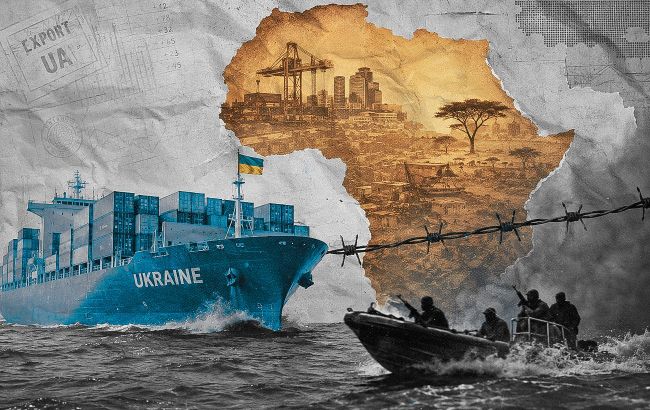 Photo: How port blackmail and pirates are destroying Ukrainian exports to Africa (collage by RBC-Ukraine)
Although Africa is in dire need of food, attempts by Ukrainian companies to enter this market often result in colossal losses.
Read the RBC-Ukraine article to find out why domestic suppliers are losing millions in the African market and how the government, together with the business community, is trying to reverse this trend.
Key points:
- Trade risks: Ukrainian exporters regularly face extortion at ports, frozen bank accounts, legal chaos, and piracy.
- Uneven exports: Most Ukrainian shipments go to the EU, while the African market is poorly covered and is largely limited to Egypt and Algeria.
- New strategy: Ukraine is shifting its focus from humanitarian exports of raw materials to exports of finished products through the Food from Ukraine program.
- Strict protectionism: The main barrier for businesses has been African countries’ requirements to process products within their own borders.
- Protection strategies: Safe expansion is possible through logistics hubs, cooperation with local partners, or reliable foreign intermediaries.
After shipping a large consignment of wheat to one of Africa’s tropical countries, a Ukrainian company faced an unexpected ultimatum: local buyers claimed that the quality of the grain was unsatisfactory and demanded that the price be cut in half.
There was no point in taking the local authorities to court, so the company agreed. However, the buyers turned out not to have the money. Instead, they offered to pay via barter: with rare "the world’s most expensive" wood from the local jungles, which, they claimed, was in high demand among manufacturers of luxury furniture in Italy.
The exporter chartered a separate ship, picked up the cargo, and brought it to Europe. However, in Italy, they simply shrugged as the wood turned out to be junk, good for nothing but firewood. This cost the Ukrainian company about $9 million.
"The owner of this company said, 'I will never work with them again,'" Leonid Kozachenko, president of the Ukrainian Agrarian Confederation, tells RBC-Ukraine, recounting this sad story, though deliberately without naming specific individuals.
This is a classic scam. For years, West Africa has been a hub for the large-scale trade in counterfeit kosso, wood from the African rosewood tree, around which an entire counterfeiting industry has been built (in 2017 alone, Interpol simultaneously seized $216 million worth of illegal kosso in nine countries across the region).
And it is precisely these kinds of stories that are one of the reasons why Ukraine remains a secondary supplier in Africa. According to the State Statistics Service, the geography of domestic agricultural exports remains skewed.
Nearly half of all exports go to the EU market ($10.7 billion out of $22.6 billion in 2025), while all of Africa accounts for only 12.3%, and most of this amount comes from two buyers in the north of the continent: Egypt ($1.44 billion) and Algeria. The rest of Africa, including all of Sub-Saharan Africa, receives less than 4% of Ukraine’s agricultural exports.
This is so, although the region’s actual need for food is enormous. Ukraine is fully capable of increasing exports to Sub-Saharan African countries to approximately $25 billion per year over the next 5–8 years, of which agricultural products and food could account for about $10 billion, according to Artem Hudkov, director of the Ukrainian-African Trade Mission LLC, a company established to support Ukraine’s agricultural expansion in Africa.
The government, together with the business community, is already trying to change this status quo. And there are several dimensions to this.
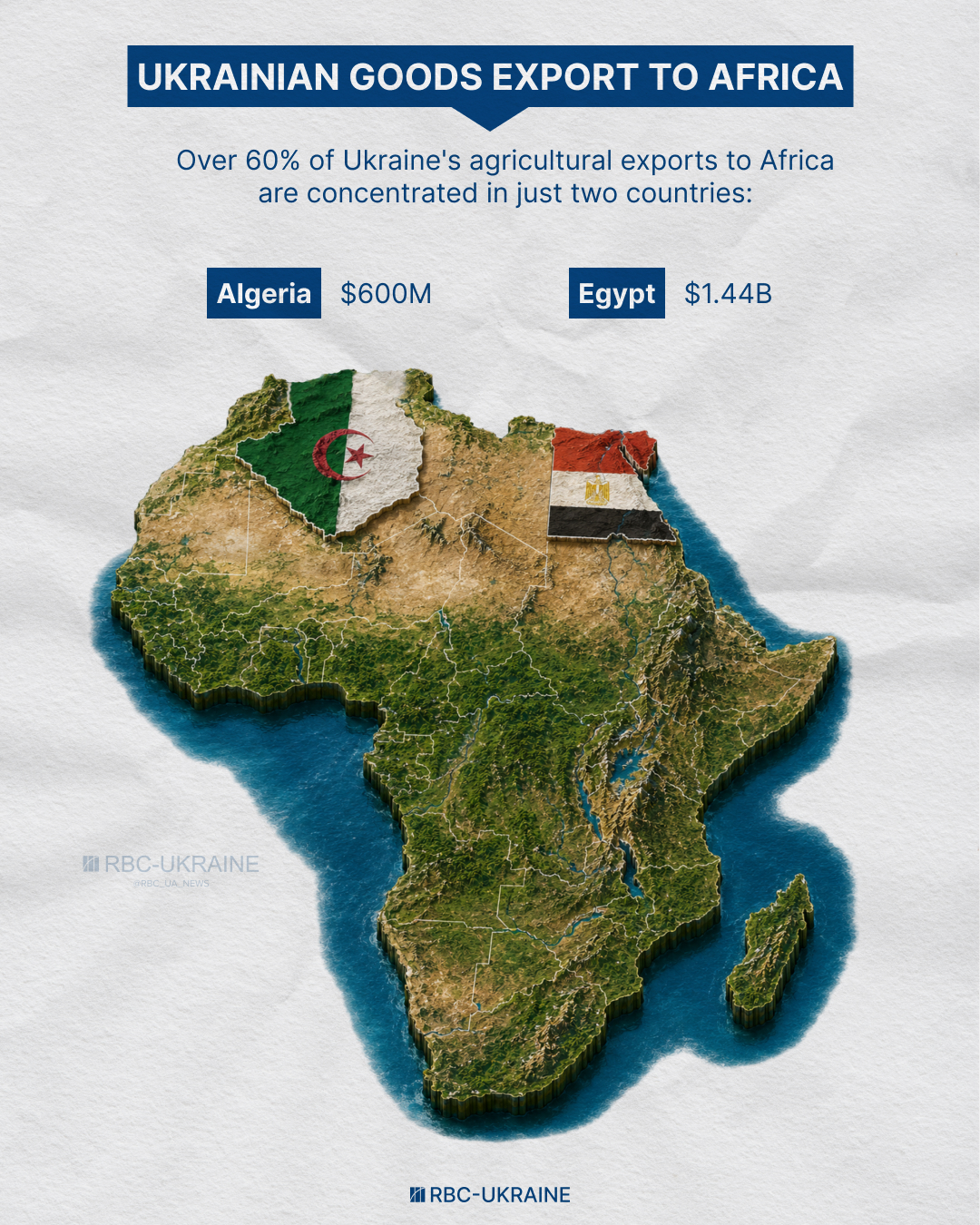 Photo: Exports of Ukrainian goods to Africa (infographic by RBC-Ukraine)
From grain to food
It is important to understand that, until now, Ukraine’s presence in the continent’s poorest regions has largely been driven not by traditional commercial exports but by the sale of grain through international intermediaries, funded by Western donors.
The previously operating Grain from Ukraine humanitarian program was purely crisis-response in nature: partners allocated funds, which were used to purchase raw materials from Ukrainian farmers and transport them to areas threatened by famine.
According to the Ministry of Foreign Affairs of Ukraine, in response to a request from RBC-Ukraine, over 335,000 metric tons of food were delivered to 19 countries suffering from acute food crises during the implementation of Grain from Ukraine. The total amount of contributions from 29 donor countries since the initiative’s launch has exceeded $381 million.
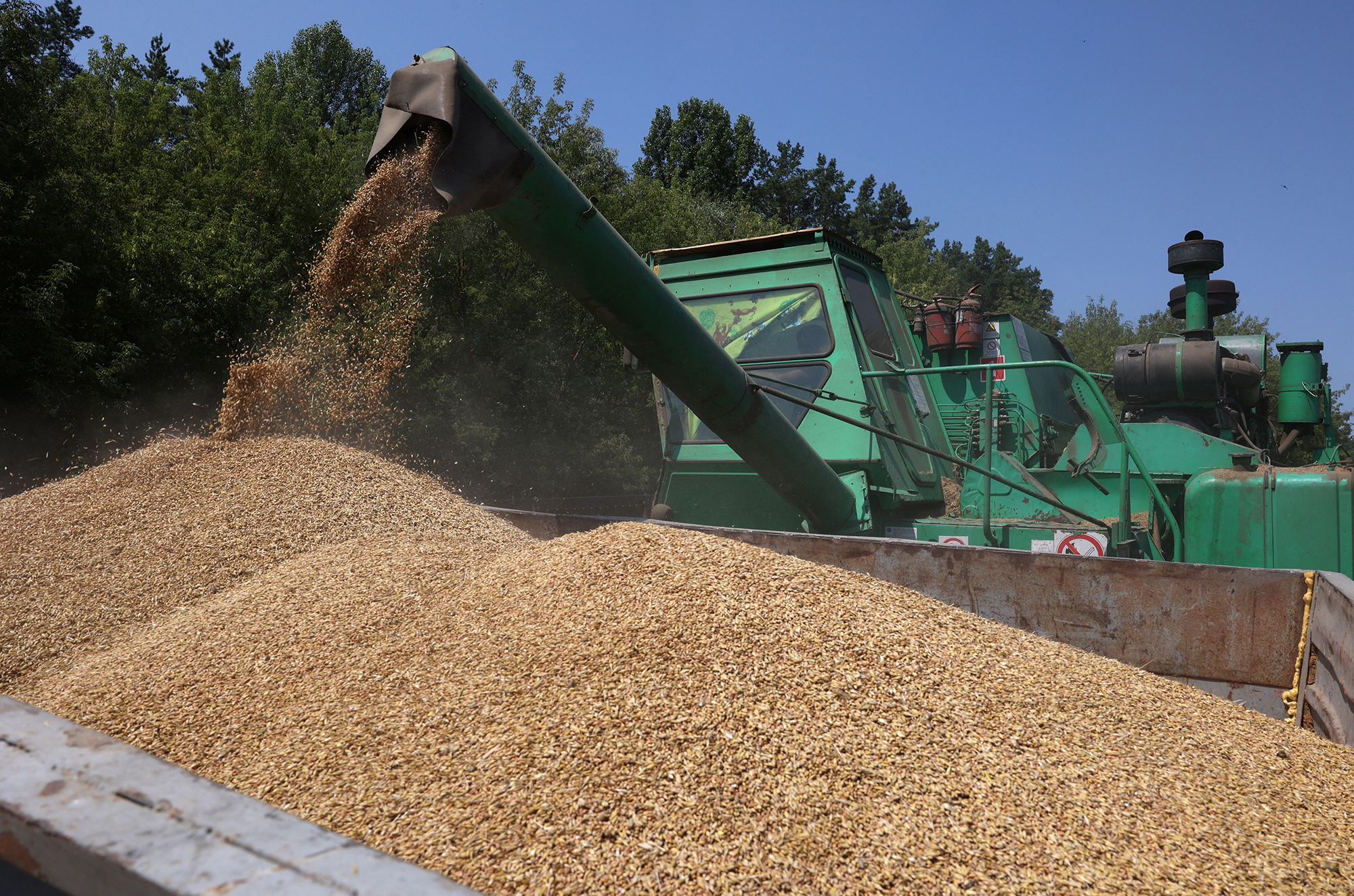 Photo: Harvesting in the Kyiv region (Getty Images)
Historically, raw materials have formed the basis of these and other exports. However, today, the Ukrainian government is declaring a paradigm shift: a transition from shipping grain to selling high-value finished products. The goal is ambitious—to process at least 50% of the country’s own harvest domestically.
The Food from Ukraine initiative, which replaced its predecessor, has become a symbol of this transformation. It is also funded by foreign donors and includes not only food supplies but also the export of Ukrainian technologies and the building of partnerships that will help Africa feed itself.
"The new program calls for expanding the range of food products (particularly value-added goods), increasing the number of recipient countries, and transitioning from a donor-driven model to a collaborative approach to long-term food security," the Ministry of Foreign Affairs explains.
First and foremost, this applies to African countries, where the focus is on technology transfer, training, joint agricultural projects, and investments in mechanization. Another element of the new format is the creation of regional agri-food hubs.
These hubs are intended to provide storage, processing, logistics, and further distribution of Ukrainian-origin products. Negotiations on establishing such hubs are currently underway with the UAE, Egypt, Lebanon, and Oman, and an agri-hub was opened in Ghana in April, the Ministry of Foreign Affairs adds.
Changing trends
However, the government’s plans to expand exports of finished products are running up against a fundamental shift in the rules of the game on the continent itself—and this is becoming the main challenge for companies trying to operate there independently, without the backing of international humanitarian donors.
Trends in the food market have changed radically, notes Artem Hudkov.
"The very framing of the issue—'more finished products instead of grain'—is an approach from a decade ago. The architecture of international trade has changed dramatically since then, yet we’re still debating in outdated terms," he emphasizes in an interview with the agency.
As Hudkov notes, the key trends now are strict protectionism for local producers and the localization of processing within importing countries.
To achieve this, a full range of tools is being used: from protective tariffs to complex regulatory barriers, such as specific certification requirements or the need to obtain special import permits. This is the strategy of a number of the continent’s largest countries, from Nigeria to Algeria. Incidentally, African economists themselves confirm this logic.
"Due to subsidies in industrialized countries where South Africa imports wheat, low international wheat prices continue to exert pressure on the potential growth of the local industry, which has been unable to compete at these low wheat prices," explains South African agricultural economist Thabile Nkunjana.
According to his assessment, even South Africa, one of the continent’s most developed agricultural markets, meets only half of its domestic consumption with its own grain; the country is forced to import the rest.
At the same time, Hudkov notes that most Ukrainian companies simply lack the resources and knowledge for such expansion:
"Yes, of course, there are exceptions, but we’re talking about the entire spectrum of businesses that already export their products or have the potential to do so. There is no reason to abandon the goal. It’s a reason to take an honest look at what we’re systematically lacking and start closing those gaps," he emphasizes.
Opening up each individual country to exports of finished products is a separate investment project that requires capital investment, a tailored strategy, and a long payback period.
"Without this understanding, we will continue to declare an increase in added value for years to come, while in reality we will be exporting the same old grain," Hudkov stresses.
Gray zone pitfalls
In addition to bureaucratic barriers, Ukrainian businesses in Africa often find themselves trapped in a climate of legal nihilism. As noted by Leonid Kozachenko, chairman of the Ukrainian Agrarian Confederation (UAC), the regions most in need of food are often governed by opaque government agencies and financial institutions that readily disregard international law.
According to him, a common scheme involves local authorities suddenly declaring that the products do not meet quality standards after a shipment arrives at an African port. At the same time, they completely ignore certificates issued by SGS, the global leader in quality certification.
 Photo: Unloading Ukrainian grain at the port of Constanța in Romania (Getty Images)
"They say, 'On the instructions of our leader, only the state laboratory conducts inspections, so we checked it, and this is not at all what we wanted. Either you cut the price in half, or take your products back.' This happens after the goods have already been unloaded and are sitting in their port," says Kozachenko.
In such cases, local African banks controlled by governments simply refuse to honor letters of credit and block payments to Ukrainian companies.
The exporter finds itself in a bind: a daily penalty of tens of thousands of dollars is charged for the ship’s idling, and shipping the cargo back halfway around the world would be a financial disaster. Traders are forced to accept these terms and give away their goods for next to nothing.
Moreover, such risks affect not only small players. One of the most high-profile cases occurred in the Egyptian market, where procurement shifted from the relatively transparent civilian agency GASC to a new entity, Future of Egypt, controlled by the military.
According to Reuters, due to the unpredictable actions of this entity last year, a major Ukrainian exporter that had shipped 12,000 metric tons of sunflower oil faced a sudden refusal by the bank to open a letter of credit.
The company was forced to urgently reroute the ship, seek other buyers, and suffer colossal losses; it subsequently initiated arbitration in the United Kingdom.
Algeria’s state grain agency (OAIC) has also been using similar tactics for years. In its own laboratories, it regularly downgraded the quality of imported wheat based on shell bug damage ratings and forced suppliers to factor the so-called Algerian discount into the base price of the shipment.
Despite this pressure, leading Ukrainian suppliers are not abandoning this market. Algeria ranks among the top five global wheat importers, actively displacing France from its market. Moreover, under pressure from shortages and higher prices at tenders, the country was ultimately forced to officially relax its requirements.
Grain pirates
While bureaucratic pressure can still be challenged in court, Ukrainian businesses are virtually defenseless against physical threats.
Unlike Russia, which resolves disputes in Africa with the help of its military mercenaries from the African Corps (formerly the Wagner Group), Ukrainian companies have no military backing in similar situations.
"There have been many cases where ships were carrying cargo, and pirates would appear, stop them, unload them, and take the grain. No one could determine who they were or how it happened, and no one could protect the ships from this," adds Leonid Kozachenko in an interview with RBC-Ukraine.
In 2025 alone, more than 35 official attacks on commercial vessels were recorded in the Gulf of Guinea (West Africa) and off the coast of Somalia. At the same time, maritime security analysts at Dryad Global emphasize that the actual number is several times higher.
While in East Africa (near Somalia), pirates have traditionally taken crews hostage for ransom, in West Africa, the main goal is to rob the ships.
Criminal groups seize ships for several days or attack them directly at unprotected anchorages in ports, quickly transshipping agricultural products and fuel for sale on the regional black market. For Ukrainian companies, such incidents usually mean the irretrievable loss of cargo.
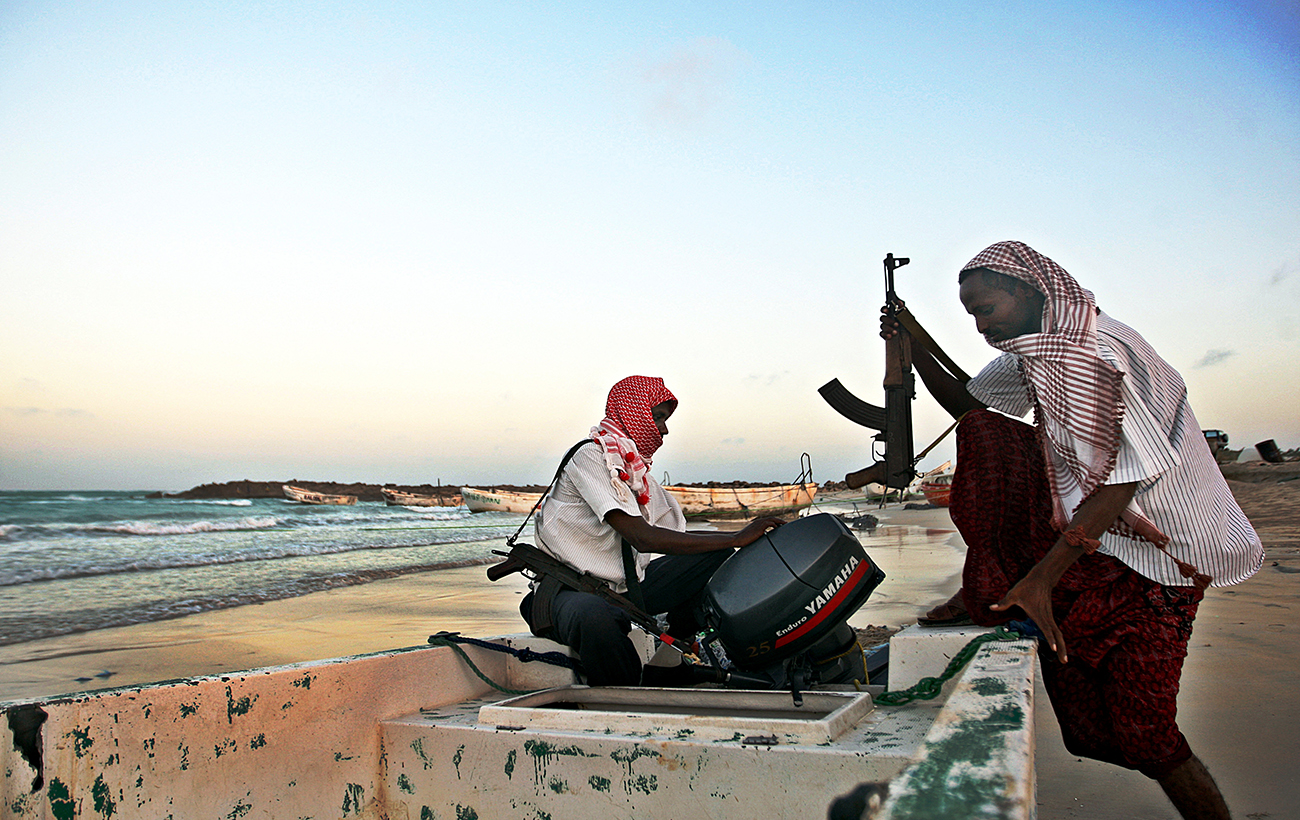 Photo: Somali pirates (Getty Images)
Ultimately, an information war has also been waged against Ukrainian exports to Africa. Russian propaganda on the continent systematically promotes the narrative that Ukraine and the West are using food as a weapon and that Ukrainian grain is substandard or toxic.
The main goal of such media disinformation campaigns is to push Ukraine out of promising markets and replace it with Russia’s own food products.
Three paths to entering Africa
Traditional European trade rules do not work in markets south of the Sahara. So what works or could work?
In summary, the agency’s interviewees identify three tools, where the first creates the necessary foundation, and the next two offer parallel, albeit opposing, strategies for business.
The first is state-sponsored infrastructure hubs. This approach involves the government taking charge of political negotiations, providing diplomatic protection and legal guarantees. When products are delivered to and stored at these designated hubs, Ukrainian companies can sell them in small batches directly on Africa’s domestic market.
This allows for de facto trade, bypassing the risks of blocked letters of credit and laboratory blackmail at ports. At the same time, diplomatic support helps expand the geographic reach. In the past year alone, the State Service of Ukraine for Food Safety and Consumer Protection and the Ministry of Foreign Affairs have approved certifications for nearly two dozen new product categories in the region.
The second strategy is expansion through joint ownership. For players willing to take a long-term view and shoulder risks, the future lies in joint processing directly on the ground. This allows for building capital partnerships within the continent and engaging local players who know how to effectively navigate the local bureaucracy.
"This will in no way reduce our own agricultural exports, but it will enable us to export high-tech equipment and technologies and significantly expand our influence," emphasizes Artem Hudkov.
A practical implementation of this model is already operational based on the existing infrastructure. At the aforementioned agri-hub in Ghana, pasta is already being produced from Ukrainian flour for local food packages.
The third approach is a parallel track involving trusted intermediaries. This alternative and significantly more cautious path is suitable for companies that do not have budgets in the millions to build their own factories in Africa.
Instead of taking risky independent steps, domestic businesses can rely on intermediaries.
"The Emirates have a massive trade volume with Africa thanks to a very clever model. They extract gold-bearing ore from there, refine it (purify it—ed.), and this gold serves as a guarantee that if they ship any goods there, whether from Ukraine or any other country, and they aren’t paid for them, or if pirates seize the shipment en route, they have collateral," Leonid Kozachenko explains.
The African market remains enormous, but it punishes naivety instantly. Ultimately, the choice for Ukrainian businesses boils down to a simple dilemma: take the risk and build their own plants on the continent, or settle for a modest but secure margin from intermediaries.
Quick Q&A
– Why is it risky for Ukrainian companies to export agricultural products to Africa?
– The main threats are the arbitrary use of power by local officials, the blocking of bank payments under the pretext of so-called poor quality cargo, and maritime piracy. In addition, Ukrainian companies lack military protection on the continent, and Russia is waging a systematic information war against our exports.
– Which African countries buy the most Ukrainian grain?
– The key buyers are Egypt and Algeria, which together account for the majority of Ukraine’s exports to Africa. For example, in 2025, Egypt imported $1.44 billion worth of our food products. In contrast, all of Sub-Saharan Africa accounts for less than 4% of the total shipments from Ukraine’s agricultural sector.
– How does the Food from Ukraine initiative differ from Grain from Ukraine?
– While the previous Grain from Ukraine program was purely humanitarian and supplied raw grain, the new Food from Ukraine initiative focuses on selling finished products with added value. It involves a transition from a donor-based model to joint business ventures, technology transfer, training, and the establishment of processing facilities.
– How do agri-food hubs protect Ukrainian exporters?
– These are state-protected logistics centers located directly in Africa for storing and packaging products. They allow Ukrainians to sell goods in small batches directly on the domestic market. This eliminates the risks of port blackmail and the freezing of large letters of credit.
– How can Ukrainian businesses trade safely in the African market?
– There are two parallel approaches. Large holding companies can invest in joint processing plants on the ground together with influential local partners. It is safer for small and medium-sized businesses to sell goods through large international traders, who assume the financial and logistical risks in exchange for a share of the margin.