WSJ uncovers new details of Ukraine's Operation Spiderweb

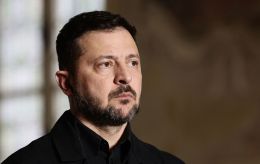
 Photo: The Security Service of Ukraine carried out a special operation called Spiderweb (facebook.com SecurSerUkraine)
Thanks to the testimony of participants in the Security Service of Ukraine's (SBU) Spiderweb special operation, new details have emerged about the large-scale drone attack on Russian military airfields. Dozens of aircraft were destroyed or damaged during the operation, according to The Wall Street Journal.
Operation was on verge of failure
According to the WSJ, it all started when a Russian truck driver accidentally shifted the roof of the cab, revealing the hidden cargo — drones for the operation. The driver called Artem Tymofeyev, a Ukrainian who had lived in Russia for a long time and was coordinating the special operation.
In order not to disrupt the mission, a cover story was quickly invented: the cargo was supposedly hunting cabins with drones for tracking animals. After that, the driver sent a photo with the roof in place, and the operation continued.
How Spiderweb went
The SBU created a complex transport network to deliver hundreds of drones and eight prefabricated cabins to Russia. The cargo crossed the border using corruption loopholes in Russian customs.
Artem Tymofeev and his wife, Kateryna, assembled the components on Russian territory. The cabins were equipped with solar panels and batteries, and the drones were equipped with communication devices for control from Kyiv.
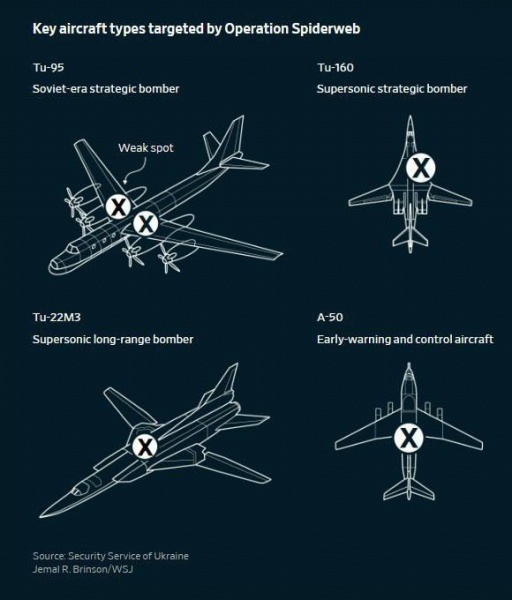
At the end of May, five trucks set off on different routes across Russia. On June 1, over a hundred drones took to the air simultaneously and struck 4 Russian airfields.
According to SBU estimates, 41 aircraft were hit, more than 10 of which were destroyed.
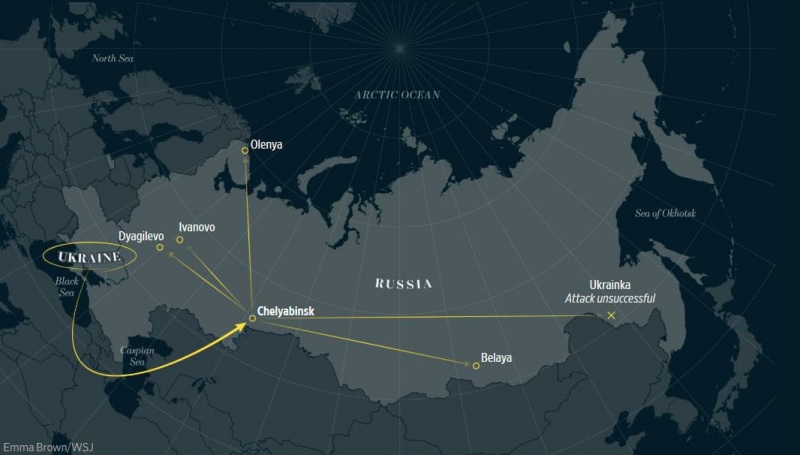
Source: Wall Street Journal
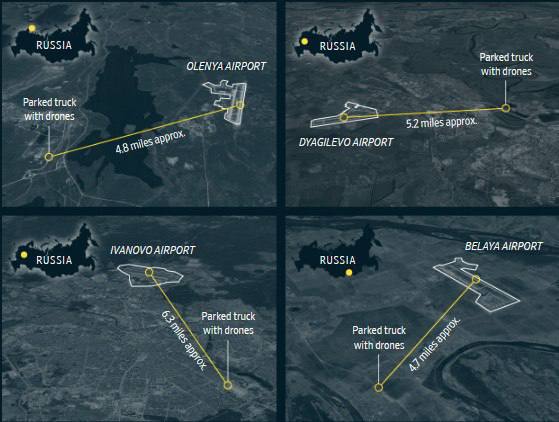
Source: Wall Street Journal
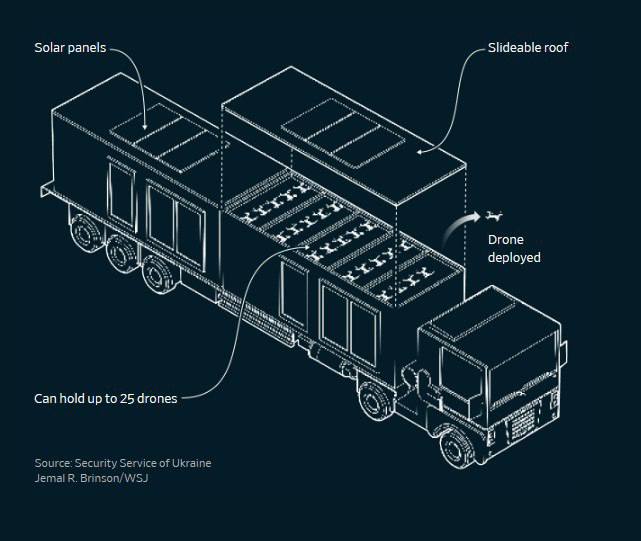
Source: Wall Street Journal
Source: Wall Street Journal
Secret coordinators of special operation
Artem and Kateryna Tymofeyevy are originally from Ukraine, but moved to Russia after the 2014 economic crisis. Thanks to their knowledge of the language and their Russian passports, they did not arouse suspicion. Before the operation began, the couple was secretly brought to Ukraine's Lviv and given a polygraph test.
In Russia's Chelyabinsk, Artem founded a logistics company, hired drivers, set up a warehouse, and quietly managed the launch of Operation Spiderweb. The drivers had no idea what they were transporting.
After the attack, Russian security forces put Tymofeyev on the wanted list, but it was too late.
A few days before the active phase of the operation, the couple left for Kazakhstan under the pretext of a tourist trip, taking only the bare essentials — including their Scottish cat and Shih Tzu dog.
Operation Spiderweb
Operation Spiderweb became one of the largest special operations of the Security Service of Ukraine: SBU drones simultaneously attacked several Russian airfields.
SBU Chairman Vasyl Malyuk gave a detailed account of how the special service destroyed or disabled strategic Russian aircraft.
RBC-Ukraine has compiled more details about the operation in a special report.