Without US and G7: EU may act alone to block Russian oil fleet

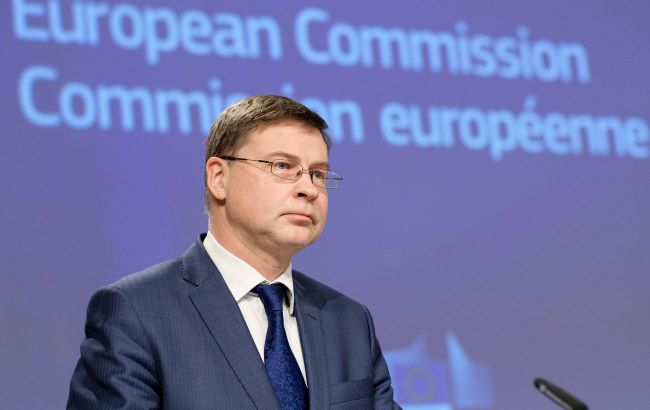 Photo: Valdis Dombrovskis (GettyImages)
The European Union may impose a complete ban on maritime services for Russian oil tankers even without approval from G7 countries, including the United States, stated European Commission Vice President and Commissioner for Economy and Productivity Valdis Dombrovskis.
Read also: EU sanctions on Russia near finish line: Hungary's position may delay approval, Politico reports
He stated that while G7 support is desirable, it is "not an absolute precondition" for making a decision. If a broader international agreement is not reached, the EU is ready to act independently.
"The higher alignment we can achieve, including at the G7 level, the better. But we will not shy away also to take steps at the EU level, should the broader agreement not be forthcoming," Dombrovskis added.
Part of the new sanctions package
The maritime ban is a key element of the EU’s 20th sanctions package against Russia, which Brussels aims to finalize by the fourth anniversary of the full-scale invasion. Its goal is to limit the Kremlin’s ability to transport oil and reduce funding for the war against Ukraine.
The new package also includes additional import and export restrictions, as well as an expansion of sanctions lists for banks and the shadow fleet vessels.
Resistance from some EU countries
The initiative faces opposition from Malta and Greece, whose economies heavily rely on shipping. They insist that the ban should only be implemented in coordination with G7 countries, including the US, fearing that otherwise Chinese and Indian shipping companies would benefit.
At the same time, several states, including Sweden, support the position that the EU should act even without global coordination if necessary to strengthen sanctions pressure on Russia.
20th sanctions package details
On February 6, the European Commission presented the draft of the 20th sanctions package against Russia, planned for adoption by February 24—the fourth anniversary of the Russia-Ukraine war.
The main restrictions target the energy and financial sectors. Specifically, the proposals include a full ban on maritime services for transporting Russian oil, expanding the sanctions list of the shadow fleet to 640 vessels, and limiting the servicing of liquefied natural gas tankers.
Meanwhile, the European Commission’s initiatives to sanction foreign ports and banks that facilitate illegal Russian oil exports are currently facing resistance from certain EU countries.