Why Europe can’t block Russia’s Baltic exports: Expert explains


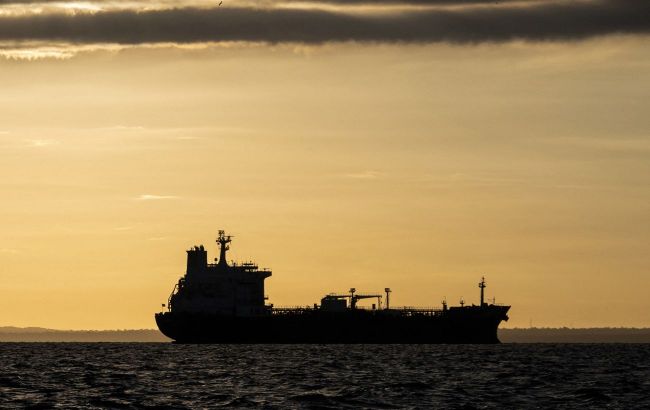 Photo: Europe cannot block Russian exports via the Baltic Sea (Getty Images)
Blocking shipping in international straits is equated to an act of war. Moreover, such a blockade must not be formal but real and enforced by naval forces, says Doctor of Law and expert of the Association of Reintegration of Crimea, Borys Babin.
According to him, blocking Russian vessels in the Danish Straits is a complex task due to international obligations and escalation risks. Despite sanctions, the EU and Denmark have limited legal grounds for a complete halt to transit.
“Any closure of an international strait for an undefined group and number of vessels, or for a specific country or port of departure, is a blockade, that is, an act of war,” he said.
Such a situation has developed in the Strait of Hormuz and the Persian Gulf, where an international armed conflict is ongoing.
“Therefore, such a general closure in the Baltic can only be carried out by a state that is directly involved in an armed conflict, while other Baltic countries, in particular Denmark, cannot take even the measures that Türkiye introduced for the Black Sea under the Montreux Convention,” the expert explained.
The blockade must be real, meaning accompanied by naval means, not just statements. Otherwise, all neutral countries have the full right to ignore the blockade.
“Thus, the only country that currently has the right to take measures to block the Baltic straits for all vessels controlled by Russia or heading to and from Russian ports is Ukraine. And exclusively through the use of practical means and, most likely, outside Denmark's territorial waters,” Babin added.
According to him, all other restrictions on passage through the Baltic straits may concern only specific vessels. And exclusively under conditions of violations of maritime safety norms or Denmark’s state interests.
So, for now, without the ability to physically block the straits, Ukraine has chosen another path. Drones and cruise missiles have been brought into play. Strikes on oil terminals in Novorossiysk, port infrastructure in Ust-Luga, and Tuapse limit Russian exports no less than a blockade.
Russian exports via the Baltic
A significant part of Russian oil exports passes through the Baltic Sea. This concerns more than 60% of crude oil supplies, and together with routes through the Black Sea, about 80%.
Key to this remain the Danish Straits (the Great Belt, the Little Belt, the Øresund), which connect the Baltic Sea with the Atlantic Ocean. Through them, the main volume of oil from the Russian ports of Ust-Luga and Primorsk is transported.
Despite sanctions and discussions about restricting the shadow fleet, European countries have still not introduced a full blockade of this route.
Attacks on Ust-Luga port
In March-April 2026, the port of Ust-Luga in Russia’s Leningrad region suffered a series of drone attacks that caused fires and disruptions at the largest oil terminal in the Baltic.
The strikes were aimed at disrupting the logistics of Russian raw material exports.
According to Reuters, as a result of these attacks, about 40% of Russian oil exports were paralyzed.